


Feed Grade Sodium Bicarbonate: High-Purity Rumen Buffer & Livestock
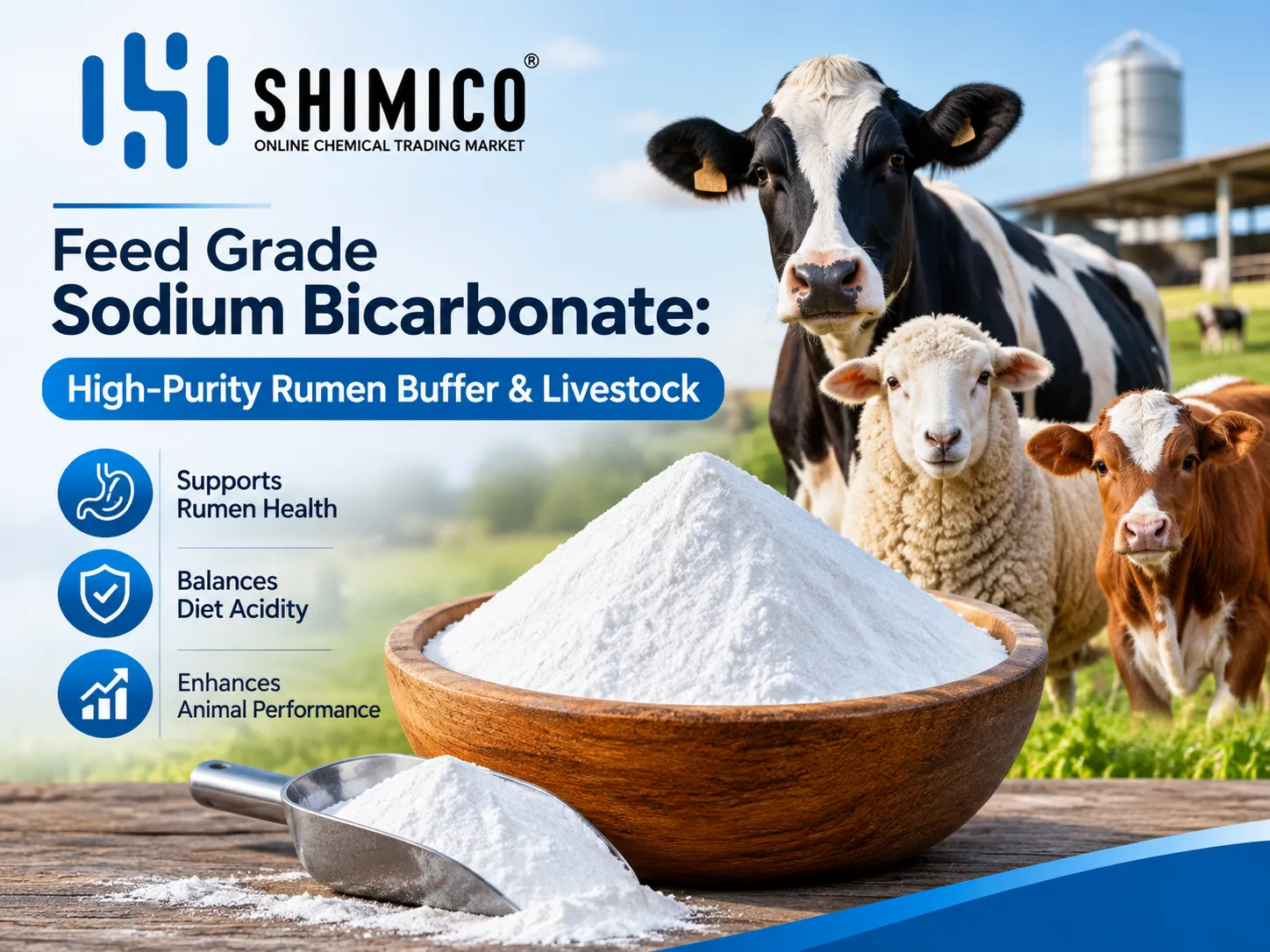
Feed Grade Sodium Bicarbonate: High-Purity Rumen Buffer and Dietary Electrolyte for Livestock Nutrition
Modern intensive livestock production demands high metabolic performance under tight operational margins. High-yielding dairy cows, finishing feedlot cattle, and rapidly growing poultry flocks operate close to their physiological limits.
Feeding starch-dense concentrate rations to support rapid weight gain and peak lactation places tremendous acid stress on the animal’s digestive tract. When metabolic acid production outpaces natural biological buffering, clinical and subacute metabolic disorders develop quickly.
Feed grade sodium bicarbonate (NaHCO3) is a white, free-flowing crystalline compound formulated specifically as an active dietary buffer, systemic alkalizer, and chloride-free sodium contributor.
Manufactured under rigorous feed-safety protocols, it acts directly in the digestive system to stabilize physiological pH, sustain cellulolytic rumen microflora, and maintain dietary electrolyte balance across diverse animal species.
Subacute Ruminal Acidosis (SARA) alone is estimated to cost commercial dairy operations over 1.12 dollars per cow each day in lost butterfat yields, secondary laminitis treatments, and involuntary culling. Integrating feed grade sodium bicarbonate into daily rations delivers predictable chemical stabilization that protects milk quality, herd longevity, and feed conversion efficiency.
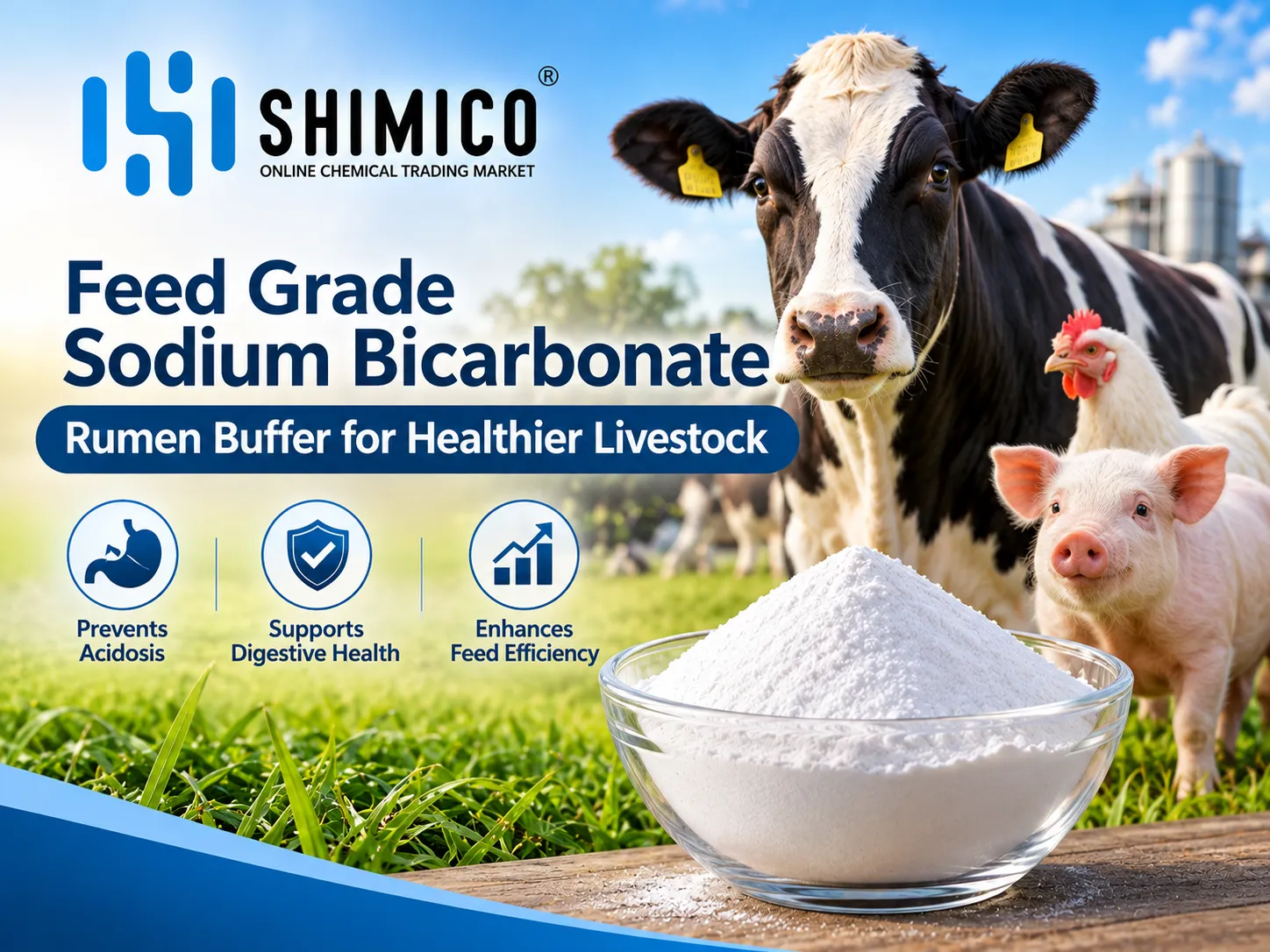
Mechanism of Action in Ruminants: Mitigating Acidosis and Stabilizing Ruminal Ecology
In high-producing dairy cows and feedlot cattle, high concentrate-to-forage ratios lead to rapid ruminal fermentation of non-structural carbohydrates. This rapid carbohydrate breakdown generates substantial amounts of volatile fatty acids (VFAs) predominantly propionate, butyrate, and acetate alongside lactic acid accumulation. When ruminal fluid pH falls below the critical threshold of 5.8 for extended daily intervals, ruminal function rapidly destabilizes.
A low ruminal pH destroys cellulolytic and fibrolytic bacterial populations, such as Fibrobacter succinogenes and Ruminococcus albus, shifting the microbial profile toward acid-tolerant, lactate-producing organisms like Streptococcus bovis.
This biological shift damages ruminal papillae, triggers lipopolysaccharide endotoxin translocations across the ruminal wall, and induces systemic inflammation throughout the animal.
Dietary sodium bicarbonate operates as an immediate chemical buffer. Upon reaching the rumen, it dissociates rapidly into free sodium cations (Na+) and bicarbonate anions (HCO3-). These bicarbonate ions directly bind free hydrogen protons, converting them into unstable carbonic acid (H2CO3), which decomposes into carbon dioxide and water:
“NaHCO3 + H+ → Na+ + H2CO3 → Na+ + H2O + CO2↑”
This buffering cycle stabilizes ruminal fluid within the optimal window of 6.2 to 6.8, encouraging active fiber fermentation. Stable ruminal pH promotes the acetate-to-propionate ratio needed for mammary de novo fatty acid synthesis, preventing milk fat depression in early-to-mid lactation.
“Rumen stabilization directly preserves microfloral viability. Maintaining ruminal pH above 6.2 sustains microbial protein synthesis and safeguards volatile fatty acid proportions necessary for consistent butterfat yield.” — Journal of Dairy Science
Applications in Poultry and Swine: Electrolyte Balance and Heat Stress Management
Poultry and swine lack sweat glands and rely heavily on evaporative cooling through polypnea (rapid panting) when exposed to high ambient temperatures and humidity. Hyperventilation rapidly blows off carbon dioxide (CO2) from the lungs, lowering partial pressure of blood CO2 and shifting the bicarbonate-carbonic acid equilibrium toward respiratory alkalosis.
In commercial layer flocks, circulating bicarbonate depletion starves the oviduct shell gland of carbonate ions needed for calcium carbonate (CaCO3) precipitation. The result is a sharp increase in micro-cracks, thin shells, and unsellable eggs during summer months.
In broilers and swine, heat stress disrupts blood acid-base homeostasis, depresses feed intake, and compromises intestinal epithelial tight junctions, inducing systemic endotoxemia.
Dietary Electrolyte Balance (DEB), calculated via the standard equation [DEB (mEq/kg) = Na + K – Cl], is maintained by supplementing feed grade sodium bicarbonate. Unlike salt (NaCl), which supplies an equal milliequivalent of chloride, sodium bicarbonate delivers bioavailable sodium without the acidifying chloride ion.
This enables nutritionists to elevate dietary cation-anion balance to optimal targets (250 to 300 mEq/kg), relieving systemic alkalosis and restoring shell thickness.
Physical and Chemical Properties of Feed Grade Sodium Bicarbonate
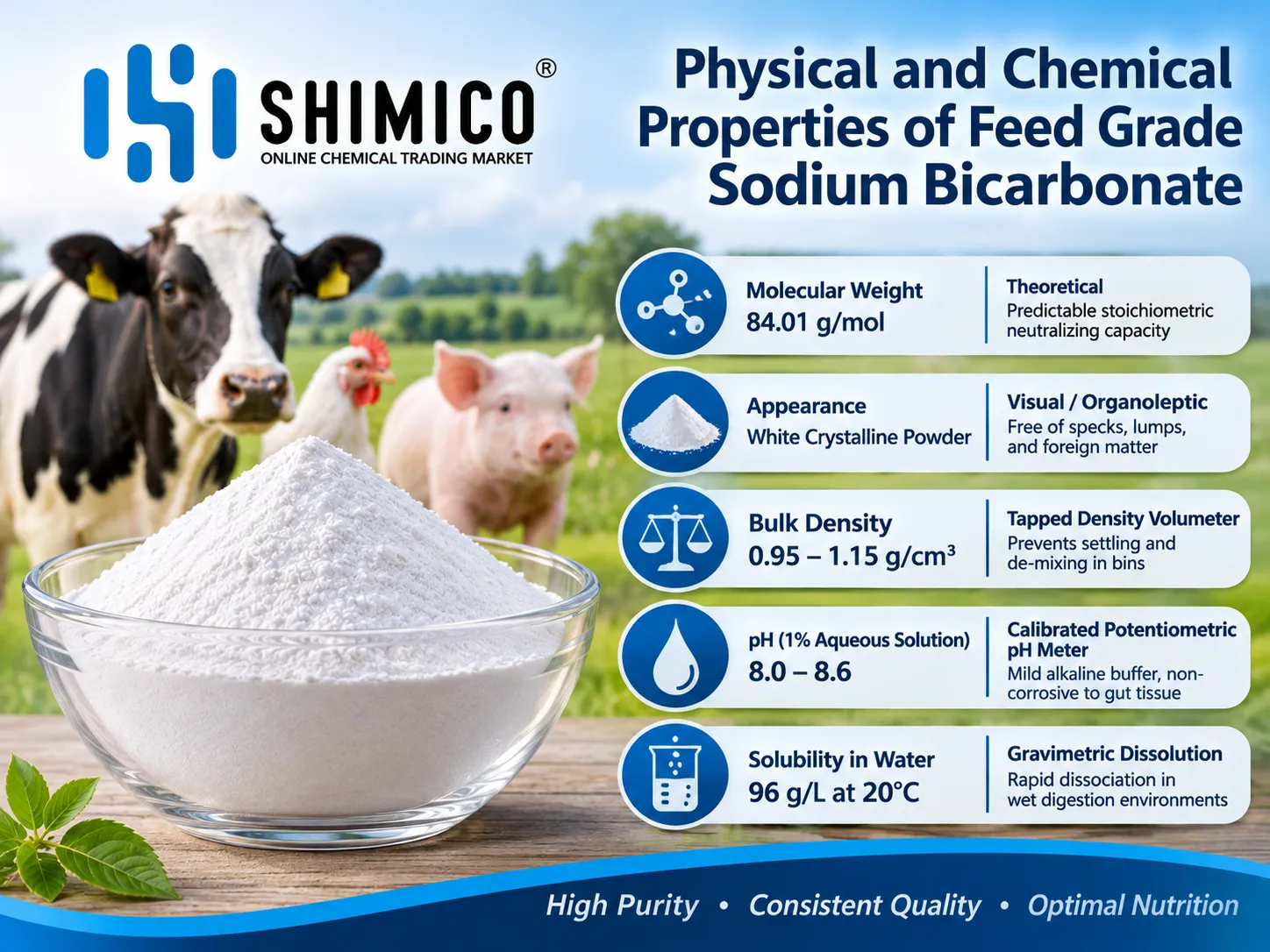
Feed grade sodium bicarbonate is a non-combustible, odorless, fine crystalline powder with an appearance ranging from translucent white granules to dense monoclinic crystals. The product dissolves completely in water at ambient temperatures, yielding a mildly alkaline solution with a pH of approximately 8.2 to 8.4 at 1% concentration.
Unlike raw industrial minerals, feed grade material is engineered to achieve a uniform bulk density between 0.95 and 1.15 g/cm3. This density closely matches standard vitamin-mineral premixes and cereal grains, eliminating particle segregation during mechanical conveyance and automated pneumatic batching.
Technical Specifications and Certificate of Analysis (COA)
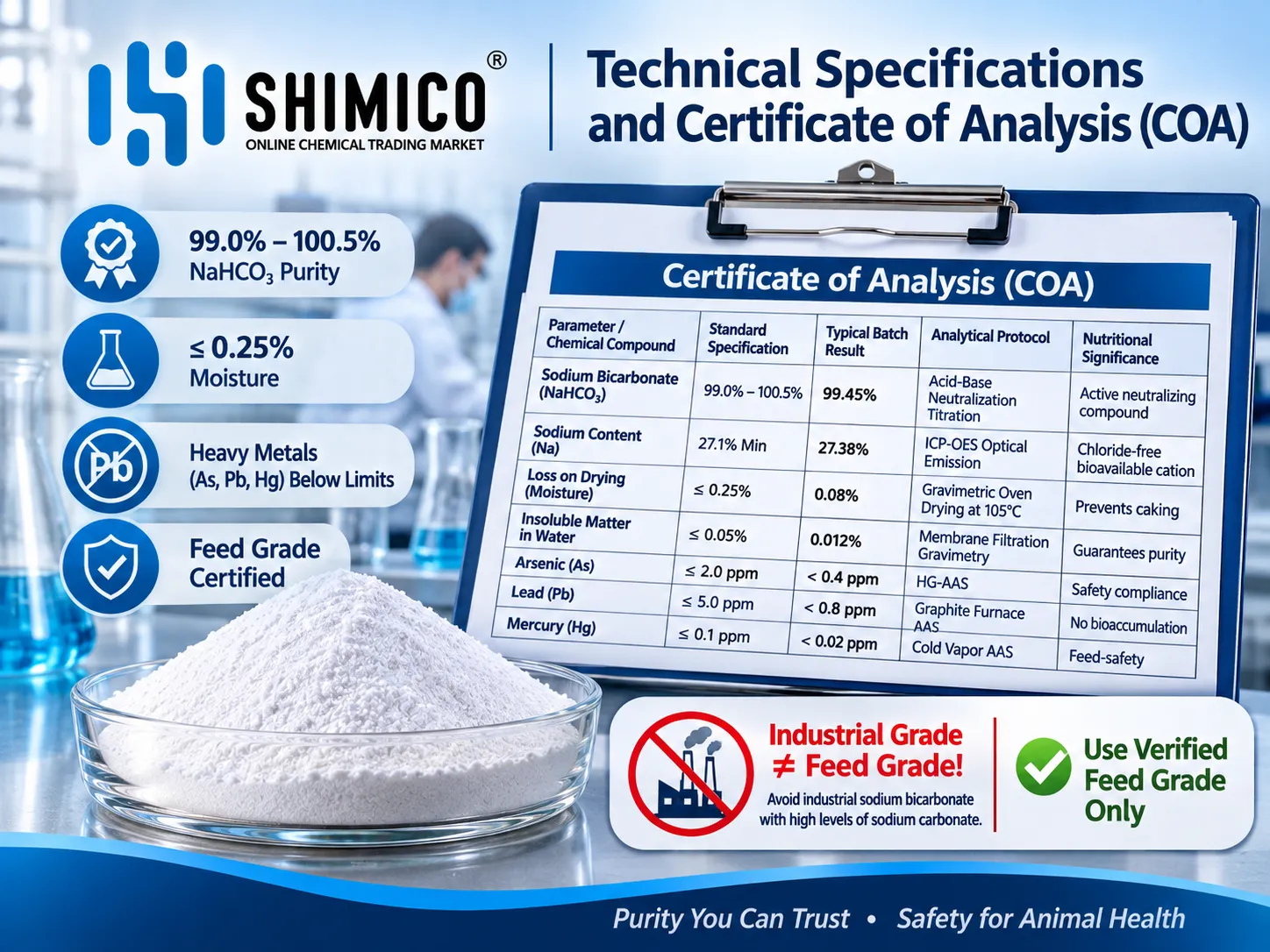
Commercial feed formulation software requires precise nutrient matrices. Every delivery of feed grade sodium bicarbonate must be accompanied by an authentic batch Certificate of Analysis (COA) confirming core assay purity and certifying the absence of heavy metal pollutants.
Trace minerals such as arsenic, lead, and cadmium must fall well below maximum regulatory limits defined by international animal health standards. The following representative COA illustrates the tight analytical parameters applied to each manufacturing run:
These analytical values verify that high-purity feed grade sodium bicarbonate provides complete chemical stability without risk of heavy metal contamination. In feed milling operations, maintaining particle moisture below 0.15% ensures smooth micro-dosing and prevents clumping inside pre-mix silos.
⚠️ Critical Verification: Industrial vs. Feed Grade:
Industrial grade sodium bicarbonate must never be used in feed manufacturing. Industrial grades permit higher limits of unreacted soda ash (sodium carbonate), which carries an aggressive pH near 11.0 that can cauterize oral mucosa, irritate esophageal tissue, and disrupt gut microflora. Always require verified feed grade certification before accepting bulk material.
Manufacturing Methods: Synthetic Solvay Route vs. Natural Trona Ore Extraction
Feed grade sodium bicarbonate is commercially produced through two primary industrial pathways: the synthetic Solvay carbonation process and the direct refining of natural trona ore deposits. Both methods yield high-purity NaHCO3 suitable for livestock consumption, though their physical crystal habits and processing footprints differ.
In the synthetic process, saturated sodium carbonate (soda ash) brine reacts with purified carbon dioxide gas under controlled pressure in carbonation towers. The sodium bicarbonate precipitates out as a crystalline slurry, which is separated by industrial centrifuges, washed to remove residual chlorides, and dried in fluidized bed driers:
“Na2CO3 + CO2 + H2O → 2 NaHCO3↓”
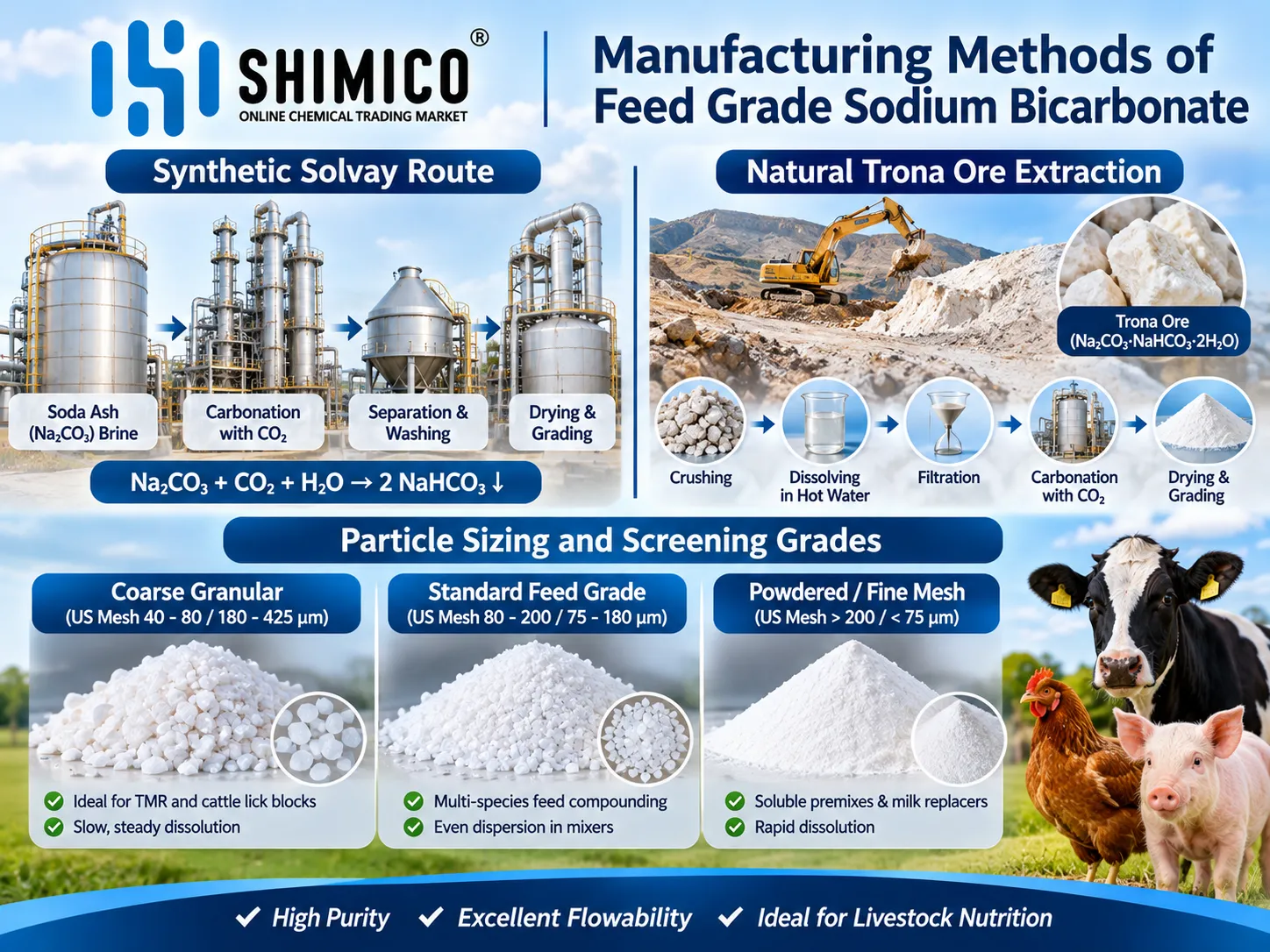
Natural extraction processes mine underground deposits of trona ore (sodium sesquicarbonate, Na2CO3·NaHCO3·2H2O). The raw ore is crushed, dissolved in hot water, filtered to remove insoluble shale, and treated with activated carbon to strip trace organics. The purified solution is carbonated with CO2 gas to crystallize feed grade sodium bicarbonate, which is then dried and graded by particle mesh size.
Particle Sizing and Screening Grades
Feed grade sodium bicarbonate is screened into coarse, granular, and fine grades. Selecting the correct particle size directly affects handling characteristics in feed mill operations:
- Coarse Granular (US Mesh 40 – 80 / 180 – 425 μm): Engineered for on-farm Total Mixed Rations (TMR) and free-choice cattle lick blocks. Resists wind drift and dissolves steadily over hours in the rumen.
- Standard Feed Grade (US Mesh 80 – 200 / 75 – 180 μm): The multi-species industry standard for commercial feed compounding and pelleted mash. Disperses evenly in high-speed paddle mixers without creating excess dust.
- Powdered / Fine Mesh (US Mesh > 200 / < 75 μm): Used in soluble premixes, milk replacers, and water-soluble livestock medications where rapid, complete dissolution is critical.
Recommended Dosage and Species-Specific Application Protocols
Accurate inclusion rates depend on basal dietary composition, forage-to-concentrate ratios, ambient environmental conditions, and production goals. In ruminant diets, inclusion rates must balance ruminal acid production with total diet cation-anion difference (DCAD).
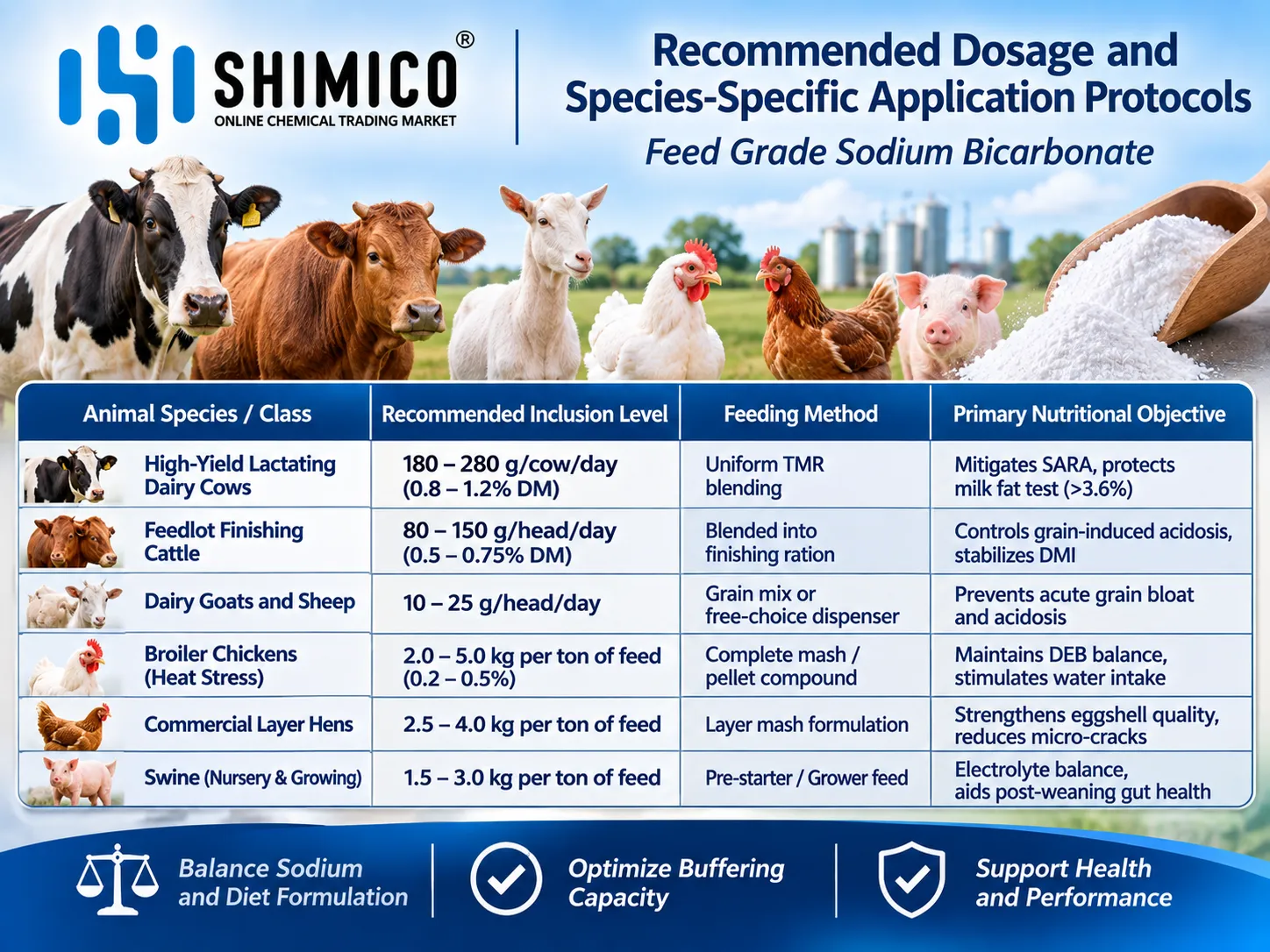
Dairy nutritionists recommend adding sodium bicarbonate at 0.75% to 1.25% of total dry matter (DM) intake, which equals 180 to 280 grams per head daily for lactating dairy cows. For finishing beef steers on steam-flaked corn or barley rations, 0.5% to 1.0% DM inclusion smooths ration transitions and reduces liver abscesses.
These dosage rates allow nutritionists to optimize buffering capacity without exceeding dietary sodium limits. When formulating rations, calculate the sodium contribution (27.3% Na) and adjust salt (NaCl) inclusion accordingly to avoid hypernatremia.
Packaging Configurations, Storage Protocols, and MSDS Safety Guidelines
Sodium bicarbonate is hygroscopic and vulnerable to atmospheric moisture uptake. Exposure to ambient air with relative humidity exceeding 75% triggers surface moisture adsorption, recrystallization, and severe packaging caking. Reliable moisture barriers are essential to protect product free-flow during shipping and storage.
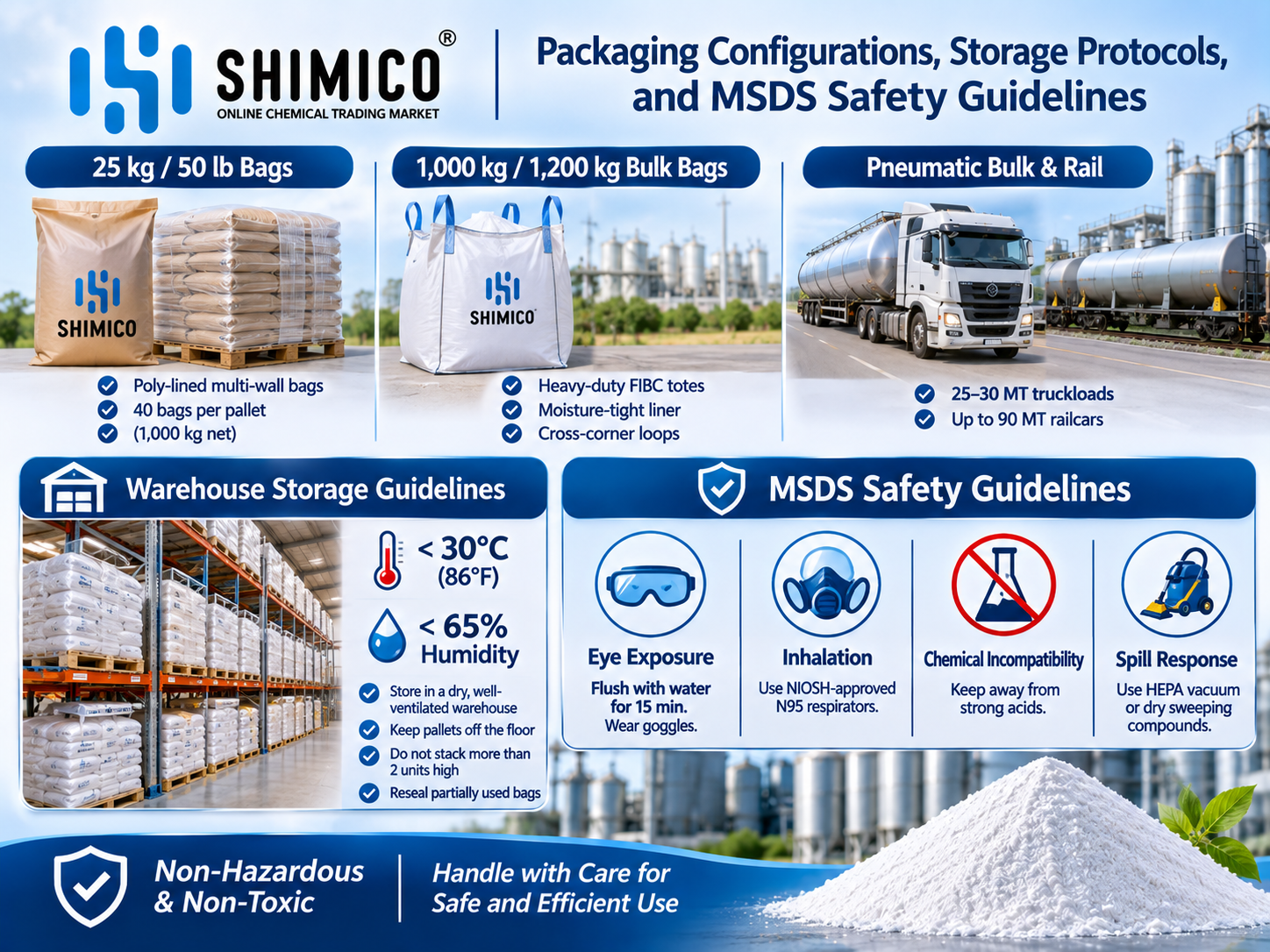
Commercial operations rely on three primary packaging formats tailored to warehouse infrastructure, shipping mode, and dosing equipment:
- 25 kg / 50 lb Poly-Lined Multi-Wall Bags: Three-ply extensible kraft paper with a heat-sealed 50-micron polyethylene inner liner. Stacked 40 bags per wooden or composite pallet (1,000 kg net), fully shrink-wrapped with UV-resistant stretch hooding.
- 1,000 kg / 1,200 kg Heavy-Duty Bulk Bags (FIBC Totes): Woven tubular polypropylene with cross-corner lifting loops, top duffle/spout fill, and bottom discharge chute. Equipped with moisture-tight polyethylene form-fit liners.
- Pneumatic Bulk Truckloads & Rail Tankers: Bulk road tankers (25 to 30 metric tons) or railcars (up to 90 tons) for automated transfer into feed mill storage silos via dry-air pneumatic blowers.
💡 Warehouse Storage Guidelines:
Store feed grade sodium bicarbonate in a dry, well-ventilated warehouse maintained below 30°C (86°F) and under 65% relative humidity. Pallets should be stored off warehouse floors on industrial racks. Never stack pallets more than two units high to prevent compaction caking on bottom tiers. Reseal partially used bags immediately to preserve crystal free-flow.
Material Safety Data Sheet (MSDS) Handling Standards
Under the OSHA Hazard Communication Standard (29 CFR 1910.1200) and GHS chemical labeling criteria, sodium bicarbonate is classified as a non-hazardous, non-toxic substance. However, bulk processing operations must enforce workplace dust control:
- Eye Exposure: Fine dust can cause mild mechanical irritation. Flush eyes with clean eyewash water for 15 minutes if contact occurs. Wear chemical splash safety goggles when emptying bags.
- Inhalation: Prolonged inhalation of airborne powder can dry and irritate the upper respiratory tract. Use NIOSH-approved N95 particulate respirators around high-dust tipping stations.
- Chemical Incompatibility: Keep material isolated from strong acids (e.g., sulfuric, hydrochloric, or phosphoric acid). Contact with acids triggers rapid decomposition into carbon dioxide gas, which can generate dangerous pressures in sealed mixing vessels.
- Spill Response: Clean dry spills using industrial vacuum systems equipped with HEPA filtration, or sweep using dry anti-dust sweeping compounds. Avoid high-pressure water washing into storm runoff to protect drainage systems.
International Comparison: Tier-1 Global Producers vs. Regional Manufacturers
Sourcing feed grade sodium bicarbonate requires evaluating manufacturing consistency, plant certifications, shipping logistics, and pricing. Major global brands operate dedicated chemical synthesis facilities and underground trona mines that supply the world’s commercial feed mills.
Major Western producers provide premium brand recognition and documented trace mineral limits, but command premium price points and long international shipping lead times. Regional manufacturers operating synthetic carbonation plants offer competitive pricing and flexible overland delivery, making them strong supply partners when backed by verified third-party COAs.
Bulk Commercial Procurement Guide and Global Price Benchmarks
Purchasing feed grade sodium bicarbonate at industrial volume requires navigating seasonal price shifts, global energy trends, and shipping logistics. Raw soda ash costs and energy-intensive carbonation cycles directly drive spot prices.
Commercial spot prices for feed grade sodium bicarbonate typically range between 280 and 420 USD per metric ton FOB basis for bulk full-container-load (FCL) purchases. Palletized 25 kg or 50 lb bags carry a small premium over 1-ton jumbo totes due to extra bagging, palletizing, and protective shrink-wrap films:
B2B Commercial Sourcing Checklist
Industrial procurement teams should verify these commercial criteria before finalizing contracts:
- Batch-Specific COA Verification: Confirm that the Certificate of Analysis includes testing for sodium assay (≥ 99.0%), moisture (≤ 0.25%), lead (≤ 5 ppm), and arsenic (≤ 2 ppm) from an accredited laboratory.
- Anti-Caking Additives: Check with the supplier whether anti-caking additives (like magnesium oxide or precipitated silica) have been added, or if the product is 100% pure crystalline bicarbonate.
- Incoterms Delivery Point: Ensure quotes explicitly define delivery terms—FOB loading port, CIF destination terminal, or DDP direct to your feed mill warehouse door.
- Lead Times and Production Date: Prioritize lots produced within 60 days of dispatch to maximize warehouse shelf-life and avoid storage clumping.
Frequently Asked Questions (FAQ) – Feed Grade Sodium Bicarbonate
Can feed grade sodium bicarbonate replace forage roughage in dairy cattle diets?
No. Sodium bicarbonate serves as a chemical buffer, not an effective fiber source. While it neutralizes volatile fatty acids in the rumen, it cannot physically stimulate the ruminal wall to trigger cud-chewing or maintain the fibrous rumen mat. Formulations must maintain adequate physically effective neutral detergent fiber (peNDF) alongside buffer additions to ensure normal digestive motility.
What is the primary difference between sodium bicarbonate and sodium sesquicarbonate?
Sodium sesquicarbonate is a natural double salt consisting of sodium bicarbonate and sodium carbonate (Na2CO3·NaHCO3·2H2O). Pure sodium bicarbonate contains roughly 27.3% sodium and 72% active bicarbonate ions, whereas sesquicarbonate contains more carbonate ions and roughly 30.5% sodium. Pure bicarb dissolves faster in ruminal fluid, making it the preferred choice for rapid acute ruminal buffering.
How does feeding sodium bicarbonate impact herd water consumption?
Dietary sodium intake stimulates natural thirst via systemic osmotic regulation. Increased clean water consumption helps animals dissipate body heat through respiration and urine output, supporting herd hydration and dry matter intake during periods of heat stress.
What quality certifications are essential when procuring feed grade sodium bicarbonate?
International feed manufacturers must verify that suppliers hold accredited certifications such as FAMI-QS (Feed Ingredients Quality System), GMP+ (Good Manufacturing Practice), or ISO 22000. These certifications ensure rigorous testing for heavy metal residues, dioxins, and microbiological contaminants, while maintaining end-to-end lot traceability.
Can sodium bicarbonate be combined with other dietary buffers like magnesium oxide?
Yes. Combining sodium bicarbonate with feed grade magnesium oxide (MgO) creates an effective dual-buffer system. Sodium bicarbonate provides rapid neutralization in ruminal fluid, while magnesium oxide dissolves more slowly, extending buffering protection into the lower digestive tract. A standard ratio is 2 to 3 parts sodium bicarbonate to 1 part magnesium oxide.
🚀 Secure Reliable Feed Grade Sodium Bicarbonate Supplies with Shimico
Access certified, high-purity animal nutrition compounds directly from verified industrial manufacturers. Compare live spot pricing, request batch-specific COAs, and streamline bulk shipping on
Shimico — the dedicated international marketplace for industrial chemicals and agricultural inputs.
✅ Strict Quality Verification: Full laboratory COA, heavy metal testing, and batch traceability with every order.
✅ Flexible Packaging Formats: Supplied in 25 kg bags, 50 lb multi-ply sacks, and 1,000 kg heavy-duty jumbo totes.
✅ Direct B2B Sourcing: Competitive FOB and CIF quotes for commercial feed mills, blenders, and export traders.
✅ Complete Agricultural Portfolio: Explore our verified listings for Bulk Agricultural Fertilizers, Technical Urea Solutions, and Industrial Chemicals.
Guaranteed particle screening, low dusting profiles, and professional supply chain execution for modern livestock health operations.
Scientific References and Technical Standards:
- National Research Council (NRC). Nutrient Requirements of Dairy Cattle, 8th Revised Edition. National Academies of Sciences, Engineering, and Medicine. Washington, DC: The National Academies Press.
- Erdman, R. A. (1988). “Dietary Buffering Requirements of the Lactating Dairy Cow: A Review.” Journal of Dairy Science, 71(12), 3246-3266.
- Association of American Feed Control Officials (AAFCO). Official Publication: Definitions of Mineral Feed Ingredients (Section 57: Sodium Bicarbonate).
- Mongin, P. (1981). “Recent Advances in Dietary Anion-Cation Balance: Applications in Poultry.” Proceedings of the Nutrition Society, 40(3), 285-294.
- European Feed Ingredients Safety Code (FAMI-QS). Code of Practice for Specialty Feed Ingredients and Their Mixtures, Version 6.
Last Seen


Users Comment
Food Grade vs Industrial vs Feed Grade Sodium Bicarbonate: Which Grade
Sulphur Import to Pakistan: Suppliers, Documents and Shipping Steps
Top 10 Sodium Bicarbonate Suppliers in India
Sodium Bicarbonate Price: Cost per Ton, per kg and Bulk Market Rates
Iran Sulfur Price: Domestic Market, FOB Export Price and Price per Ton
Sulfur Export Price FOB Iran: Bulk Sulfur Price per Ton
Sulfur Fungicide: How It Works, Uses and Safety Precautions
Types of Sulfur Fertilizers: Powder, Granular, Liquid & Sulfate Forms
Sulfur for Soil: Benefits, Uses and How to Apply It
Sulphur 80 WDG: Technical Specifications, Uses & Bulk Supply
Sulfur WDG: Water Dispersible Granules, Uses & Bulk Supply
Sulphur WDG Pakistan: Bulk Supply, Prices & Import Guide