


Sulphur 80 WDG: Technical Specifications, Uses & Bulk Supply
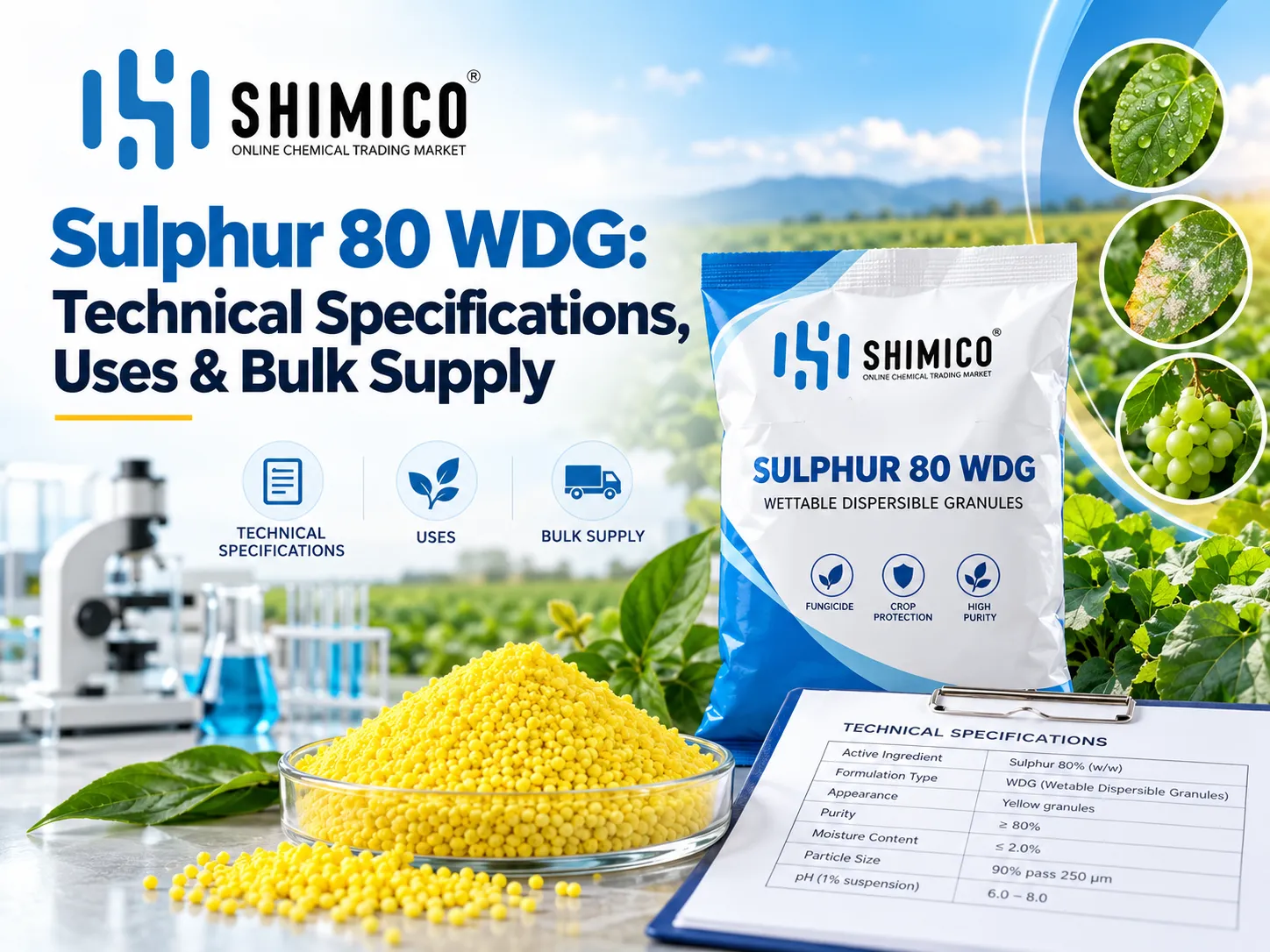
Two products can both say Sulphur 80 WDG on the quotation and still be very different purchases. The sulphur percentage is only one line of a purchasing specification. Dispersibility, the actual batch certificate of analysis, local registration, packaging and shipping terms can determine whether a shipment is acceptable to an importer or distributor. For that reason, a reliable wholesale order begins with an exact product identity, not a price screenshot.
This page is for agricultural importers, procurement managers, wholesale distributors, and firms sourcing Sulphur 80% water-dispersible granules by the pallet or metric ton. It explains the active ingredient, manufacturing, laboratory testing, crop-protection uses, 25kg bag requirements and Sulphur 80 WDG price per ton calculations. Where dosage or permitted use is discussed, the product-specific registered label takes precedence.
What Is Sulphur 80 WDG?
Sulphur 80 WDG is a formulated agricultural product containing 80% elemental sulphur by weight. WDG means water-dispersible granules: the dry granules break apart when mixed with water and form a suspension of fine sulphur particles. They do not dissolve into a clear liquid. The 80% figure describes the active ingredient content, not the granule diameter, field application rate, or product registration.
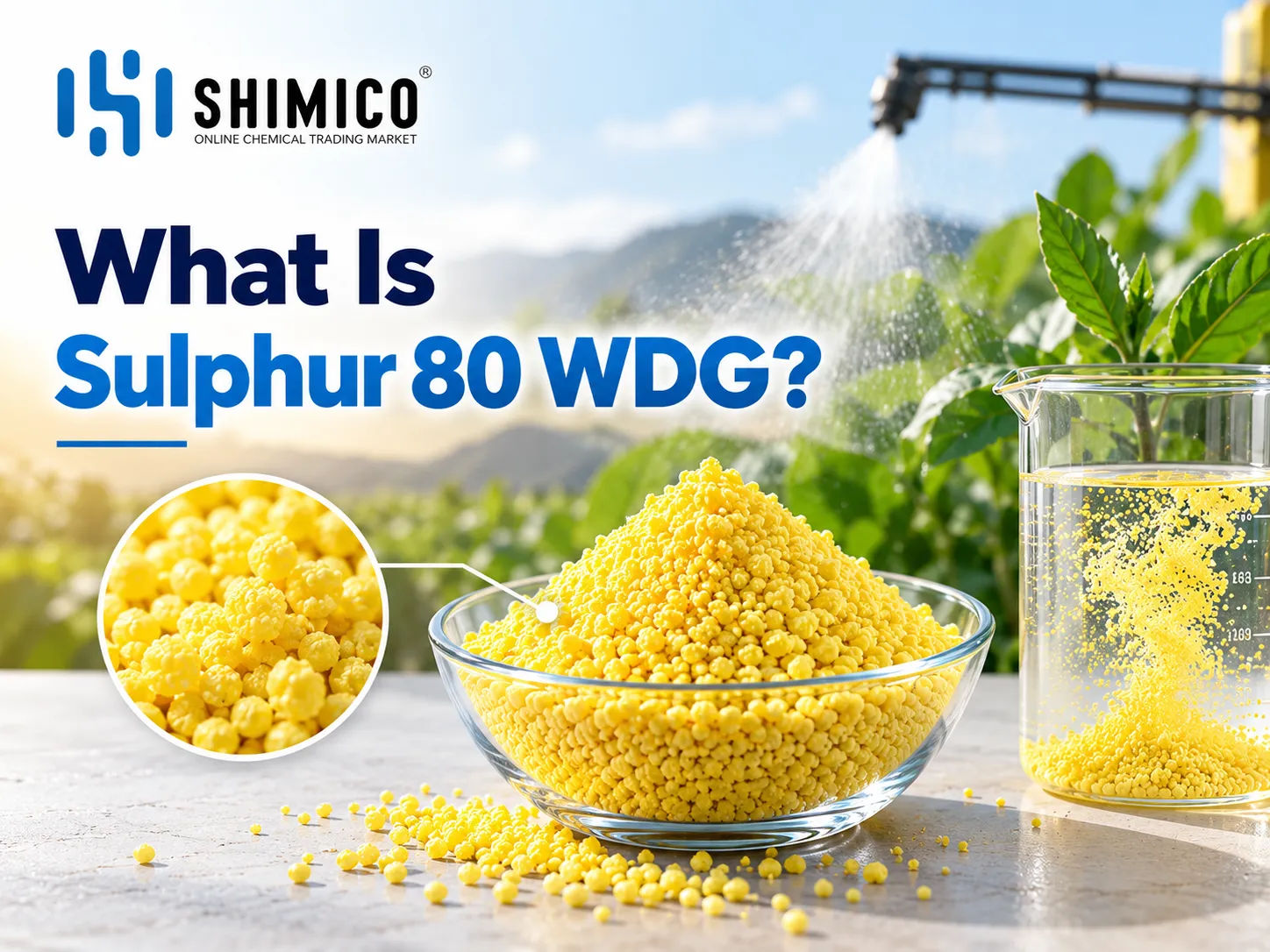
Sulphur 80 WDG, WG and dry flowable terminology
WG is the recognized formulation code for water-dispersible granules. WDG is the common descriptive shorthand, while DF, or dry flowable, appears on some commercial sulphur products. These descriptions may refer to comparable physical formats, but the label and manufacturer technical data sheet determine which product is being purchased. The remaining 20% of an 80% formulation comprises other components, such as materials selected to support granule structure, wetting and dispersion; its precise composition is product-specific.
Why Sulphur 80 WDG is different from raw sulphur
Raw sulphur prills and industrial granules may contain a higher percentage of sulphur but are generally not formulated for spray tanks. A buyer who substitutes prills for water-dispersible granules may encounter coarse particles, settling and blocked filters. The formulation, not just the chemical name, makes the difference. For a broader overview of grades, see Sulfur WDG grades and formulations.
Who buys Sulphur 80 WDG in bulk?
Typical enquiries come from registered agrochemical distributors, importers, product formulators, private-label buyers and agricultural procurement teams. They need different evidence. A distributor checks approved claims and consumer pack labels; an importer checks certificates, origin and clearance requirements; a large purchaser looks at batch consistency, price per metric ton and delivery obligations. A qualified quotation should answer the particular buyer rather than assume every country accepts the same product.
Sulphur 80 WDG Physical and Chemical Properties
Elemental sulphur has chemical symbol S and CAS number 7704-34-9. In a WDG formulation, the visible product is typically yellow or yellowish free-flowing granules. Size, apparent density, dustiness and moisture content vary by manufacturing process. A finished formulation must be assessed as a formulated pesticide or agricultural product, not as pure elemental sulphur alone.
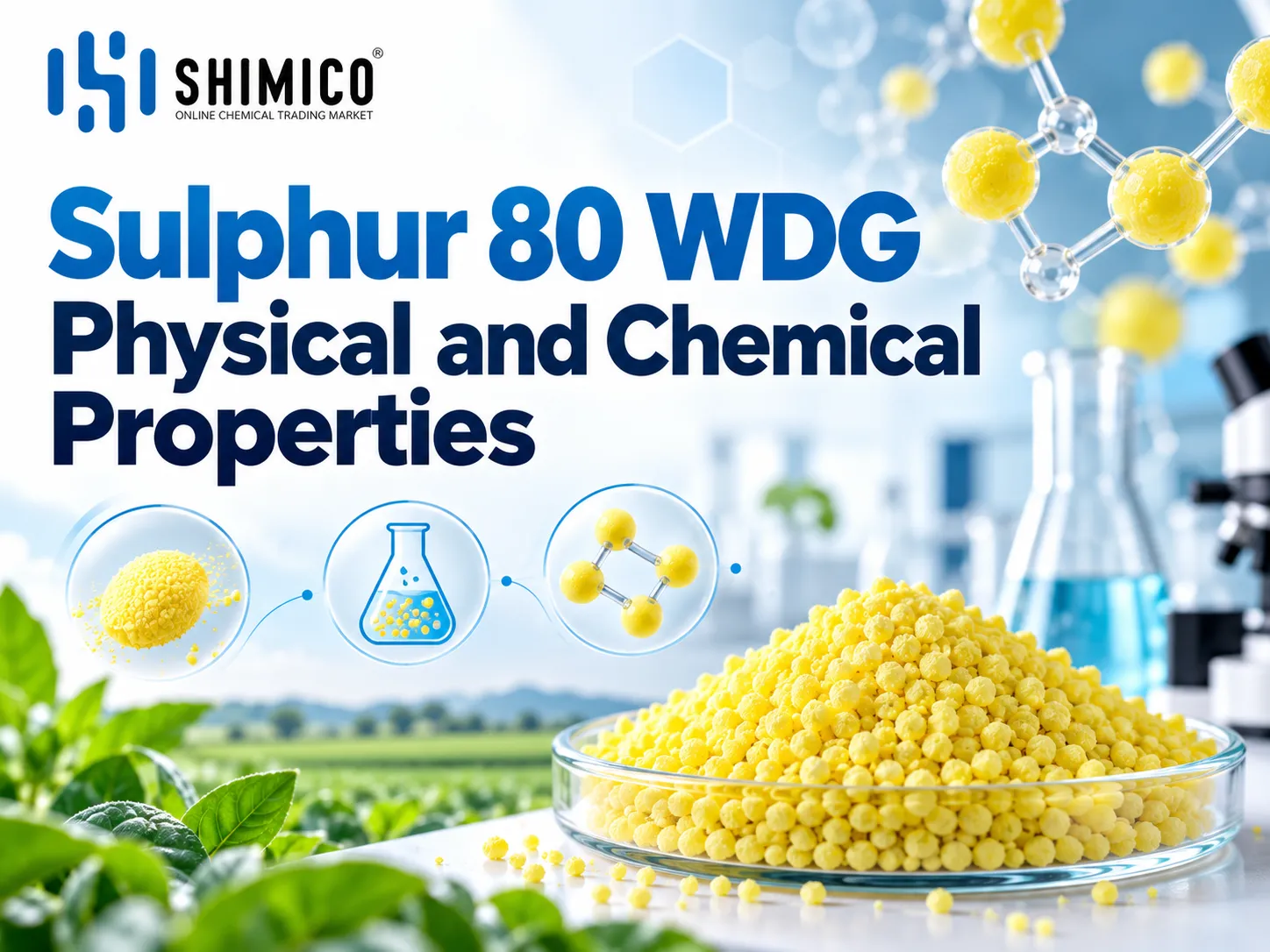
Sulphur 80 WDG composition and granule appearance
The nominal formulation contains 80% elemental sulphur by mass. Buyers should verify the exact declaration with the offered label, TDS and batch COA. A sample may look uniformly yellow yet still vary in its fine-particle distribution after dispersion. Likewise, a darker or lighter shade is not a substitute for a chemical assay. Hard lumps, excessive fines, damaged packaging or signs of moisture ingress merit further inspection.
Wettability, dispersibility and suspensibility
Wettability concerns how readily water makes contact with the product. Degree of dispersion describes how effectively the granules break apart. Suspensibility assesses the fraction of active material remaining suspended under defined test conditions. These properties should be specified with test methods, water conditions and acceptance criteria. A claim such as “instant dispersion” cannot replace a reproducible laboratory result.
Sulphur 80 WDG dustiness, flow and storage behaviour
Dry products can create handling issues if granules break down into airborne fines. Flow behaviour affects measuring and packing, while moisture may lead to agglomeration or caking. Before signing a contract, confirm whether dustiness, flowability and stability are included in the agreed specification. A product designed for a humid export destination also needs suitable moisture-resistant packaging and a documented storage procedure.
Sulphur 80 WDG Technical Specifications and COA
The most useful technical specification is one that identifies a product, provides numerical limits when applicable, cites methods and can be tested on a representative shipment sample. The FAO/WHO pesticide specification programme provides a reference framework for water-dispersible granules (WG), including dispersion, suspensibility and wet sieve testing. It does not automatically certify an individual supplier or establish that every sulphur product passes the same numerical limits.
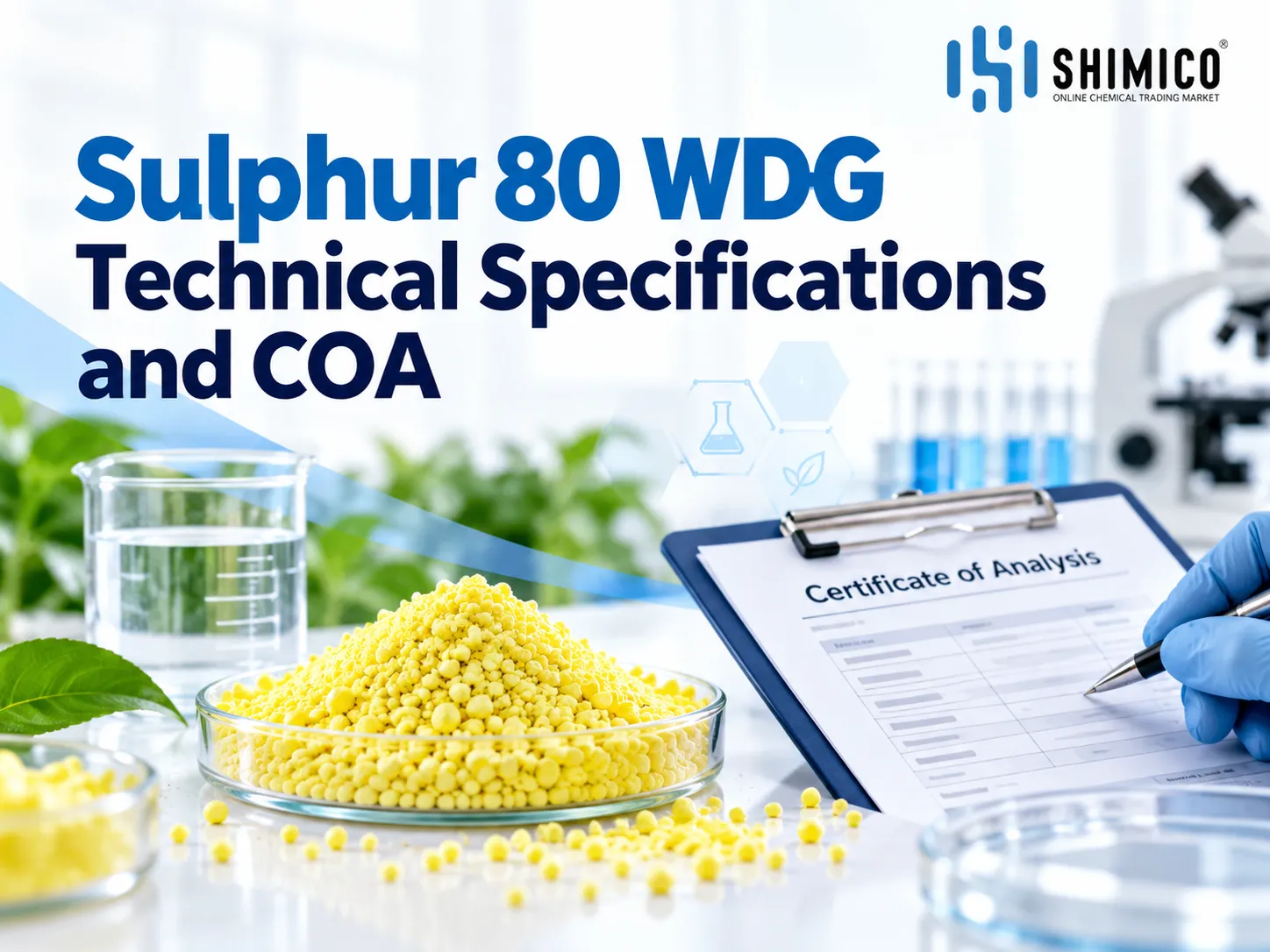
What a batch Certificate of Analysis should show
A proper COA identifies the production batch, analysis date, test parameters, actual results and, where relevant, method references. Ask for the certificate covering the shipment lot rather than a sales brochure or an unfilled template. If several lots are combined in a container, confirm how lot identification and sampling will be handled. The purchasing contract should state the acceptance procedure if a batch does not meet its documented specification.
TDS, SDS and registration documents
The technical data sheet describes the formulation and technical characteristics. The safety data sheet describes hazards, protective measures, storage, spill response and transport considerations. The approved product label specifies lawful agricultural uses, doses, precautions and restricted crops in the destination market. None of these documents can substitute for the others, and an SDS alone is not proof of agricultural registration.
Independent sampling and inspection
A pre-shipment sample should be representative, traceable and securely retained. For a first shipment or high-volume contract, parties may agree on independent analysis of sulphur content, wetting, suspensibility and sieve residue. Name the testing laboratory and dispute-resolution rules before goods are loaded. If an inspection certificate is requested, check exactly which measurements it covers; “inspection passed” is too vague for a technical purchasing contract.
For contract drafting, request all parameters relevant to the approved formulation in writing. The following table describes purchasing evidence rather than invented test limits. Each report must use the exact offered product, relevant method and batch.
| Parameter | What it establishes | Evidence |
|---|---|---|
| Active ingredient | 80% elemental sulphur nominal declaration | Batch COA, registered label |
| Physical form | Water-dispersible granules (WG) | TDS and sample |
| Wettability | Ability of granules to become wetted | Test method and result |
| Degree of dispersion | Breakup and dispersion in water | Agreed method and measured result |
| Suspensibility | Retention of dispersed solid under test conditions | Method, limits and batch result |
| Wet sieve residue | Presence of oversized residual particles | Sieve method, test result |
| Moisture and storage stability | Caking and handling suitability | Stability data and COA |
| Dustiness and flow properties | Safety and handling characteristics | Agreed product specification |
| Traceability | Lot number, production date, pack marks | Bag sample and packing list |
Sulphur 80 WDG Uses in Agriculture
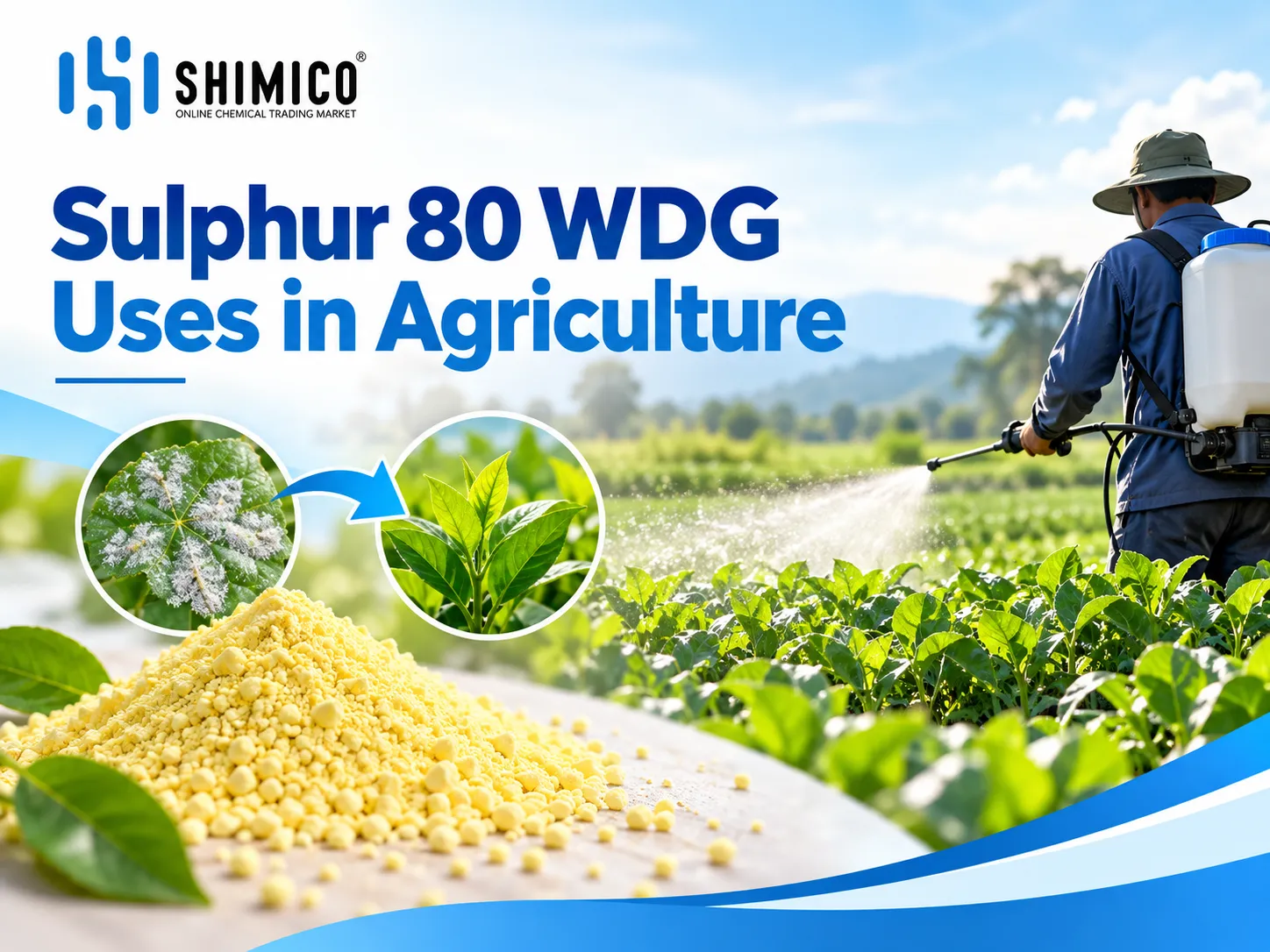
Registered sulphur WDG formulations are used in crop protection, most often as contact or protectant fungicides. Some product labels also specify miticidal or insecticidal applications. An 80% concentration is not, by itself, authorization to use a product on any crop, disease or pest. Importers must check the individual registered label in their intended market.
Sulphur 80 WDG fungicide and powdery mildew applications
Powdery mildew is among the diseases addressed by some registered sulphur products. Growers may encounter sulphur-based options in fruit, vegetable, ornamental and field-crop programmes, but the actual crop and pathogen list is product-specific. The Drexel Sulfur 80 WDG product page provides an example of a manufacturer listing supported uses in its market. Its label must not be copied to unrelated brands or countries.
Sulphur 80 WDG mite control and crop-specific claims
Some sulphur formulations are labeled for certain mites. Their effectiveness and legal claims depend on the pest, timing, crop and product registration. A B2B seller should request an approved local label before advertising universal “mite control” or making broad yield promises. This protects distributors from promoting uses that may not be approved.
Crop safety and high-temperature restrictions
Sulphur products can cause phytotoxicity in some crops or under hot conditions. Incompatibilities and intervals around horticultural oil treatments may also apply. The registered product label governs temperature warnings, timing, maximum use frequency, worker protection and crop restrictions. A global wholesale page should direct buyers to those product-specific instructions instead of offering a single universal rule.
Sulphur 80 WDG Dosage and Application Guidelines
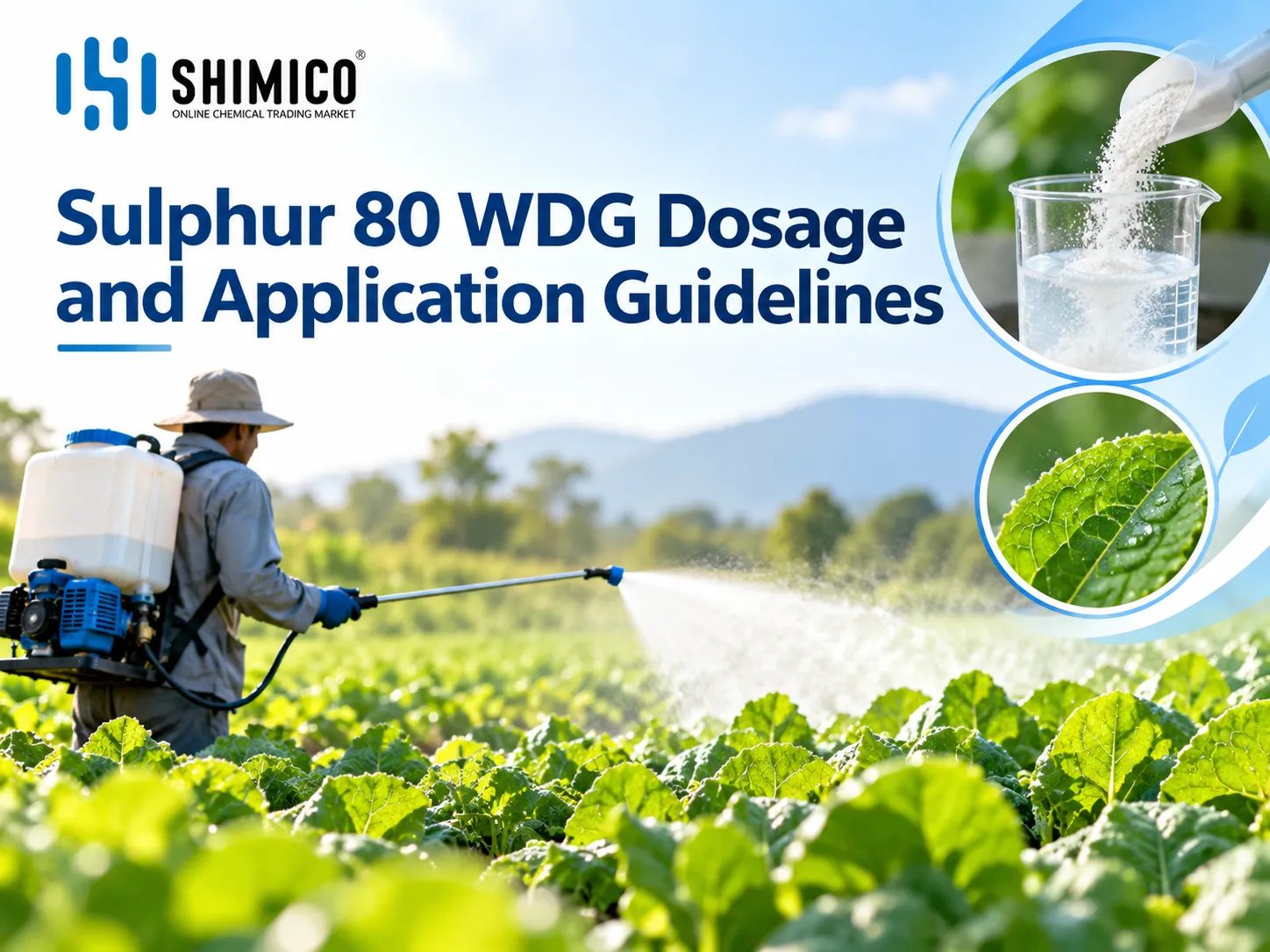
Queries such as “sulphur 80 wdg dosage per litre” are common because growers need practical mixing instructions. Yet a global dosage number would be misleading: the lawful amount depends on the product label, country, crop, pest, equipment and local rules. A concentration percentage does not determine the application rate.
Why Sulphur 80 WDG dosage per litre varies
A rate may be expressed by spray volume, treated area or another label-specific unit. The same active ingredient may have different registered rates for different crops and pests. Spray concentration also cannot be interpreted separately from total water volume and covered acreage. Distributors should publish only rates belonging to the locally registered product being sold.
Water mixing, agitation and equipment checks
Water-dispersible granules are designed to disintegrate and disperse in water when mixed according to the product instructions. Correct tank-filling sequence, agitation and filter compatibility matter. Before field use, read the label, confirm equipment suitability and follow local handling guidance. Never use ordinary sulphur prills as a substitute for WG material merely because both contain elemental sulphur.
Can Sulphur 80 WDG be mixed with NPK or oil products?
Do not assume compatibility with an NPK fertilizer, pesticide or spray oil. Crop injury, physical incompatibility, pH conditions and regulatory restrictions can differ. A jar test, where appropriate and permitted by instructions, may identify obvious physical separation but cannot establish biological safety or legal compatibility. Follow both product labels and seek advice from a qualified local agronomist before making tank-mix recommendations.
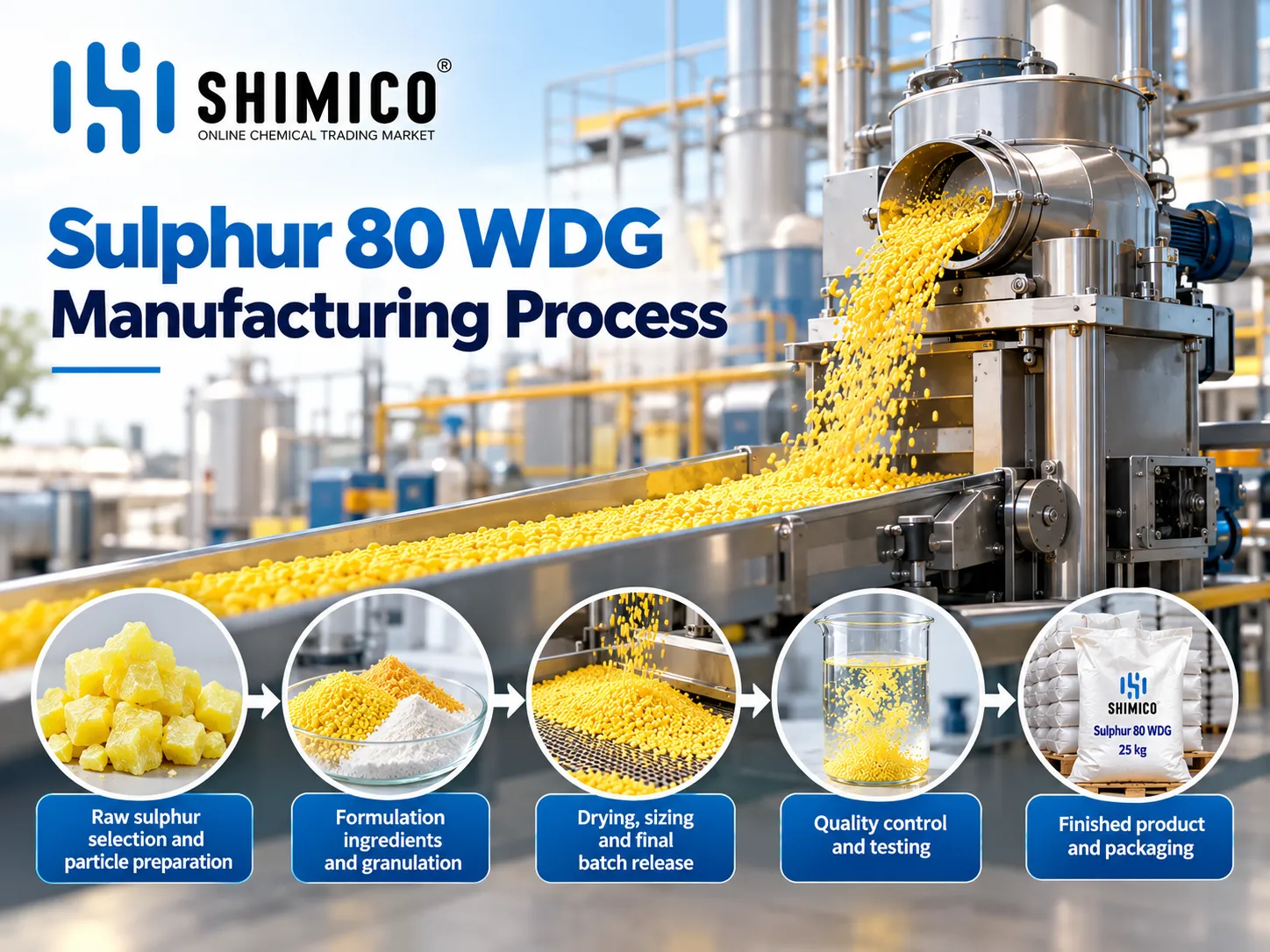
Sulphur 80 WDG Manufacturing Process
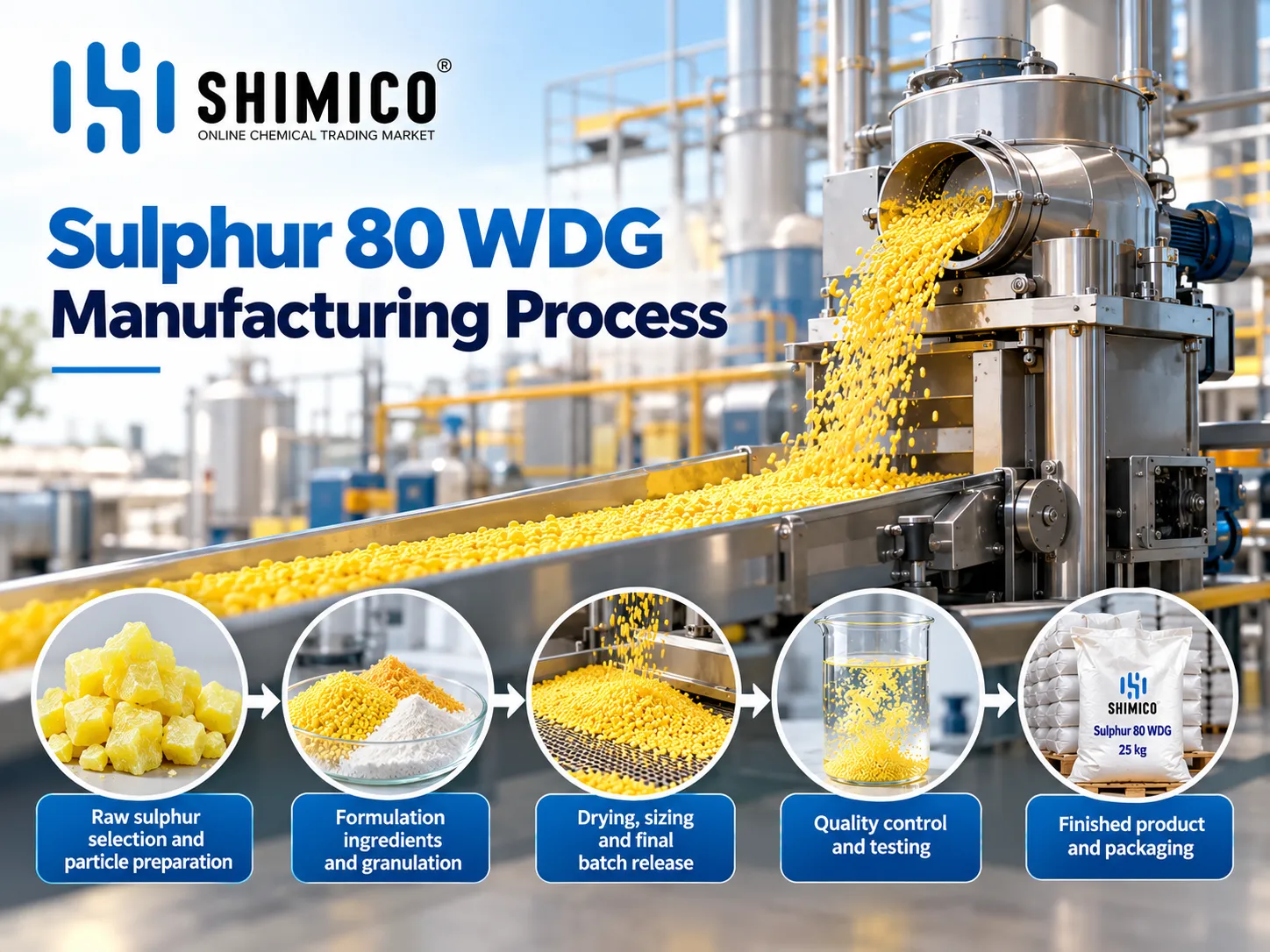
Sulphur 80 WDG manufacturing converts sulphur feedstock into a stable, water-dispersible agricultural formulation. Manufacturers may use different milling, blending and granulation systems. A single process diagram should not be presented as universal or as evidence that a named supplier owns a particular production facility.
Raw sulphur selection and particle preparation
Incoming feedstock needs defined identity and purity controls. Manufacturers may reduce sulphur particle size to meet the targeted behaviour in the eventual suspension. Sulphur dust can present combustible-dust hazards in industrial handling, so production requires suitable process engineering, ventilation and protective systems. Feedstock quality alone does not ensure good dispersion once granulated.
Formulation ingredients and granulation
A WDG may include wetting, dispersing and binding ingredients selected for its process. The formulation is then made into granules that are manageable during filling and transportation yet break apart appropriately in water. Granulation routes differ between factories, so terms such as spray drying must not be described as compulsory steps for all products. The finished composition is defined by the manufacturer registered formulation.
Drying, sizing and final batch release
Drying where applicable, granule classification, sampling and final testing help manufacturers target suitable moisture, particle characteristics and consistency. Before release, the lot should be identified and checked against the approved or agreed specification. Buyers comparing a manufacturer with a trading exporter should ask who actually performs batch testing and whose name appears on the COA.
Sulphur 80 WDG vs WP, SC and Sulphur 90 WDG
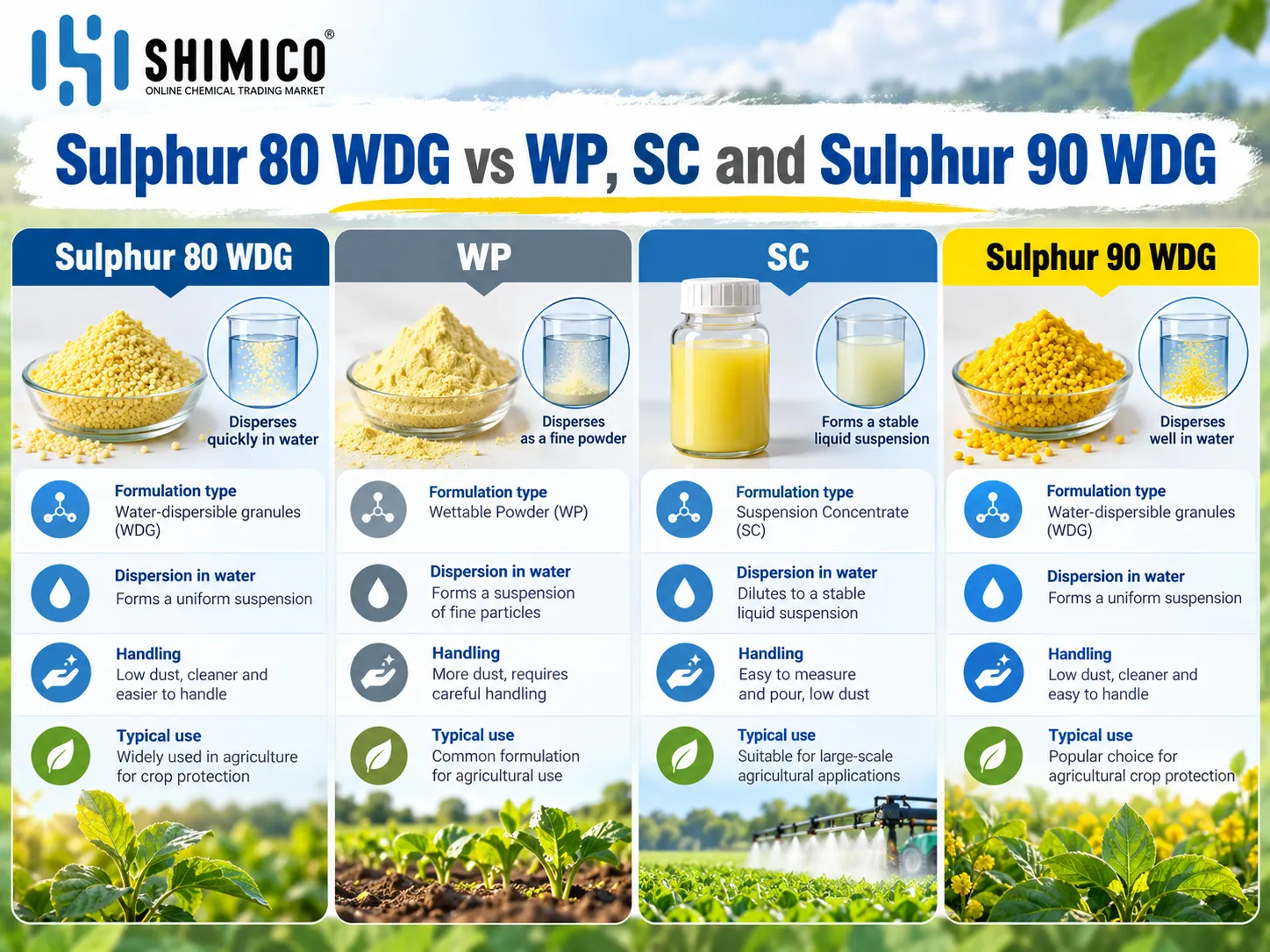
Products sharing sulphur as an ingredient can differ markedly in physical format and handling. Sulphur 80 WDG is a dry water-dispersible granule; WP is a wettable powder; SC is a liquid suspension concentrate; a 90 WDG is a different nominal sulphur concentration. Choosing among them requires attention to the application, registration, shipping format and technical performance.
Sulphur 80 WDG vs sulphur wettable powder (WP)
Wettable powder is supplied as a finely divided powder intended to disperse in water. It may generate more airborne dust during measuring than an appropriately formulated low-dust granule, although actual dustiness depends on the product. WG can provide easier handling, but a claim of superior field efficacy is not justified by physical form alone.
Sulphur 80 WDG vs suspension concentrate (SC)
SC is a liquid product with solid active material held in suspension. It brings different container sizes, handling requirements and stability considerations. Transport costs may differ because an SC includes its liquid carrier. Buyers should compare the active ingredient concentration, product registration, use instructions and total delivered cost.
Sulphur 80 WDG vs 90 WDG and sulphur prills
90 WDG indicates a higher nominal active ingredient content when that product is genuinely marketed and registered. It does not guarantee better crop outcomes. Industrial prills lack the intended tank-dispersing formulation and are not automatically interchangeable. When reviewing all Shimico sulphur product listings, confirm which are spray formulations and which are raw sulphur products.
The table below separates the formulation types in a purchasing context. Physical form can shape handling and freight, but approved uses must still be checked on the exact label.
| Product | Supplied form | Buyer check |
|---|---|---|
| 80 WDG / WG | Dry dispersible granules | Verify 80% declaration and WG testing |
| Wettable powder (WP) | Fine dry powder | Dust and suspension characteristics |
| Suspension concentrate (SC) | Liquid suspension | Liquid packaging and storage requirements |
| 90 WDG / WG | Higher declared concentration where offered | Verify formulation and registration |
| Sulphur prills | Industrial or fertilizer solids | Not an automatic spray-grade substitute |
Sulphur 80 WDG Packaging, Storage and Shelf Life
Packaging is part of the commercial specification, not a decorative afterthought. Sulphur 80 WDG can be offered in bag sizes suited to wholesale and distribution channels, with 25 kg sacks a common requested format. Exact pack sizes, pallet arrangements and any private-label capability must be confirmed for the selected supplier.
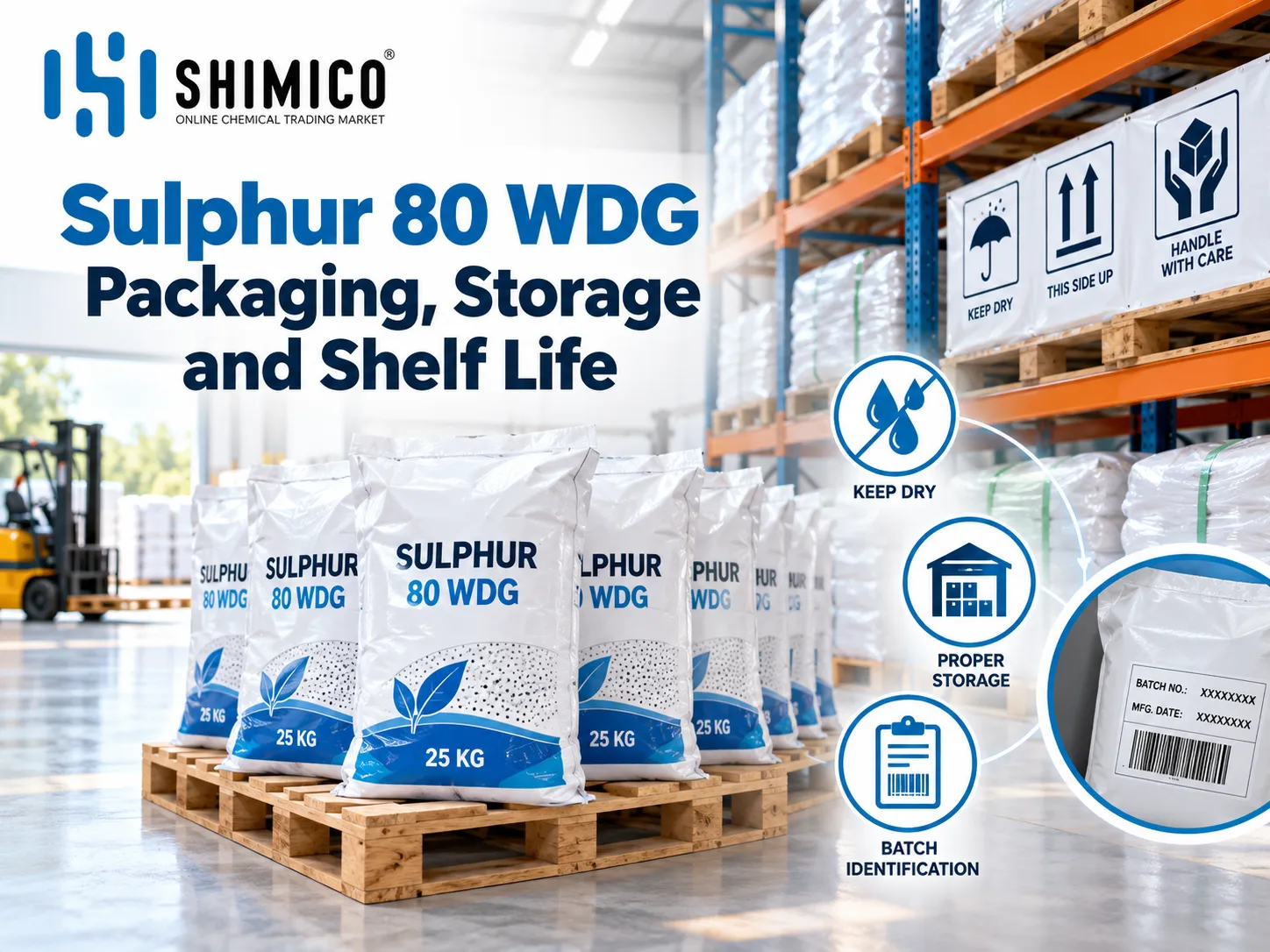
Sulphur 80 WDG 25kg bags for bulk orders
A quotation should identify net bag weight, inner liner, outer bag material, moisture resistance, palletization and printed label. At a purely mathematical level, 24 metric tons divided into 25 kg bags equals 960 bags before accounting for pallets and tare weight. This example is not a promise that a specific container will accept 24 MT; actual allowable payload depends on equipment, port and transport rules.
Safe storage of Sulphur 80 WDG
Keep packages intact and follow the manufacturer SDS and label. Avoid preventable exposure to moisture, inappropriate heat and incompatible materials. Warehouses should be arranged to permit inspection, stock rotation and lot identification. Moisture-damaged granules may cake or become difficult to disperse, so affected bags should be quarantined for assessment rather than simply mixed into undamaged stock.
How long does Sulphur 80 WDG last?
A shelf-life claim must be tied to the exact registered formulation, storage study, manufacturing date and labeling requirements. There is no safe universal expiry period for every 80% WDG product. Request the manufacturer documented stability period and conditions; compare those dates with the proposed delivery schedule and expected time in inventory.
Sulphur 80 WDG Manufacturers and Wholesale Suppliers
A bulk purchaser may buy from a manufacturer, authorized distributor, exporter, broker or trading marketplace. These are not identical roles. The buyer should identify the actual formulator, contracting seller, exporter of record and the party providing legally required product documentation. A marketplace listing alone is not proof of manufacturing capacity.
How to assess a Sulphur 80 WDG manufacturer
Ask for the legal manufacturer name, plant address when appropriate, exact formulation, current TDS, batch COA, SDS, evidence of registration and sample traceability. If repeat purchases are expected, request evidence of consistent batch testing and a process for nonconforming material. A manufacturer may offer private-label services, but branding permissions and regulatory responsibility must be agreed separately.
Comparing wholesale suppliers and exporters
Compare offers against the same grade, moisture-resistant pack, sample acceptance criteria, order quantity, origin, lead time and Incoterm. Ask whether quoted prices include inner liners, palletization, factory loading, inspection or export paperwork. Offers that look cheaper on a one-line message can become costly if registration documents or compliant labels are missing.
OEM supply, private label and product registration
Private-label sourcing may appeal to distributors, but the destination country registration may require a named manufacturing source, approved label and formulation identity. A different brand name does not necessarily transfer an existing approval. Do not print unverified origin, regulatory status or performance claims on bags. Buyers should have specialist advice on local product-registration requirements before committing to branded inventory.
Sulphur 80 WDG Price per Ton and Landed Cost
Sulphur 80 WDG wholesale prices differ according to manufacturer, grade conformity, batch size, packaging, origin, destination and timing. A public static number cannot represent a dependable current price per ton across all markets. Buyers should request a dated quote for a defined specification and compare landed costs using consistent assumptions.
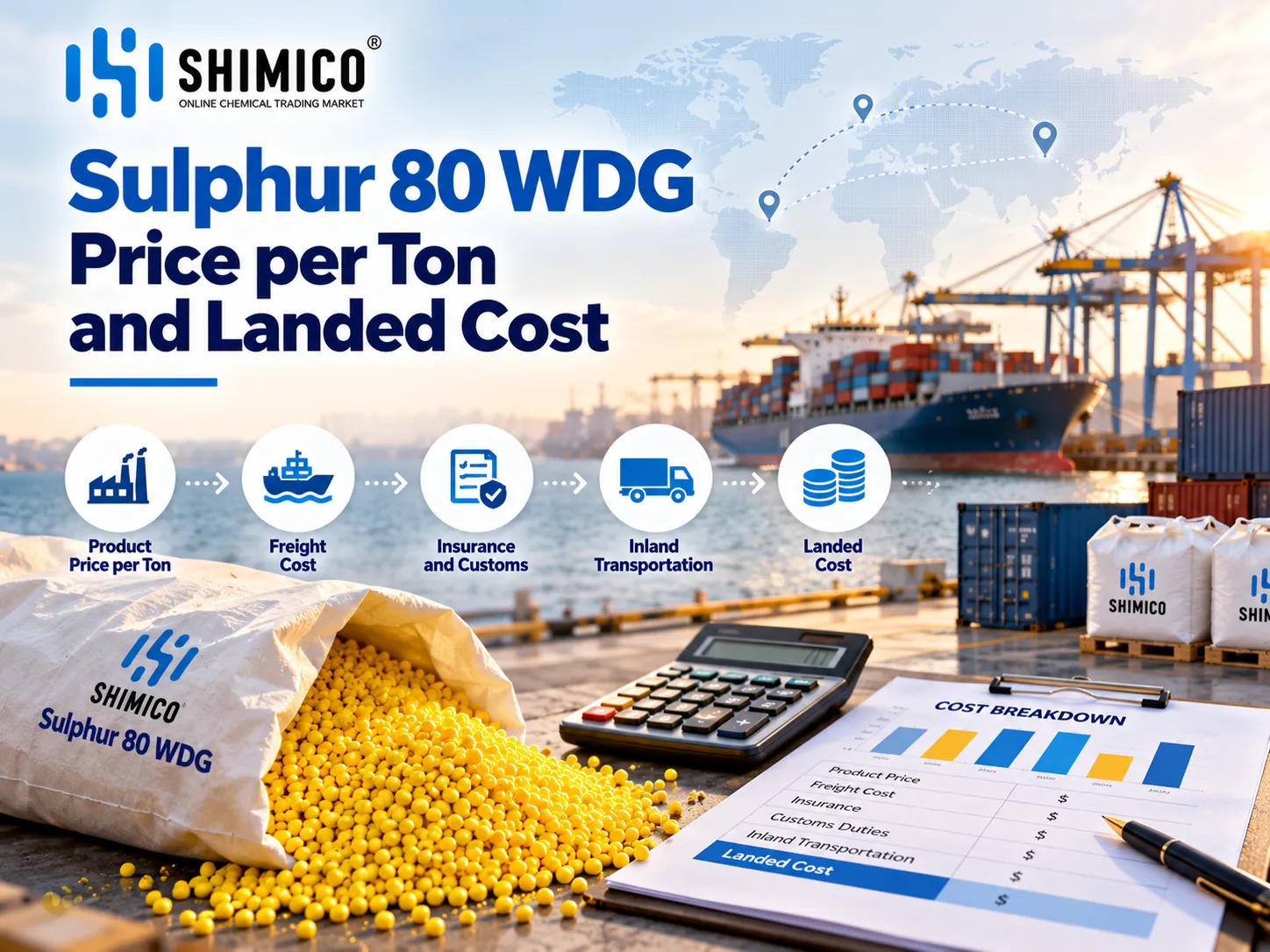
What affects Sulphur 80 WDG bulk price?
The underlying sulphur feedstock, grinding and formulation steps, quality testing, packaging material and production lot size can affect the supplier price. Freight availability, port charges, currency and import requirements affect the delivered result. Lower price per ton is not automatically lower procurement risk when specifications are weak or delivery terms are unclear.
FOB, CFR, CIF and delivered cost
FOB, CFR and CIF are different Incoterms with different cost and risk allocations. An FOB offer cannot be compared directly with a CIF offer without accounting for shipping, insurance and other relevant charges. CIF is not the same as duty-paid inland delivery. The purchase contract should identify the Incoterms version and exact named port or place.
Sulphur 80 WDG landed-cost calculation
A practical landed-cost analysis separates goods, export packing, origin handling, freight, insurance, destination port fees, duties, taxes, clearance, storage, inland delivery and finance costs. Add only items not already included under the agreed Incoterm to avoid double counting. Divide the resulting cost by net metric tons delivered. This method supports accurate comparison without inventing a market rate.
Sulphur 80 WDG RFQ checklist
A useful request identifies the 80% WG formulation, target tonnage, destination country and named port, 25 kg bags if required, certificate expectations, manufacturer identity, desired Incoterm and preferred shipment window. Specify whether the product is already registered in the destination country and whether private-label packaging is planned. Ask for a validity date and clear exclusions on the quotation.
A meaningful sulphur 80 WDG quotation describes the product, batch evidence and delivery terms. A price per ton without an Incoterm and destination cannot be fairly compared.
Buy Sulphur 80 WDG in Bulk Through Shimico
Shimico is a chemical trading marketplace where commercial buyers can explore relevant supplier and product listings. For Sulphur 80 WDG, the fastest route to a meaningful supplier comparison is to communicate the technical and commercial details of the planned order. Actual availability, manufacturer identity, approved applications, price and shipment conditions must be confirmed by the contracting seller.
Start a bulk Sulphur 80 WDG sourcing enquiry
Define your requested active sulphur declaration, destination, required documentation, bag size and metric tonnage before contacting sellers. A purchase team may also request pre-shipment samples, batch-specific COA and inspection conditions. Explore the sulphur product category on Shimico for related listings, and use Shimico product and supplier marketplace to identify sourcing options.
Global purchasing and Pakistan-specific guidance
International buyers sourcing Sulphur 80 WDG in bulk should verify product specifications, manufacturer documentation, packaging requirements, and shipping terms before placing an order. Import regulations and product registration requirements vary by destination country.
For buyers importing Sulphur 80 WDG into Pakistan, additional considerations include local pesticide registration, approved product labeling, customs documentation, and delivery arrangements through Pakistani ports.
For more information about local sourcing requirements, wholesale purchasing, and distribution, read our Sulphur 80 WDG Pakistan buying guide.
Request a Bulk Sulphur 80 WDG Quotation
Share your target metric tonnage, 80% WG specification, 25kg packaging requirements, destination and required certificates. Verify availability and terms with the selected seller.
Frequently Asked Questions About Sulphur 80 WDG
These questions cover common formulation and procurement enquiries. The answers are written as independent explanations; questions relating to crop rates and restrictions must always be checked against the actual registered label.
What is Sulphur 80 WDG?
It is a dry water-dispersible granule formulation with a declared 80% elemental sulphur content by weight. It disperses into fine suspended particles when mixed with water according to the product instructions.
What is the difference between Sulphur 80 WDG and Sulphur 80 WG?
WDG and WG both refer to water-dispersible granules. The approved product label and technical data sheet determine the exact formulation and registration.
What is Sulphur 80 WDG used for?
Registered products may be used for specified fungal diseases such as powdery mildew and certain pests or mites. The lawful crops and targets vary by product label and country.
What is the Sulphur 80 WDG dosage per litre?
There is no universally valid dosage for every 80% WG product. Use the rate shown on the locally approved label for the specific crop, disease, equipment and market.
Can Sulphur 80 WDG be mixed with NPK?
Compatibility is product-specific. Check both labels and technical instructions; do not assume safe tank mixing with liquid fertilizers or other inputs.
Is Sulphur 80 WDG water soluble?
No. The granules are designed to disperse, producing a suspension of fine sulphur particles rather than a clear dissolved solution.
How much does Sulphur 80 WDG cost per ton?
The current wholesale price depends on supplier, specification, lot size, packaging, origin, destination and delivery terms. Request a dated quotation and compare landed cost.
Can I order Sulphur 80 WDG in 25kg bags?
25 kg bags are a common wholesale packaging request, but their availability, lining, palletization and labels depend on the selected supplier and intended market.
Which documents are needed for a bulk Sulphur 80 WDG order?
Typical requests include a product TDS, SDS, batch COA, relevant local registration evidence, packing list and commercial shipment documents.
How do I choose a Sulphur 80 WDG manufacturer?
Verify the legal manufacturer, formulation, test results, production lot, registration and the seller’s responsibility for contract and shipment quality.
What is the shelf life of Sulphur 80 WDG?
The shelf life depends on the specific formulation and manufacturer storage data. Confirm the documented expiry or stability period rather than applying a universal number.
Is Sulphur 80 WDG safe to spray in hot weather?
Some sulphur products can injure crops in hot conditions. Read and follow the exact registered product label for temperature, crop and oil-spray restrictions.
Sulphur 80 WDG Technical and Regulatory References
When evaluating technical performance, use the original manufacturer label together with recognized specification guidance. General WG methods are presented by FAO/WHO, but each product needs its own evidence and regulatory verification. The following English-language sources provide reference points for formulation testing and product-specific use claims.
FAO/WHO pesticide specifications — FAO.
2025 FAO/WHO pesticide specifications manual — WHO.
Drexel Sulfur 80 WDG product information — Drexel Chemical.
Last Seen


Users Comment
Sulfur Fungicide: How It Works, Uses and Safety Precautions
Types of Sulfur Fertilizers: Powder, Granular, Liquid & Sulfate Forms
Sulfur for Soil: Benefits, Uses and How to Apply It
Sulfur WDG: Water Dispersible Granules, Uses & Bulk Supply
Sulphur WDG Pakistan: Bulk Supply, Prices & Import Guide
Sulfuric Acid Supply to Turkey: Price, Transport and Import Guide
Sodium Bicarbonate for Dairy Cows: Rumen Buffer, Dosage, Milk Fat
Why Sulfuric Acid Is King and Benzene Is Called Queen
Buy Basic Chromium Sulfate in Pakistan: BCS Price, Wholesale Supply
How Urea Can Hydrate and Exfoliate Your Skin
Sodium carbonate| Soda ash; features and applications
Copper Sulfate; Features and applications