










What Is Sulfur? A Complete Review of Sulfur, Its Chemical Structure, and Production Sources
Although many people know sulfur only as an agricultural material, this element is one of the important raw materials in the global chemical industry chain.
From sulfuric acid production and agricultural fertilizer manufacturing to the rubber industry, oil refining, metal processing, and various chemical products, sulfur plays a direct role in industrial processes.
In the chemical materials market, sulfur quality is not determined by its name alone. Factors such as purity percentage, physical form, particle size, moisture content, and production source determine which application a product is suitable for.
For this reason, factories and industrial organizations examine the product’s technical specifications and analysis when sourcing sulfur.
Definition of Sulfur and Its Position in Different Industries
Sulfur is a chemical element with the symbol S and atomic number 16, classified among the nonmetals of the periodic table. Because of its suitable reactivity and ability to form various compounds, this element is considered one of the most widely used industrial elements.
In large industries, sulfur is usually known as a chain raw material. This means that in many cases sulfur itself is not the final product, but rather a material that factories use to produce other products such as sulfuric acid, sulfate fertilizers, and chemical compounds.

What Is Sulfur Made Of?
Sulfur is a pure chemical element and, unlike many industrial materials, is not made from a combination of several raw materials. This element exists in nature in free form or in mineral compounds such as sulfides and sulfates.
In industrial processes, sulfur is mainly extracted from hydrocarbon sources. Crude oil and natural gas contain sulfur compounds that are removed in refineries. After separation and processing, these compounds are converted into sulfur suitable for industrial use.
Types of Industrial Sulfur; Differences Between Granular, Lump, Powdered, and Liquid Sulfur
In the industrial market, sulfur is supplied in various types based on production method, physical form, particle size, and final application. Selecting the appropriate type of sulfur depends on the consumer’s needs, production process, transportation method, and storage conditions.
In industrial transactions, the name sulfur alone is not enough; specifications such as purity percentage, particle size, moisture content, production source, and packaging type must also be examined.

| Type of Sulfur | Product Form | Main Application |
|---|---|---|
| Granular Sulfur | Uniform Granules | Exports, Chemical Industries, and Sulfuric Acid Production |
| Lump Sulfur | Irregular Solid Pieces | Industrial Processing and Various Industries |
| Powdered Sulfur | Fine Particles | Applications Requiring a High Contact Surface |
| Micronized Sulfur | Very Fine Powder | Specialized Applications and Formulations |
| Bentonite Sulfur | Composite Granules | Agricultural Uses and Soil Amendment |
| Liquid Sulfur | Liquid Form | Special Industrial and Agricultural Applications |
Granular Sulfur; the Most Widely Used Type of Export Sulfur
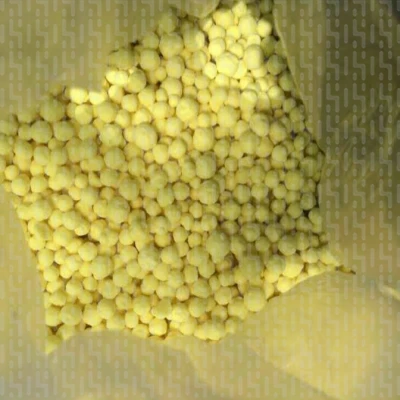
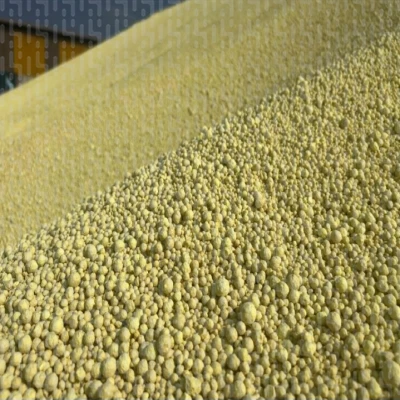
Granular sulfur is one of the most common types of sulfur in the global market and is widely used in industrial and export transactions because of its granular form, high uniformity, and ease of transportation.
This type of sulfur is usually produced in oil and gas refineries and is considered a suitable option for consumers that require large shipments.
- Sulfur Exports
- Sulfuric Acid Production
- Large Chemical Industries
- High-Tonnage Transportation
Lump Sulfur; a Refinery Product for Industrial Processing
Lump sulfur refers to solid pieces of sulfur that are usually produced in refinery processes and may require crushing or processing before final use.
Khangiran lump sulfur and some regional sources are well-known examples of this type of product in the market.
Powdered Sulfur; Suitable for Applications Requiring Fine Particles
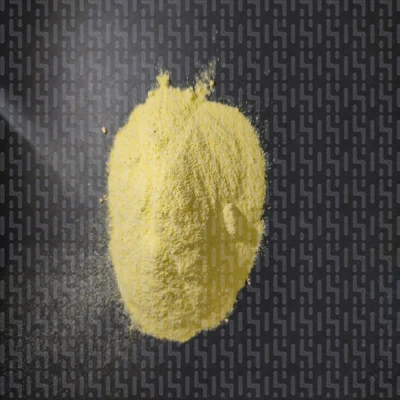
Powdered sulfur has a smaller particle size than ordinary solid sulfur. The increased particle contact surface has made this type of sulfur useful in some industrial and agricultural applications.
When selecting powdered sulfur, particle size, purity percentage, and production method are very important.
Micronized Sulfur; Very Fine Particles for Specialized Applications
Micronized sulfur is a processed type of sulfur with a very small particle size, used in applications that require better dispersion or faster reaction.
Bentonite Sulfur; a Combination of Sulfur and Bentonite for Agricultural Use
Bentonite sulfur is a combination of sulfur and bentonite produced to improve sulfur dispersion in soil. This product is mainly used in agriculture and for improving soil conditions.
The type of sulfur required for agriculture differs from the type used in chemical industries, and product selection must be based on the intended application.
Liquid Sulfur; a Product with Different Storage Conditions
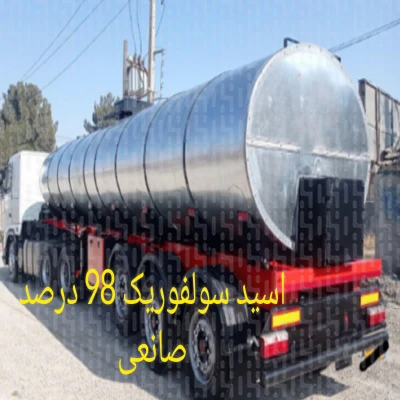
Compared with solid types, liquid sulfur has different transportation and storage conditions. This product is usually supplied in packaging such as 20-liter containers or industrial tanks and is used for specific applications.
Physical and Chemical Specifications of Industrial Sulfur; Quality and Technical Analysis Review
Understanding the physical and chemical specifications of sulfur is one of the important stages in selecting the appropriate product for different industries. Two sulfur products may appear similar, but differences in purity, moisture, ash, particle size, and accompanying compounds can change their performance in an industrial process.
Factories and major consumers usually review the product analysis sheet or COA before sourcing sulfur to ensure that the product specifications match the requirements of the production line or consumption process.

Physical Properties of Sulfur
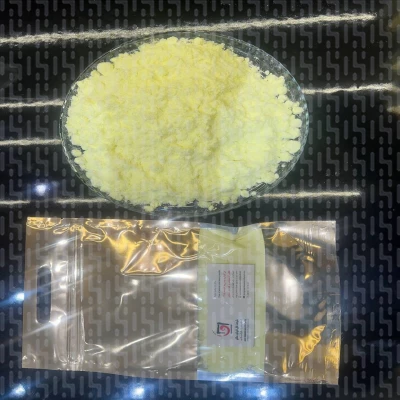
Pure sulfur is normally seen as a yellow solid material. In the solid state, this element has different structures and may undergo physical changes depending on temperature conditions.
In the industrial market, the product’s physical form is very important. Sulfur may be supplied as powder, granules, lumps, or micronized material. Each form is suitable for specific transportation, storage, and consumption conditions.
Chemical Properties of Sulfur and Its Behavior in Industrial Processes
Sulfur is a nonmetallic element with defined reactivity that can form various compounds with different elements. The most important industrial sulfur compounds include sulfur dioxide, sulfur trioxide, sulfuric acid, and various sulfides.
One of the most important properties of sulfur is its ability to be converted into sulfate compounds. For this reason, a large share of the sulfur produced worldwide is used to manufacture sulfuric acid, a material that has a fundamental role in many chemical industries.
Does Sulfur Dissolve in Water?
Elemental sulfur has very low solubility in water. This property is one reason why processing, grinding, or combination with other materials is required in some applications.
In agricultural products such as bentonite sulfur, the purpose of combining auxiliary materials is to improve sulfur dispersion in soil and create the conditions for its conversion into a form usable by plants.
Low sulfur solubility does not mean that it is ineffective. Sulfur performance depends on its physical form, particle size, conditions of the application environment, and its chemical conversion process.
Is Sulfur an Acid or a Base?
Elemental sulfur itself is not considered an acid or a base. It is a chemical element that can participate in various reactions. Acidic or basic behavior usually relates to compounds formed from sulfur.
For example, sulfur dioxide and sulfur trioxide can form acidic compounds when reacting with water, which are highly important in chemical industries.
Technical Analysis of Sulfur (COA) and Quality-Control Parameters
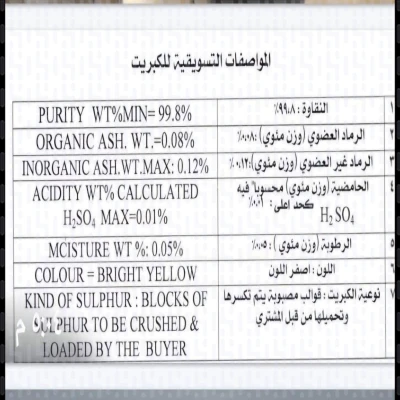
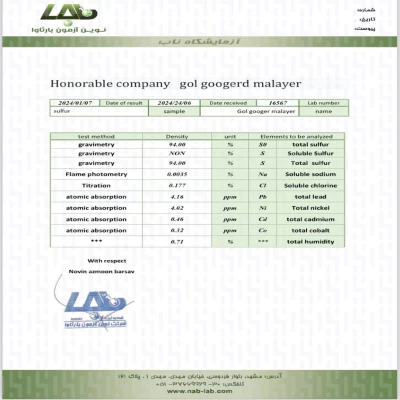
The Certificate of Analysis, or COA, is one of the most important documents accompanying industrial sulfur shipments. This document shows the properties of the dispatched product and whether it matches the buyer’s expected specifications.
A sulfur COA usually examines parameters such as pure sulfur percentage, ash content, moisture, organic materials, and particle size. Depending on its process, each industry may be more sensitive to one or more of these items.
Sulfur Production Method; From Oil and Gas Refining to the Final Industrial Product
Industrial sulfur traded in today’s global market is mainly obtained through refinery processes and the recovery of sulfur compounds present in oil and natural gas.
Contrary to common belief, a large share of the sulfur used by industries is not extracted from mines, but is produced as a valuable by-product in fuel purification processes.
The presence of sulfur compounds in crude oil and sour gas requires refineries and gas complexes to remove these compounds before supplying the final product. After processing, the separated sulfur enters the market in various forms such as granular sulfur, lump sulfur, and powdered sulfur.

Production of Sulfur from Oil and Natural Gas
Crude oil and natural gas usually contain sulfur compounds such as hydrogen sulfide (H₂S). These compounds must be removed before the fuel is used or enters the transmission network, because their presence can cause equipment corrosion, air-pollutant emissions, and reduced final-product quality.
In gas-processing units, hydrogen sulfide is first separated from the gas stream. It is then transferred to the sulfur-recovery unit and converted into elemental sulfur through several chemical stages.
The Claus Process in Sulfur Production
The Claus Process is the most common industrial method for producing sulfur from hydrogen sulfide. This technology is used in many refineries and gas complexes worldwide and accounts for the main share of refinery sulfur production.
In the first stage, part of the hydrogen sulfide is converted into sulfur dioxide in the presence of oxygen. The produced sulfur dioxide then reacts with the remaining hydrogen sulfide and produces elemental sulfur.
The overall reaction of the Claus Process is expressed as follows:
After cooling and separation, the produced sulfur is prepared for conversion into various commercial forms.
Reputable Sulfur Producers in Iran; Refineries and Production Complexes
Because of its extensive oil and gas resources, Iran is considered one of the important producers of refinery sulfur in the region. A large share of the country’s industrial sulfur is produced by sulfur-recovery units in gas refineries, oil refineries, and petrochemical complexes.
In the industrial market, the sulfur produced by each complex is evaluated based on factors such as purity percentage, product type, physical form, supply capacity, and COA technical specifications. Iran’s most important sulfur producers include:

Sulfur from Shahid Hasheminejad Gas Refinery (Khangiran)
Shahid Hasheminejad Gas Refinery in the Khangiran region of Razavi Khorasan is one of Iran’s well-known sulfur production sources. By processing sour gas, this complex removes sulfur compounds from natural gas and produces recovered sulfur.
Khangiran sulfur is usually supplied as lump sulfur and is used in sulfuric acid production, chemical industries, and some agricultural applications.
Sulfur from Tehran Oil Refinery
Tehran Oil Refinery is one of the country’s important refineries that removes sulfur compounds during crude-oil refining and produces industrial sulfur.
Because this complex is close to consumer industries in the center of the country, its sulfur production is important in the domestic supply chain.
Sulfur from Khark Petrochemical Complex
Khark Petrochemical Complex is one of Iran’s important chemical complexes on Khark Island. Because of its activities in chemical products and gas processing, this complex is considered one of the country’s industrial sulfur supply sources.
Sulfur from Bandar Abbas Oil Refinery
Bandar Abbas Oil Refinery is one of southern Iran’s important refineries and produces sulfur through its refining processes. The refinery’s location near maritime routes increases its importance in regional trade.
Sulfur from Isfahan Oil Refinery
Isfahan Oil Refinery is one of the country’s largest refineries and produces sulfur obtained from oil-refining processes. This complex is considered one of the important sulfur supply sources for domestic industries.
Sulfur from Abadan Oil Refinery
Abadan Refinery, as one of Iran’s oldest refineries, is active in crude-oil refining, and sulfur is one of the by-products of this process.
Sulfur from Razi Petrochemical Complex in Mahshahr
Razi Petrochemical Complex in the Mahshahr Petrochemical Special Economic Zone is one of the country’s important chemical complexes. This complex operates in the chain of sulfur-related products and sulfur compounds.
Sulfur from the South Pars Gas Complex and Assaluyeh
South Pars gas complexes in the Assaluyeh region are among Iran’s largest sulfur production centers. Assaluyeh sulfur is obtained by recovering sulfur compounds from natural gas, and a large share is produced as granular sulfur and supplied to industrial markets.
Applications of Sulfur in Different Industries; From Agriculture to Chemical Industries
Sulfur is a raw material that plays a role in different industries. Unlike many chemicals used only in a specific field, sulfur is used in agriculture, chemical production, oil refining, the rubber industry, mining, and many industrial processes because of its particular chemical properties.
The type of sulfur used is usually selected based on the intended application. For example, a sulfuric acid manufacturer requires different specifications than an orchard owner or fertilizer producer. Therefore, understanding the application of each sulfur type is an important part of the product-selection process.

Use of Sulfur in Agriculture and Soil Amendment
One of the best-known applications of sulfur is its use in agriculture. Under the influence of microorganism activity, elemental sulfur can be converted into sulfate compounds in soil and play a role in the plant-nutrition cycle.
In many agricultural regions where the soil has a high pH or is calcareous, sulfur is considered one of the soil-amendment materials. This issue is more important in orchards and farmland with specific conditions.
Sulfur for Fruit Trees and Orchards
In horticulture, sulfur for trees is known as one of the materials used in nutrition and soil-management programs. The type of sulfur should be selected based on soil testing, tree type, and regional conditions.
Trees such as pistachio, grape, apple, and citrus may require different programs in different regions. Therefore, applying one fixed prescription to all orchards does not produce the same result.
Sulfur for Grapes and Vineyards
In vineyards, sulfur is one of the materials considered in managing certain problems related to fungi and soil conditions. In this application, product type, particle size, and application method are very important.
Because of their greater contact surface, powdered sulfur and micronized sulfur are selected for some agricultural applications. In contrast, granular sulfur is used for soil application and easier transportation.
Sulfur for Pear Psylla and Plant Pests
In some plant-pest and disease-management programs, sulfur is known as one of the materials used in agriculture. The application rate and timing must be determined according to the recommendations of agricultural experts and the condition of the crop.
Sulfur use in agriculture must be based on soil type, moisture level, temperature, and plant requirements. Applying more than the required amount can alter the soil balance.
Use of Sulfur in Sulfuric Acid Production
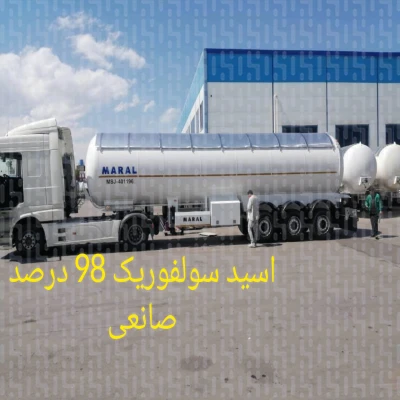
The world’s largest industrial use of sulfur is sulfuric acid production. This fundamental material is used in various industries such as phosphate fertilizers, metal processing, chemical industries, and industrial-material production.
In sulfuric acid plants, sulfur is first burned to produce sulfur dioxide. This compound is then converted through subsequent stages into sulfur trioxide and finally sulfuric acid.
Use of Sulfur in Chemical Industries
Sulfur is one of the important raw materials used to produce various chemical compounds. Sulfur compounds are used in fertilizers, intermediate chemicals, pigments, and industrial products.
Chemical industries usually require products with precise specifications. Sulfur purity percentage, moisture content, and accompanying compounds are very important in these industries.
Use of Sulfur in the Rubber and Tire Industries
One of sulfur’s long-established applications is its use in rubber vulcanization. In this process, sulfur creates chemical bonds between polymer chains and changes the mechanical properties of rubber.
Tire, belt, rubber-part, and similar-product manufacturers usually require industrial sulfur with controlled specifications.
Use of Sulfur in the Oil, Gas, and Mining Industries
In the oil and gas industries, sulfur is both a refinery by-product and an industrial raw material. By removing sulfur compounds, refineries comply with fuel-quality standards, and the recovered sulfur enters the raw-materials market.
In mining industries, sulfur compounds are also used in some metal-extraction and processing operations.
Sulfur Safety and MSDS
Like many industrial raw materials, sulfur can create hazards if stored or used incorrectly. Therefore, factories, warehouses, and major consumer organizations must review the product safety information or MSDS before receiving a shipment.
The Material Safety Data Sheet contains information about physical properties, potential hazards, handling methods, storage conditions, and the measures required in emergency situations.

Important Information in a Sulfur MSDS
A sulfur MSDS usually includes the product’s chemical specifications, exposure-control methods, fire hazards, personal protective equipment, and storage instructions.
For industrial shipments, having a valid MSDS is very important because transportation companies, exporters, and major consumers use this information to determine the proper conditions for storing and using the product.
Potential Sulfur Hazards and Safety Tips During Work
Solid sulfur is a stable material under normal conditions, but sulfur dust may require control in industrial environments. Accumulation of fine sulfur particles in an enclosed area and the presence of an ignition source can create unsuitable conditions.
When working with powdered or micronized sulfur, the use of personal protective equipment such as a suitable mask, gloves, and safety goggles is recommended.
Dust control is very important when handling powdered sulfur. The warehouse must have suitable ventilation, and the product must be kept away from heat sources and open flames.
What Should We Do If Sulfur Enters the Eyes?
If sulfur particles come into contact with the eyes, the eyes must be washed with plenty of clean water. If irritation or discomfort continues, medical evaluation is recommended.
Employees who work with powdered sulfur in industrial environments must receive chemical-safety training and use appropriate protective equipment.
Types of Sulfur Packaging; Selecting the Appropriate Option for Transportation and Industrial Use
Depending on product type, order volume, transportation method, and consumer requirements, sulfur is supplied in different packaging types. Selecting suitable packaging helps preserve product quality, improve warehouse management, and reduce handling costs.

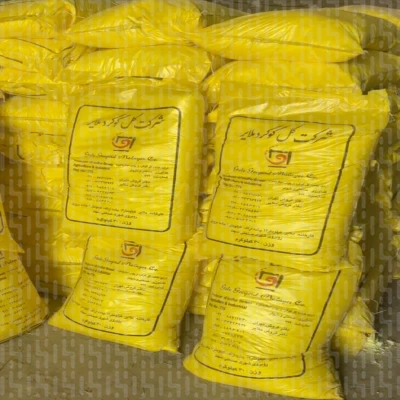
For smaller orders and domestic distribution, bag packaging is more widely used. For bulk and export orders, jumbo bags or bulk transportation are usually more suitable options.
25 kg Sulfur; Suitable for Distribution, Staged Consumption, and Limited Orders
25 kg sulfur packaging is suitable for customers who require easier handling, control over the amount consumed, or distribution of the product in smaller volumes.
- Medium-Volume Industrial Uses
- Chemical Distributors
- Customers Who Require More Manual Handling
- Warehouses with More Limited Space
50 kg Sulfur; a Common Choice for Industrial and Bulk Uses
50 kg bags are among the common packaging types for industrial sulfur. This type of packaging creates a suitable balance between product volume, transportation, and warehouse management.
- Factories and Production Units
- Major Domestic Consumers
- Industrial Warehouses
- Chemical Distribution Centers
Sulfur Jumbo Bags; Suitable for High-Tonnage and Export Orders
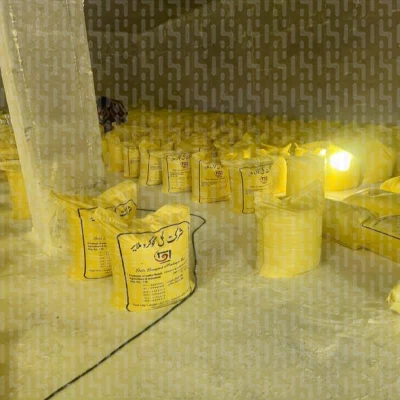
Jumbo bags are one of the main options for transporting large volumes of sulfur. This type of packaging allows faster loading and easier product transfer using industrial equipment.
- Sulfur Exports
- Multi-Ton Orders
- Container and Truck Transportation
- Large Industrial Units
Bulk Sulfur; Suitable for Large Industrial and Export Shipments
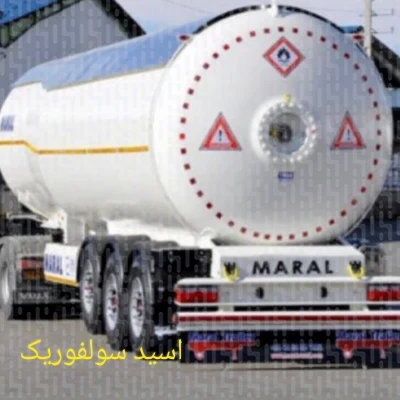
Bulk sulfur is a common transportation method for very large orders and is usually used by factories, large industrial units, and export buyers. In this method, the product is moved without bag or jumbo-bag packaging and is loaded and transferred using specialized equipment.
Bulk sulfur transportation is generally suitable for shipments whose consumer has the proper infrastructure for unloading, storage, and product transfer. This method can reduce packaging-related costs and be more economical for high-tonnage orders.
- Sulfuric Acid Production Plants
- Petrochemical Units and Large Chemical Industries
- Export Buyers with High-Tonnage Orders
- Organizations with Industrial Unloading and Storage Equipment
20-Liter Liquid Sulfur; Suitable Packaging for Easy Transportation and Controlled Consumption
20-liter liquid sulfur is one of the common packaging types for products requiring easier handling, simpler storage, and staged consumption. This type of packaging is more suitable for consumers that require a specified amount of product for their consumption process rather than high-tonnage orders.
20-liter containers provide easier transportation, better control over the amount consumed, and simpler warehouse management. Selecting this packaging type depends on the application, storage conditions, and consumer requirements.
- Consumers Requiring Controlled Volumes
- Chemical and Agricultural Product Distribution Centers
- Users for Whom Smaller-Container Transportation Is Important
- Organizations Requiring Staged Product Storage
Comparison of Different Sulfur Packaging Types
| Packaging Type | Suitable for | Main Advantage |
|---|---|---|
| 20-Liter Liquid Sulfur | Controlled Consumption and Easy Transportation | Simple Handling and Better Consumption Management |
| 25 kg Sulfur | Domestic Distribution and Limited Orders | Easy Transportation and Economical Packaging |
| 50 kg Sulfur | Industrial and Bulk Uses | Suitable Balance Between Volume and Transportation |
| Sulfur Jumbo Bag | Exports and High-Tonnage Orders | Suitable for Industrial Loading |
| Bulk Sulfur | Factories and Large Consumers | Reduced Packaging Costs at High Volumes |
Sulfur Storage Conditions in Warehouses and Industrial Environments
Proper sulfur storage preserves product quality and reduces potential problems during use. The storage location must be dry, properly ventilated, and away from incompatible materials.
High humidity can affect the visual quality of some sulfur products. In addition, dust control is more important when storing powdered sulfur than when storing granular products.

For industrial contracts, packaging conditions, loading procedures, and the unloading location should be specified before shipment so that product quality is maintained until use.
Foreign Brands and Reputable Sulfur Producers Worldwide
In the global sulfur market, some producers are known for their high production capacity, consistent quality, and continuous presence in international trade. Most of these companies operate in countries with extensive oil, natural gas, or mineral sulfur resources.
Sulfur produced by these organizations is usually consumed in sulfuric acid production, chemical fertilizers, the rubber industry, and other industrial applications.

| Brand / Producer | Country | Type of Sulfur |
|---|---|---|
| Tengizchevroil (TCO) | Kazakhstan | Solid and Granular Sulfur |
| Gazprom | Russia | Refinery Sulfur |
| Mubarek Gas Processing Plant | Uzbekistan | Lump Sulfur |
| Turkmen Gas Industries | Turkmenistan | Refinery Sulfur |
| Canadian Sulfur Producers | Canada | Industrial Sulfur |
Tengizchevroil (TCO) Sulfur, Kazakhstan
Tengizchevroil is one of the most important sulfur producers in Kazakhstan. This company operates in the Tengiz oil field and produces sulfur as a by-product of oil and gas processes.
TCO sulfur is usually supplied in solid and granular forms and, because of its high production capacity, is present in regional export markets and international sulfur trade.
Gazprom Sulfur, Russia
Because of its extensive oil and gas industry, Russia is one of the world’s important sulfur producers. Gazprom plays a role in the natural-gas production chain and the recovery of sulfur compounds.
Sulfur produced by Russian organizations is usually consumed in chemical industries, sulfuric acid production, and regional markets.
Mubarek Lump Sulfur, Uzbekistan (Mubarek Gas Processing Plant)
Mubarek Gas Processing Plant is one of Uzbekistan’s well-known sulfur production centers. This complex produces sulfur as a by-product during natural-gas processing.
Mubarek lump sulfur from Uzbekistan is known in the Central Asian market and, because of its geographic proximity, attracts the attention of industrial consumers in some regional transactions.
Turkmenistan Sulfur
Because of its vast natural-gas resources, Turkmenistan is considered one of the sulfur producers in Central Asia. The country’s sulfur is usually produced through gas-sweetening processes and the removal of sulfur compounds.
Turkmenistan sulfur is supplied in the regional market for chemical industries, fertilizer production, and industrial sulfur-consuming units.
Industrial Sulfur Purchasing Guide; Important Points for Selecting the Appropriate Product
Selecting suitable sulfur for industrial units is not based only on the product name. Each organization must select the appropriate product based on the application, consumption process, required capacity, and expected technical specifications.
For example, a sulfuric acid plant usually requires high-purity refinery sulfur, while in agriculture the product type, particle size, and reaction rate in soil may be more important.

- Required Sulfur Type (Powdered, Granular, Lump, Bentonite)
- Product Purity Percentage
- COA Analysis Sheet
- Packaging and Transportation Conditions
- Continuous Supply Capacity
Selecting the Type of Sulfur Based on Application
The first stage in sourcing sulfur is identifying the required product type. Sulfur’s physical form directly affects its use, transportation, and performance.
| Type of Sulfur | Suitable for | Selection Point |
|---|---|---|
| Granular Sulfur | Exports, Large Industries, Sulfuric Acid Production | Easy Transportation and Storage |
| Powdered Sulfur | Applications Requiring Fine Particles | Particle Size Is Highly Important |
| Bentonite Sulfur | Agriculture and Soil Amendment | Used for Specific Soil Conditions |
| Lump Sulfur | Processing and Various Industries | The Consumption Method Must Be Reviewed |
Reviewing the COA Before Sourcing Sulfur
The Certificate of Analysis, or COA, is one of the most important documents in industrial sulfur transactions. This document specifies the properties of the dispatched product and whether it meets the consumer’s requirements.
Bulk buyers usually review parameters such as sulfur percentage, moisture content, ash, organic materials, and particle size.
- COA or Certificate of Analysis
- MSDS or Safety Data Sheet
- Product Technical Specifications
- Packaging and Transportation Conditions
Selecting Suitable Sulfur Packaging for Industrial Orders
Sulfur packaging must be selected according to order volume and transportation route. For large export shipments, granular sulfur is usually shipped in bulk or jumbo bags.
For domestic orders or lower volumes, bag packaging may be a more suitable option. Selecting the correct packaging reduces product loss and preserves quality during transportation.
Questions to Ask the Seller When Sourcing Sulfur
| Question | Reason for Importance |
|---|---|
| Which Refinery or Complex Is the Sulfur Production Source? | Reviewing Supply Credibility and Stability |
| What Is the Product Purity Percentage? | Compatibility with Industrial Requirements |
| In What Form Is the Sulfur Supplied? | Selecting the Appropriate Option for Transportation and Use |
| What Is the Monthly Supply Capacity? | Planning Continuous Purchases |
If your objective is high-tonnage sourcing for industry or export, evaluating refinery granular sulfur in terms of quality, transportation, and supply stability is usually more important. For more specialized applications, the product’s technical specifications must be evaluated according to the consumption process.
Current Sulfur Price; Factors Affecting Price and Product Valuation Conditions
Sulfur price is not a fixed figure for all products and is determined by various factors such as sulfur type, purity percentage, production source, order volume, transportation conditions, and global market conditions.
Refinery sulfur, granular sulfur, powdered sulfur, and bentonite sulfur each have different pricing conditions. Therefore, in industrial transactions, the final price is usually announced after the product specifications and delivery conditions are reviewed.

In the chemical materials market, the lowest price is not always the best choice. Consistent quality, valid analysis, supply capability, and ancillary transportation costs can affect the actual value of a shipment.
Factors Affecting Sulfur Price
Sulfur price is affected by a combination of domestic and international factors. The most important items considered in determining the final price include:
| Influencing Factor | Effect on Price |
|---|---|
| Type of Sulfur | Granular, Powdered, and Lump Sulfur Have Different Values |
| Purity Percentage | Higher-Purity Products Usually Have Greater Value for Sensitive Applications |
| Production Source | The Refinery and Production Complex Affect Credibility and Supply |
| Order Volume | High-Tonnage Shipments Have Different Conditions from Limited Orders |
| Transportation Cost | Destination Distance and Transportation Method Affect the Final Price |
| Global Sulfur Market | Global Supply and Demand Affect the Price |
Prices of Different Sulfur Types Based on Product Type
Because of differences in production process and application, different sulfur types do not have the same price. The following table provides a general comparison of the factors affecting the value of each product type.
| Type of Sulfur | Feature Affecting Price | Common Application |
|---|---|---|
| Granular Sulfur | Suitable for Export and Easy Transportation | Large Industries and International Trade |
| Refinery Sulfur | Purity and Quality Consistency | Sulfuric Acid and Chemical Industries |
| Powdered Sulfur | Particle Size and Processing | Specialized and Agricultural Applications |
| Bentonite Sulfur | Formulation and Bentonite Percentage | Agricultural Soil Amendment |
Why Buy Sulfur Through SHIMICO?
Selecting the right supplier for industrial raw materials is not limited to finding a product. Factories and production organizations need a supplier that can provide accurate technical information, access to reputable sources, and a transparent communication path between buyer and seller.
As a specialized chemical materials platform, SHIMICO enables communication among producers, suppliers, and bulk buyers so that the raw-material sourcing process can be carried out more simply and accurately.

- Access to Specialized Suppliers: The ability to review organizations active in chemical materials and sulfur products.
- Product Technical Information: Reviewing product specifications, sulfur type, application, and technical documents such as the COA.
- Direct Commercial Communication: Creating a communication path between industrial buyers and suppliers.
- Suitable for Bulk Orders: Focused on industrial transactions, high tonnage, and organizational requirements.
User Reviews and Customer Experiences with Sulfur Sourcing
When sourcing the granular sulfur required by our factory, the most important issue for us was quality consistency and the ability to review the product analysis. The supplier’s technical information and specifications helped us make a more accurate decision.
Industrial Unit Purchasing ManagerFor an export sulfur shipment, we needed precise information about the product type, packaging, and transportation conditions. Reviewing different sources helped us make a more suitable selection.
Export Trading CompanyFor bulk sulfur purchasing, reviewing the production source was very important. Information about Khangiran sulfur, Assaluyeh sulfur, and other production sources made the supply-evaluation process simpler.
Chemical Raw-Material SupplierFrequently Asked Questions About Industrial and Agricultural Sulfur
Scientific Sources and Reputable References About Sulfur
- The Sulphur Institute (TSI) – Sulfur Industry Information
- PubChem – Sulfur Chemical Properties and Safety Data
- U.S. Geological Survey (USGS) – Mineral Commodity Summaries: Sulfur
- International Fertilizer Association (IFA) – Sulfur Fertilizers Information
- European Chemicals Agency (ECHA) – Sulfur Substance Information
- National Center for Biotechnology Information (NCBI) – Sulfur Chemistry Resources
- Encyclopaedia Britannica – Sulfur Element Information