




Strait of Hormuz Disruption: Which Chemical Prices Could Rise First?
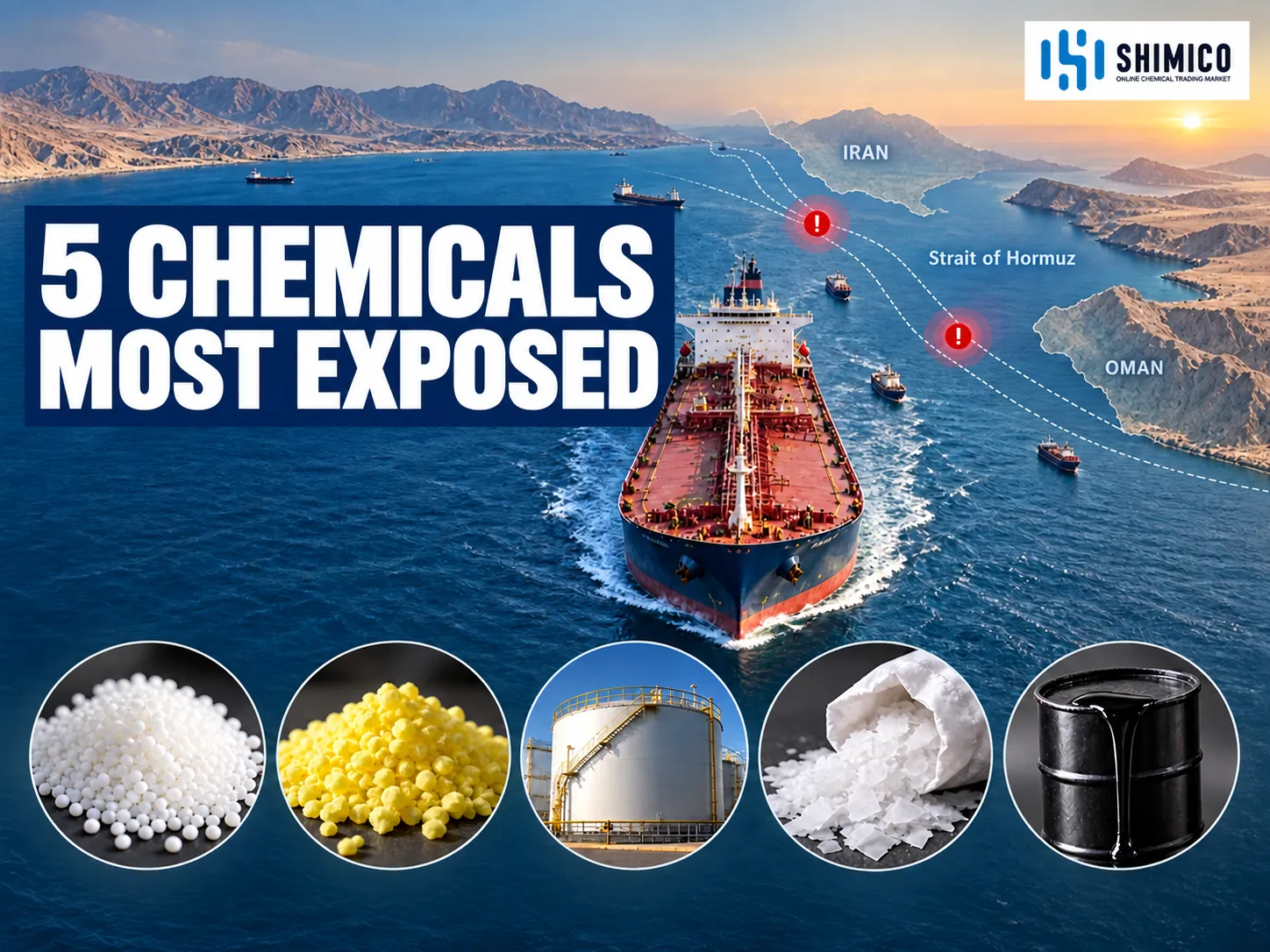
A disruption in the Strait of Hormuz does not raise every chemical price at the same speed. The first products to react are usually those tied closely to Gulf production, natural gas, refinery output, marine freight, or short inventory cover. Based on those links, urea and sulfur carry the highest immediate exposure.
Methanol and bitumen can follow through feedstock and freight costs. Caustic soda may react later or only in selected regions because its market depends on local chlor-alkali production, packaging, and transport mode.
For chemical buyers, the difficult question is not whether the conflict matters. It is which part of the delivered price changes first.
A supplier may keep the factory price unchanged while freight, insurance, port handling, financing, or lead time moves sharply. Another supplier may face a production cut even when a vessel remains available. These are different risks, and they call for different buying responses.
This article maps the exposure of five products sold through Shimico: urea, sulfur, methanol, caustic soda, and bitumen. It focuses on price transmission, supply availability, shipping routes, and the checks a buyer should complete before accepting a quotation. For the wider regional picture, read our earlier analysis of the Iran war impact on chemical and fertilizer markets.
Strait of Hormuz Chemical Prices Start With a Shipping Shock
The Strait of Hormuz connects the Persian Gulf with the Gulf of Oman and the Arabian Sea. Before the current conflict, roughly 20 million barrels of oil moved through the passage each day, according to reporting cited by the Associated Press.
The same corridor supports exports of refined products, liquefied gas, fertilizers, petrochemicals, sulfur, and other bulk cargoes. A disruption therefore reaches chemical markets through more than one channel.
Strait of Hormuz Chemical Prices React Through Five Cost Channels
First comes vessel availability. Shipowners may pause bookings, reject a route, or charge more for scarce tonnage. Next comes war-risk insurance.
Premiums and exclusions can change the landed cost even when the sea freight line looks stable. Fuel prices add another layer because tankers, bulk carriers, trucks, and port equipment consume petroleum products. Production also matters.
Gulf plants may reduce rates if feedstock, utilities, storage, labor access, or export terminals become constrained. The last channel is working capital. Longer transit and uncertain arrival dates keep a buyer’s money tied up for more days.
The September 2026 Short-Term Energy Outlook from the U.S. Energy Information Administration said Middle East oil flows remained constrained and variable.
The EIA estimated average crude production shut-ins of 6.7 million barrels per day in August and expected constraints to continue through the fourth quarter. Its forecast also pointed to elevated short-term price volatility as routes and workarounds changed.
The EIA described flows through Hormuz and Bab el-Mandeb as “constrained and variable.” Source: U.S. Energy Information Administration, September 9, 2026.
Strait of Hormuz Chemical Prices Depend on Route Alternatives
A route alternative can reduce a shortage without restoring the old cost. Saudi Arabia’s East-West pipeline was built to move oil from the Gulf side to the Red Sea.
AP reported that 2.6 million to 4 million barrels per day had recently moved through this system and the port of Yanbu. A September attack forced a shutdown, and regional officials cited by AP expected repairs to take three to five weeks. At the same time, risk around Bab el-Mandeb reduced the value of the Red Sea option.
That combination matters to chemicals even when a chemical cargo does not use the pipeline. Less oil supply can lift fuel and bunker costs. Congestion can shift ships to longer routes.
Buyers may also compete for limited port, storage, and vessel capacity. The result appears in the delivered quotation as a group of smaller changes rather than one simple “war surcharge.”
Strait of Hormuz Chemical Prices Risk Map for Five Products
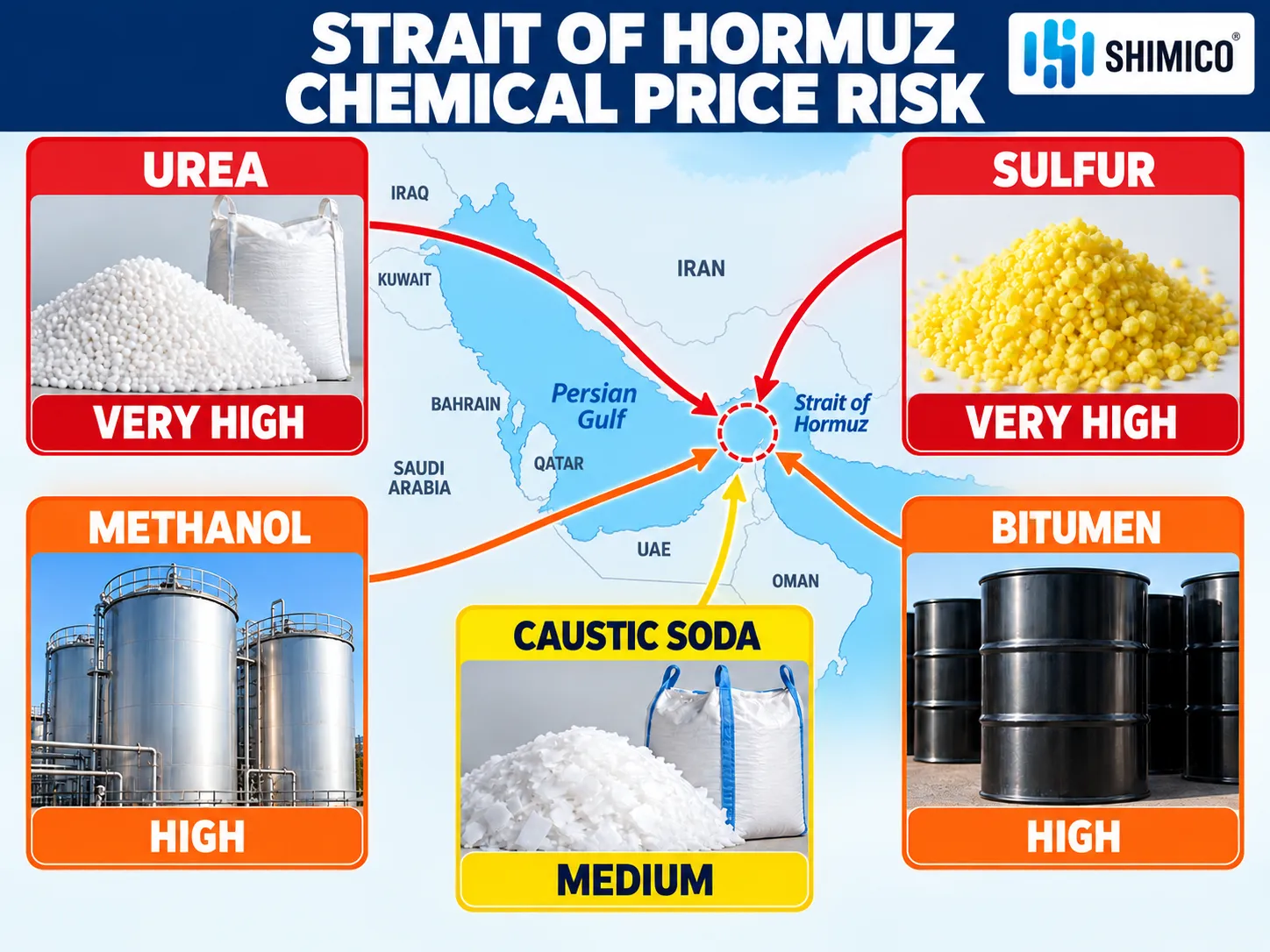
The following ranking compares near-term exposure, not guaranteed price direction. A product can remain available while its freight rises. It can also become scarce in one destination while another market receives replacement cargoes. Contract terms, origin, shipment size, grade, packaging, and destination port can change the outcome.
Strait of Hormuz Chemical Prices Put Urea at the Front of the Queue
Urea has the clearest and fastest link to the current disruption. Producers convert natural gas into ammonia and then into urea. The Gulf holds major production and export capacity, so the market responds when gas supply, plants, terminals, or shipping lanes fail to operate normally.
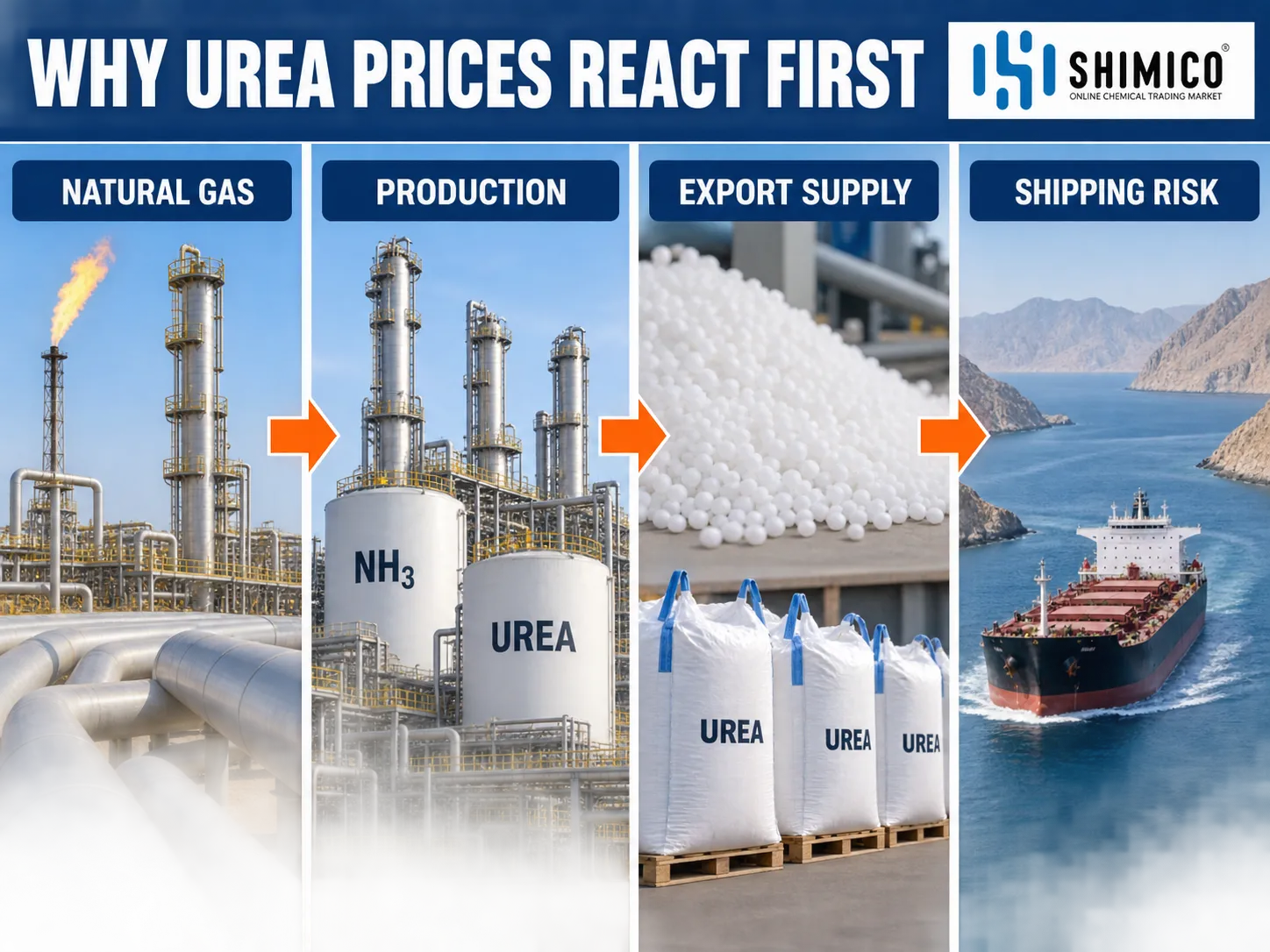
Strait of Hormuz Chemical Prices for Urea Reflect Production and Export Losses
The World Bank reported that its fertilizer price index rose more than 12 percent quarter on quarter in the first quarter of 2026. By April, the index had reached its highest point since October 2022.
Urea posted the largest increase. The World Bank said urea moved above $850 per metric ton in April, 80 percent above February, after export disruptions and regional production outages.
Prices later eased as exporters outside the Gulf filled part of the gap. That response is a reminder that a high exposure ranking does not mean a one-way market. Egypt, Nigeria, China, Russia, and the United States can alter trade flows.
Yet replacement supply may travel farther, arrive later, or carry a different product specification. The buyer still needs to compare delivered value, not only the headline benchmark.
When requesting a quote for buy granular and prilled urea, ask the seller to identify the producer, country of origin, nitrogen guarantee, biuret limit, particle size, bag type, loading port, shipment window, and quotation validity. A low number without an executable loading plan is not a usable price.
Strait of Hormuz Chemical Prices Change Urea Buying Timing
Buyers with less than one normal shipment cycle of stock face the highest operational exposure. Buyers with adequate cover can split orders, compare origins, or stagger shipment windows.
Avoid replacing urea with ammonium sulfate by price alone. Urea contains about 46 percent nitrogen, while ammonium sulfate usually contains 21 percent nitrogen and 24 percent sulfur. Crop need, soil pH, sulfur status, application method, and local agronomic advice should guide any substitution.
Strait of Hormuz Chemical Prices Expose Sulfur Through Refineries
Sulfur behaves differently from a mined commodity in much of the modern market. Refineries and natural gas processing plants recover large volumes of sulfur while removing sulfur compounds from fuels and gas.
When oil or gas production falls, recovered sulfur output can fall with it. A supply problem in energy therefore becomes a feedstock problem for phosphate fertilizer, sulfuric acid, mining, rubber, and other industries.
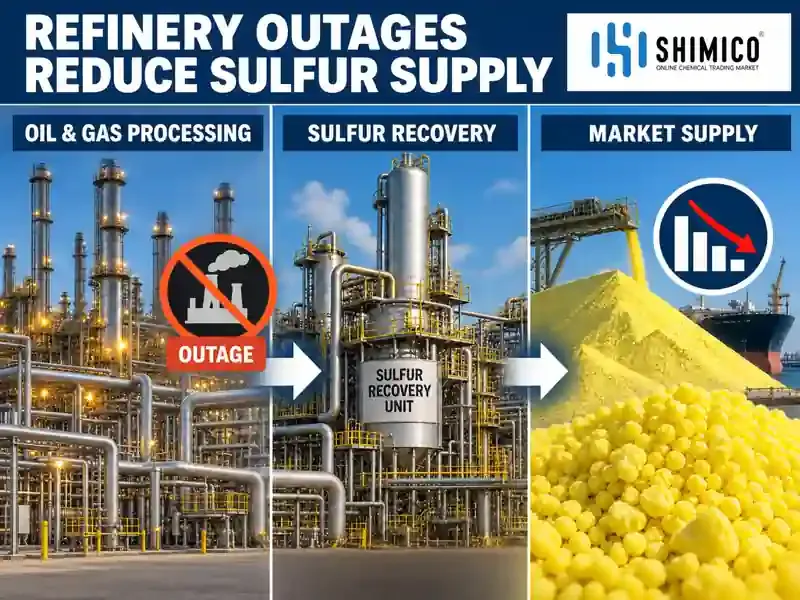
Strait of Hormuz Chemical Prices for Sulfur Reach Fertilizer Plants
The World Bank noted that sulfur prices had doubled from January by April 2026. It linked the rise to tighter feedstock conditions and disruption affecting regional output.
Sulfur matters beyond its own market because phosphate fertilizer producers burn sulfur to make sulfuric acid, which they use to process phosphate rock. A rise in sulfur cost can therefore reach DAP and MAP producers even when phosphate rock remains available.
A sulfur buyer should distinguish lump, granular, and powder forms. The quotation should state sulfur content, ash, acidity, moisture, particle form, packaging, origin, stock location, and inspection method.
Ask whether the product is physically available at the terminal or offered against expected production. That single question often separates an executable cargo from a speculative offer.
Shimico lists industrial sulfur supply for buyers comparing forms, specifications, suppliers, and export terms.
Strait of Hormuz Chemical Prices Affect Methanol Through Gas and Tankers
Methanol combines two sensitive inputs: natural gas and specialized liquid bulk shipping. A plant needs steady gas and utilities. Export cargoes need tanks, terminal slots, suitable vessels, and safe passage. A disruption at any point can narrow prompt supply even when annual nameplate capacity looks ample.
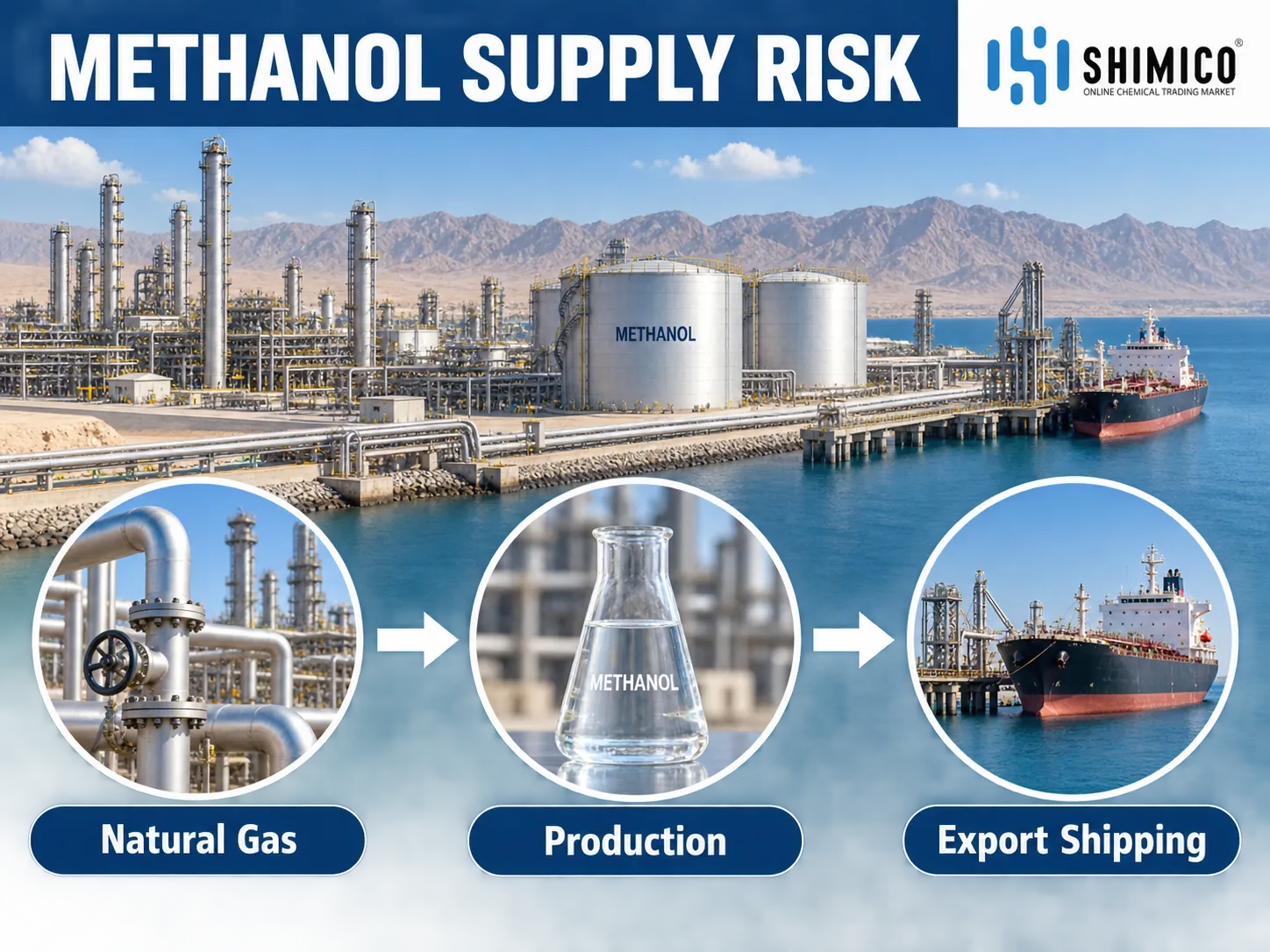
Strait of Hormuz Chemical Prices for Methanol May Appear First in Freight
Methanol may show a freight change before a clear factory-price change. Chemical tankers cannot always replace one another without checking tank coatings, prior cargoes, cleaning standards, parcel size, and terminal compatibility.
If owners avoid a region, the remaining suitable ships gain pricing power. Longer routes also increase voyage days and reduce the number of cargoes each vessel can carry in a month.
Before accepting a methanol offer, confirm purity, water content, ethanol and acetone limits where relevant, producer, storage terminal, vessel nomination process, laycan, demurrage terms, and inspection.
Buyers should compare the same Incoterm and destination. An FOB price and a CFR price do not describe the same commercial exposure.
Strait of Hormuz Chemical Prices Reach Bitumen Through Oil and Freight
Bitumen prices can respond through crude economics, refinery decisions, heating fuel, drums, containers, and marine freight. The product also creates a useful warning for buyers: packaging can change the result as much as the material price.
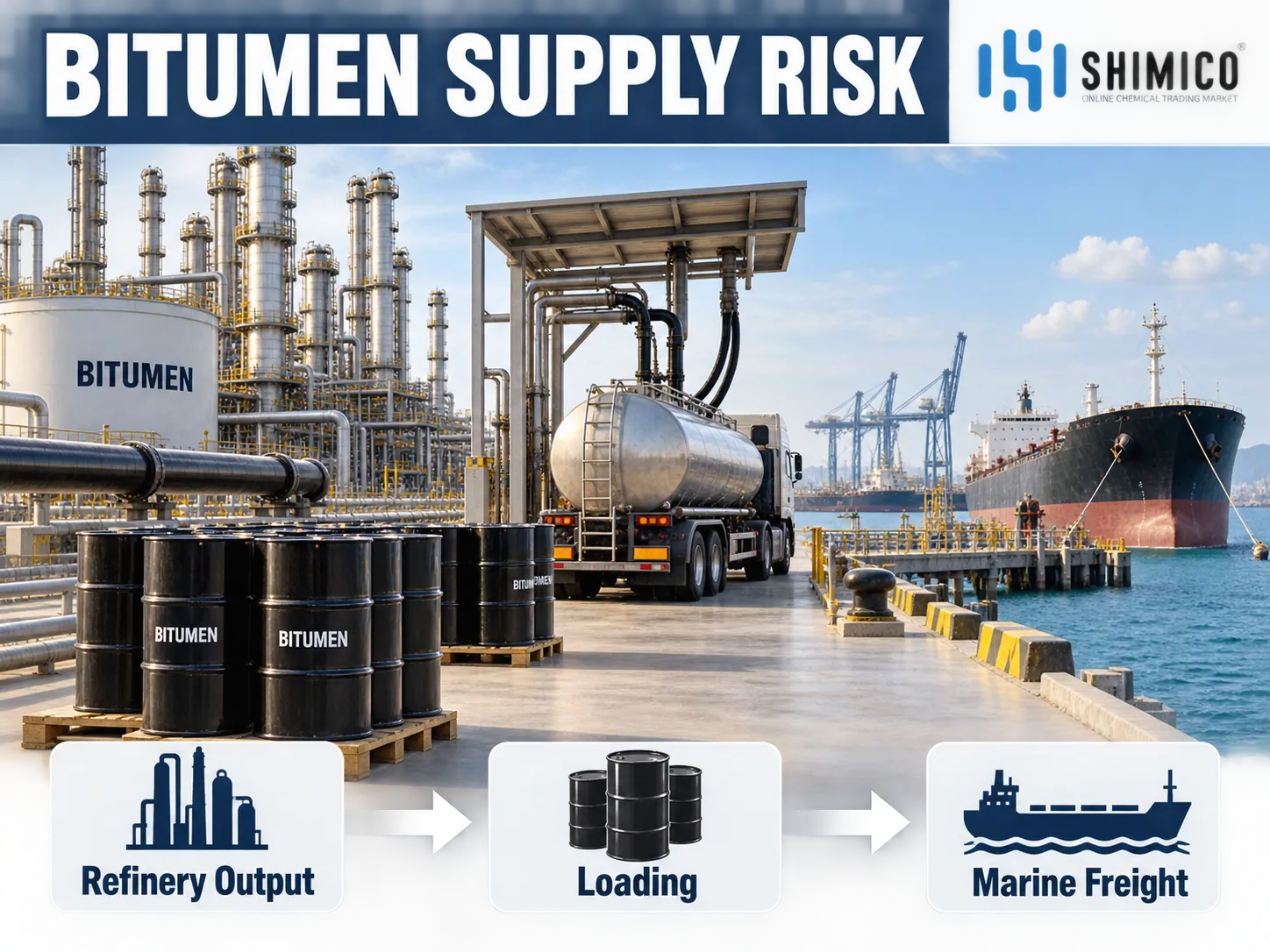
Strait of Hormuz Chemical Prices Make Delivered Bitumen the Better Comparison
A drum cargo uses steel, labor, inland transport, container or breakbulk handling, and more storage space per ton than bulk bitumen. Jumbo bags remove some drum-related cost but require suitable handling and climate controls.
Bulk shipments can lower packaging cost at scale, though the buyer needs heated storage and discharge equipment.
Compare quotations by grade, test standard, net product weight, packaging loss, loadability, port charges, freight, insurance, discharge cost, and expected usable yield. For penetration grades such as 60/70 or 80/100, request the full test report rather than accepting the grade name alone.
Strait of Hormuz Chemical Prices May Move Caustic Soda Unevenly
Caustic soda deserves a more careful rating. Chlor-alkali plants produce caustic soda and chlorine together. Local chlorine demand, electricity costs, plant maintenance, and regional balances can move caustic soda prices even without a shipping crisis. The form of the product also changes its exposure.
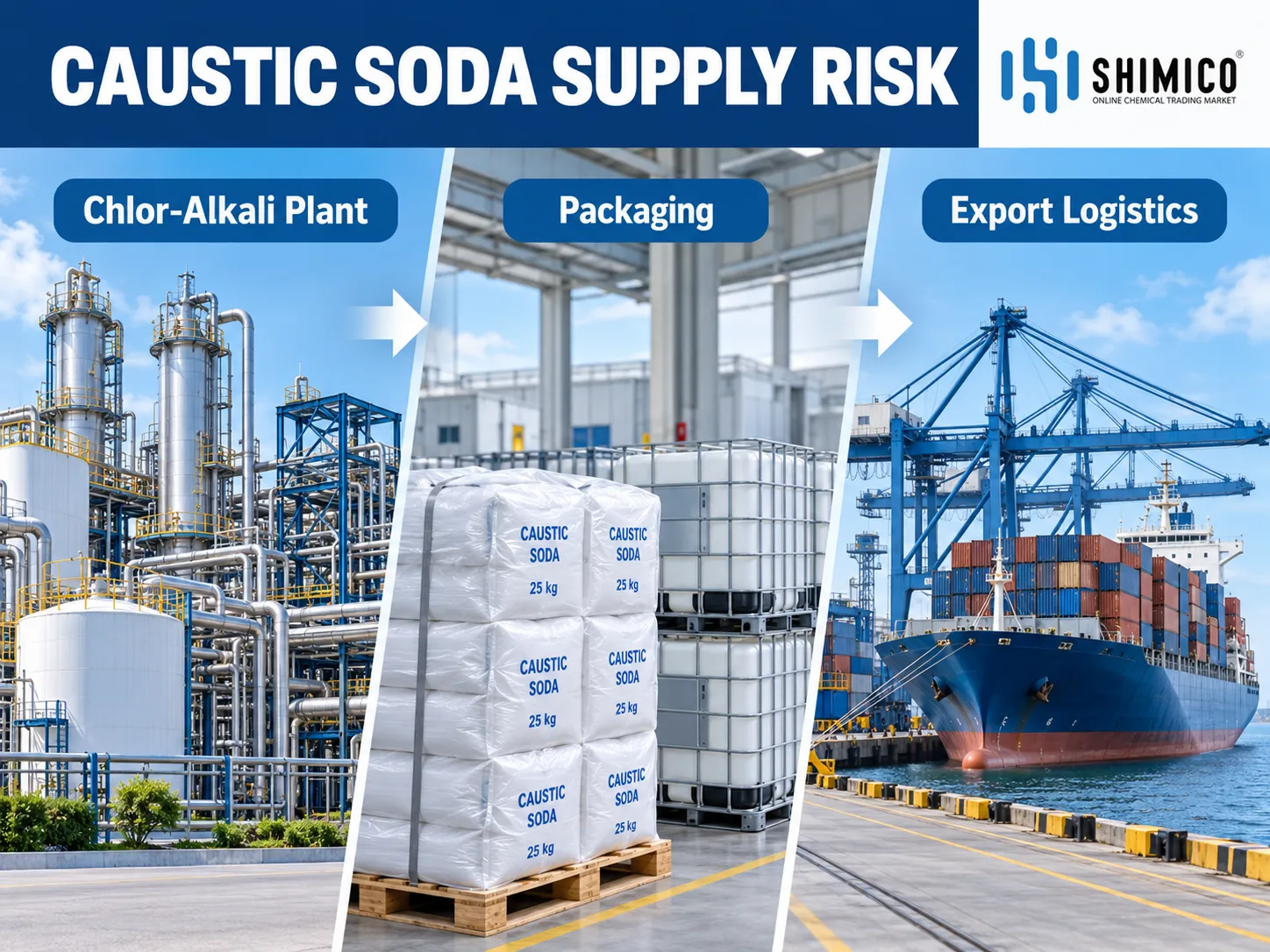
Strait of Hormuz Chemical Prices Differ for Caustic Soda Flakes and Lye
Caustic soda lye normally moves in tankers or liquid bulk systems and contains water. Flakes offer a higher concentration and can travel in lined bags, yet flaking, bagging, pallets, moisture protection, and container freight add cost. A buyer cannot compare one ton of lye with one ton of flakes without correcting for NaOH concentration and all delivery costs.
Check NaOH assay, sodium carbonate, sodium chloride, iron, packaging layers, palletization, production date, storage requirements, and container dryness. Caustic soda absorbs moisture and carbon dioxide from air. A delayed or damaged container can turn a logistics problem into a quality claim.
Strait of Hormuz Chemical Prices Require a Better RFQ
Volatile markets punish vague requests. “Send your best price” gives a supplier too much room to change the basis of comparison. A useful request for quotation fixes the product, quality, quantity, packaging, destination, Incoterm, shipment window, documents, inspection, payment method, and quote validity.
Strait of Hormuz Chemical Prices Buyer Checklist
Use the following checks before comparing offers. They help reveal whether the seller has quoted a real cargo under clear terms.
- Product identity: grade, assay, physical form, test method, and acceptable tolerance.
- Quantity: trial, container, parcel, or bulk cargo size with weight tolerance.
- Origin and producer: country, plant, stock location, and whether the cargo already exists.
- Packaging: bag layers, net weight, pallets, drums, jumbo bags, or bulk handling.
- Shipment: loading port, destination, laycan, route assumption, transshipment, and estimated transit.
- Price basis: currency, Incoterm, included charges, freight validity, and war-risk treatment.
- Documents: COA, TDS, SDS, certificate of origin, packing list, invoice, and bill of lading.
- Inspection: sampling point, inspector, finality of results, and claim procedure.
- Payment: method, banking route, documentary conditions, and refund terms where applicable.
- Fallback: replacement origin, split shipment, revised loading window, or cancellation right.
Strait of Hormuz Chemical Prices Need Scenario Based Buying
Build three short scenarios. In the first, the route improves and freight eases. In the second, present restrictions continue. In the third, vessel traffic falls again or another export route closes. For each case, record inventory cover, latest acceptable arrival, cash exposure, approved substitute origins, and the cost of production loss. This method gives the purchasing team a trigger for action instead of forcing a price prediction.
Compare Strait of Hormuz Chemical Prices and Suppliers
Use Shimico to compare suppliers, specifications, packaging, and commercial terms for urea, sulfur, methanol, caustic soda, bitumen, and other industrial chemicals.
Strait of Hormuz Chemical Prices Outlook for Buyers
Urea and sulfur sit at the top of the near-term risk map because regional production and export routes directly affect their global balances. Methanol follows through gas, plant operations, terminals, and chemical tanker availability.
Bitumen responds through crude, refinery output, fuel, packaging, and route costs. Caustic soda faces a more regional response shaped by chlor-alkali balances and whether the buyer needs flakes or lye.
The market can also adapt. Cargoes move from other origins, buyers change shipment size, and producers reopen routes. Recent fertilizer trade already shows that replacement exporters can reduce the physical shortage even when prices remain painful. Buyers should track executable offers, inventory cover, shipment status, and delivered cost instead of relying on one benchmark.
The most useful question is this: if the quoted cargo arrives two or four weeks late, what happens to production, customers, and cash? Once you know that cost, you can judge whether paying for earlier delivery, splitting an order, or approving another origin makes sense.
Strait of Hormuz Chemical Prices Frequently Asked Questions
Which chemical prices could rise first after a Strait of Hormuz disruption?
Urea and sulfur carry the highest immediate exposure because Gulf production, gas processing, refineries, export terminals, and shipping routes influence their supply. Methanol and bitumen can follow. Caustic soda exposure is more regional.
Why is urea highly exposed to a Strait of Hormuz disruption?
The Middle East accounts for nearly one-quarter of global urea exports, according to the World Bank. Urea also depends on natural gas, ammonia production, operating plants, export terminals, and available vessels.
Why can sulfur prices react to oil and gas disruption?
Refineries and gas-processing plants recover much of the world’s sulfur. Lower oil or gas processing can reduce sulfur output, while phosphate fertilizer and sulfuric acid plants continue to need the material.
Does a Strait of Hormuz disruption guarantee higher chemical prices?
No. Replacement exports, weaker demand, inventory releases, plant restarts, or safer routes can offset part of the shock. The effect also differs by destination, grade, packaging, shipment size, and Incoterm.
What should a chemical buyer request before accepting a quote?
Request the producer, origin, specification, COA, quantity, packaging, stock location, loading port, shipment window, Incoterm, freight validity, insurance basis, inspection terms, payment method, and quotation expiry.
Should buyers lock a price or wait?
The answer depends on inventory cover, lead time, the cost of a late delivery, cash limits, and access to alternative origins. Buyers can reduce timing risk by splitting volume or using staggered shipment windows.
Strait of Hormuz Chemical Prices Sources
The sources below were checked on September 15, 2026. All market figures should be refreshed immediately before publication.
- Short-Term Energy Outlook: Global Oil Markets. U.S. Energy Information Administration. Published September 9, 2026.
- Middle East and Strait of Hormuz Updates. International Maritime Organization. Incident list updated September 14, 2026.
- Fertilizer Prices Surge as Strait of Hormuz Disruptions Tighten Supplies. World Bank Data Blog. Published 2026.
- What the Closure of Saudi Arabia’s East-West Pipeline Could Mean for Oil Flows. Associated Press. Published September 15, 2026.
Last Seen

Users Comment
Aramco loan $2 billion to Petro Rabigh to cover cash shortfall
Moldova exports gas to Ukraine for storage injections