




Sulfur for Infrastructure: Asphalt, Coatings & Concrete
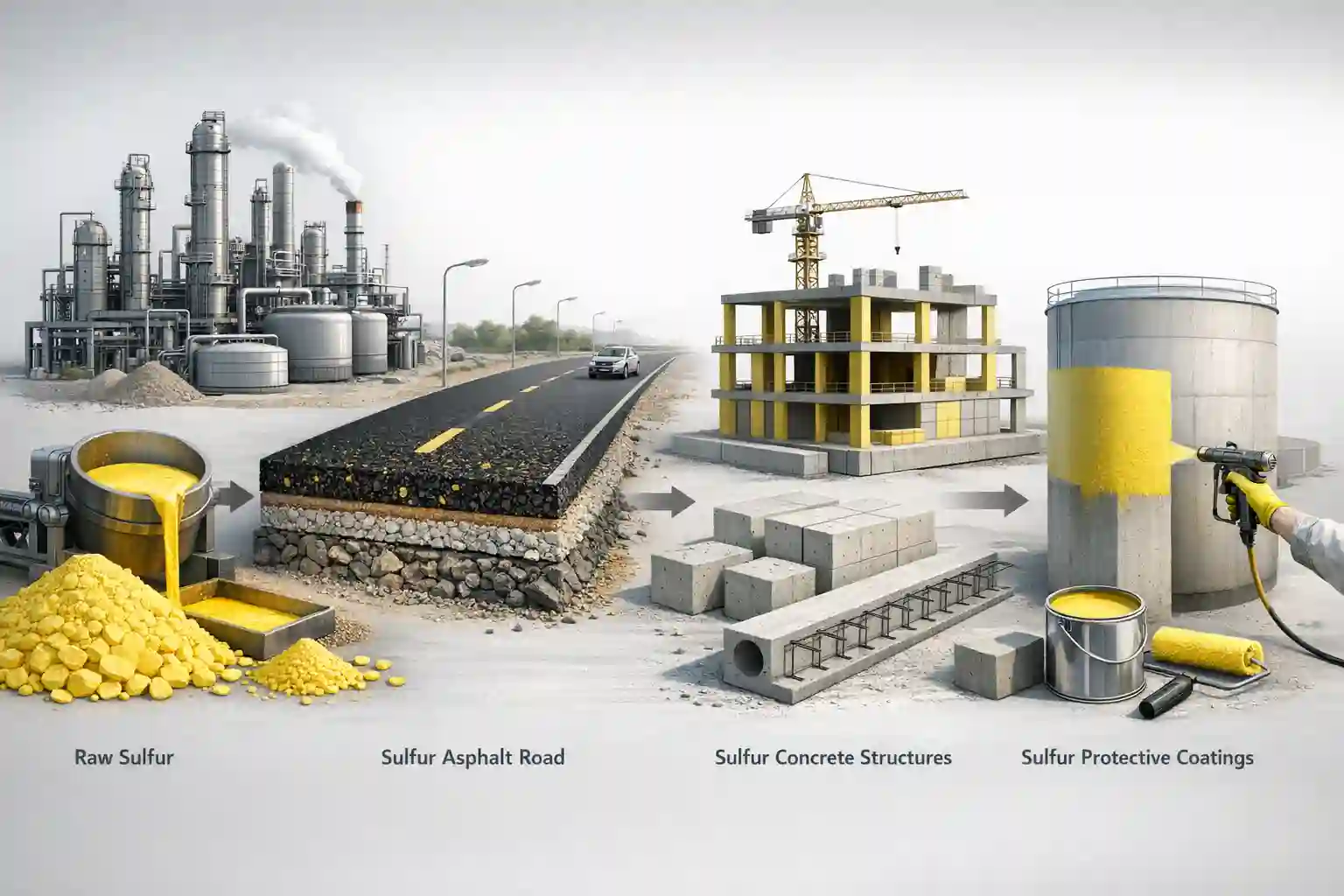
Why Does the Sulfur Value Chain Matter in Infrastructure?
“If we only see sulfur as an annoying byproduct, we will end up with yellow stockpiles and warehouse yards. If we see it as a source of advanced materials for infrastructure, we will achieve longer-life pavements, more resilient structures, and a new benchmark in life-cycle economics.”
Contents
- 1 Infrastructure Problems Targeted by Sulfur-Based Products
- 1.1 Short Service Life of Asphalt Pavements on High-Traffic Roads
- 1.2 Deterioration of Concrete Structures in Southern Coastal and Saline Environments
- 1.3 Freeze–Thaw, De-icing Salts, and Rapid Damage to Concrete Elements in Cold Regions
- 1.4 Corrosion of Concrete Basins and Channels in Chemical Industries
- 2 BituSul Sulfur Additive and Its Role in Improving Asphalt Performance
- 2.1 What Is BituSul and How Is It Added to the Asphalt Mix?
- 2.2 Mechanism of BituSul Performance in Asphalt Mixes
- 2.3 Performance Advantages of BituSul-Modified Asphalt
- 2.4 Technical Comparison: Conventional Asphalt vs. Sulfur Asphalt with BituSul
- 2.5 Impact of BituSul on Total Asphalt Cost
- 2.6 Mechanical Performance Improvement and Longer Surface Life
- 2.7 Mixing and Placement Temperature for Asphalt with BituSul
- 2.8 Examples of Projects Implemented with BituSul Asphalt
- 3 SulCoat Sulfur Coating; Insulation Against Moisture, Salt, and Acid
- 4 SulCrete Sulfur Concrete as a New Generation of Concrete for Aggressive Environments
- 4.1 Composition, Production, and Strength Development in Sulfur Concrete
- 4.2 Mechanical Properties and Durability of Sulfur Concrete vs. Conventional Concrete
- 4.3 Production and Curing Characteristics of SulCrete
- 4.4 Use of Byproducts and Industrial Waste as Aggregates
- 4.5 SulCrete Performance Classes
- 4.6 Key Applications of SulCrete Concrete
- 5 Comparison of Some SulCrete Properties with Conventional Concrete
- 6 Practical Applications of Sulfur-Based Products in Civil Projects
- 7 Environmental and Safety Considerations for Using Sulfur-Based Products
- 8 Conclusion and Key Notes for Selecting Sulfur-Based Products
The Gap Between Sulfur Production and Industrial Consumption
The growth of sulfur production in Iran and other regional countries has been faster than the growth of downstream industrial consumption. What is the result of this imbalance?
- Sulfur stockpiling in refinery yards and occupation of operational space
- Costs for storage, handling, and inventory management
- Environmental risks in production regions and surrounding areas
- Lost opportunities to create value-added industries domestically
Developing stabilization technologies and converting sulfur into infrastructure products is the focal point for solving this issue. Products such as sulfur asphalt, sulfur coatings, and sulfur concrete address this gap directly turning raw sulfur into longer-service-life infrastructure assets.
Infrastructure Problems Targeted by Sulfur-Based Products
Short Service Life of Asphalt Pavements on High-Traffic Roads
On many intercity and urban roads in the country, the average service life of asphalt pavements is reported to be between three and five years.
Heavy axle loads, severe temperature fluctuations, and the inadequate quality of some materials cause rutting, cracking, and loss of smoothness to occur earlier than what was assumed in design.
Delayed maintenance intensifies this cycle and drives road construction and rehabilitation costs up exponentially.
Deterioration of Concrete Structures in Southern Coastal and Saline Environments
The unique climate of the southern coasts and soils containing sulfate and chloride ions can reduce the service life of many coastal, marine, and near-shore concrete structures to less than 15 years. Chloride ingress, sulfate attack, and continuous moisture accelerate reinforcement corrosion and lead to cracking and surface spalling.
International studies estimate that, in the field of coastal and marine concrete infrastructure alone, a significant portion of countries’ GDP is spent annually on damage compensation and repairs.
Freeze–Thaw, De-icing Salts, and Rapid Damage to Concrete Elements in Cold Regions
In cold regions, repeated freeze thaw cycles combined with road salting expose curbs, concrete barriers, and bridge piers to rapid deterioration.
In many cases, the service life of these elements drops to less than two years, creating a need for premature replacement. This is despite the fact that such a short life was not intended in the original design.
Corrosion of Concrete Basins and Channels in Chemical Industries
Steel, copper, and other metal extraction-based industries use various acids in high volumes as part of their production processes. Acid storage basins, fluid conveyance channels, settling ponds, and concrete tanks are exposed to severe chemical attack.
Common acid-protection systems can be very expensive and, in certain special conditions, may not be practically usable. The result is frequent production downtime and higher finished-product costs.
The family of sulfur-based products has been developed in direct response to these problems—higher-life pavements, moisture/salt/acid-resistant protective coatings, and sulfur concretes with high chemical and mechanical performance.
BituSul Sulfur Additive and Its Role in Improving Asphalt Performance
In road networks exposed to heavy axle loads, high traffic, and severe temperature swings, the limitations of conventional asphalt quickly become visible. Early rutting, reduced stiffness, thermal cracking, and rising maintenance costs are common consequences of using standard bitumen in such conditions. In this context, performance additives are introduced as a practical solution to enhance pavement durability.
BituSul is a sulfur-based additive engineered to improve the mechanical behavior of asphalt mixtures and is used directly in the asphalt production process. Without requiring pre-blending with bitumen or major changes to plant equipment, it is added during mixing alongside aggregates and bitumen inside the plant mixer.
Across many urban and intercity roads in the country, asphalt layers face heavy axle loads, concentrated traffic, and strong temperature variations. Conventional bitumen alone does not meet performance requirements, and in practice, rutting, cracking, and reduced service life become clearly evident. This is exactly where the sulfur additive BituSul comes into play.
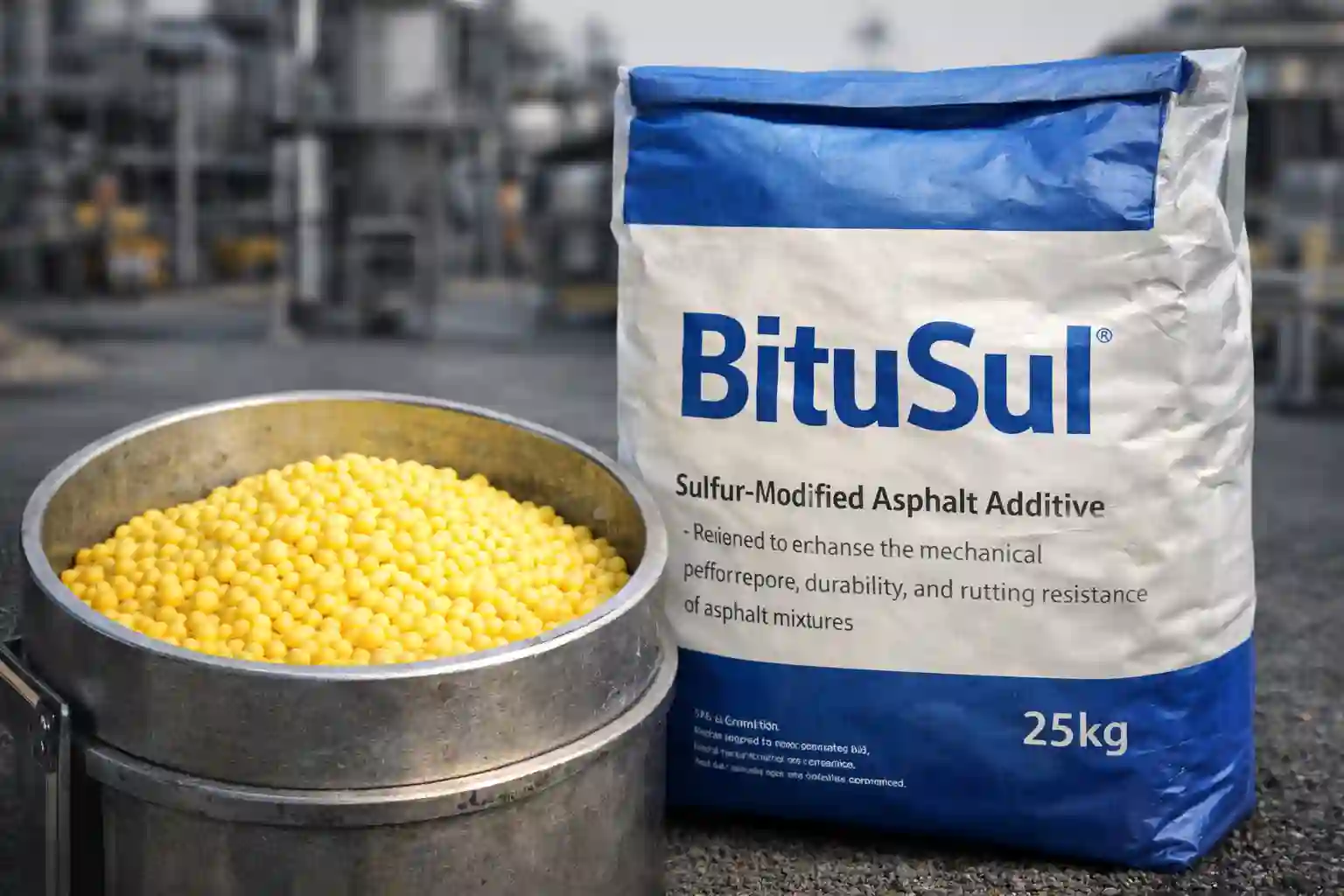
What Is BituSul and How Is It Added to the Asphalt Mix?
BituSul is a sulfur-based asphalt modifier designed to:
- Increase asphalt pavement service life
- Reduce production and execution costs
- Improve asphalt mixture mechanical performance .
Unlike many common polymers, BituSul does not require pre-blending with bitumen or installing special equipment for producing and storing polymer-modified bitumen. It is added directly during asphalt production, entering the plant mixer together with aggregates and bitumen. The result?
- Eliminates the need for upfront investment in PMB equipment
- Simplifies the production process for asphalt plants
- Can be used in existing plants without major line modifications
In addition, BituSul can replace 20% to 40% of the bitumen used in the mix, creating a meaningful advantage both economically and technically.
Mechanism of BituSul Performance in Asphalt Mixes
BituSul performance is based on modifying the asphalt mixture microstructure. Its presence increases internal cohesion, improves stress distribution, and reduces the mix’s sensitivity to temperature changes. The outcome is reduced permanent deformation and improved fatigue resistance.
One of BituSul’s key features is the partial replacement of bitumen in the mix. This not only helps reduce total asphalt cost, but also stabilizes mixture behavior at higher temperatures.
Performance Advantages of BituSul-Modified Asphalt
Field evaluations and laboratory results indicate that using BituSul can deliver the following improvements in pavement performance:
- Reduced rutting under heavy loading
- Extended fatigue life of asphalt mixtures
- Improved resilient modulus and mechanical stability
- Lower moisture susceptibility
- Faster reopening to traffic after placement
From an execution standpoint, not needing special equipment for modified-bitumen production is a major advantage compared with common polymer additives.
Technical Comparison: Conventional Asphalt vs. Sulfur Asphalt with BituSul
| Feature | Conventional Asphalt | Sulfur Asphalt with BituSul |
|---|---|---|
| Bitumen content in mix design | 100% reference bitumen | 60% to 80% reference bitumen + 20% to 40% additive |
| Bitumen cost per ton of asphalt | Baseline | About 15% to 20% lower (with reduced wearing-course thickness) |
| Rutting depth (AASHTO T324) |
Reference value | At least half of the reference value |
| Cycles to fatigue failure (EN 12967) |
Reference | About 4× conventional asphalt |
| Marshall stability (ASTM D6927) |
Reference | At least 1.5× conventional asphalt |
Field evaluation reports, including results from projects implemented in parking areas, urban access roads, and sections of highways, indicate that BituSul-containing pavements perform significantly better than conventional mixes against rutting and early deterioration.
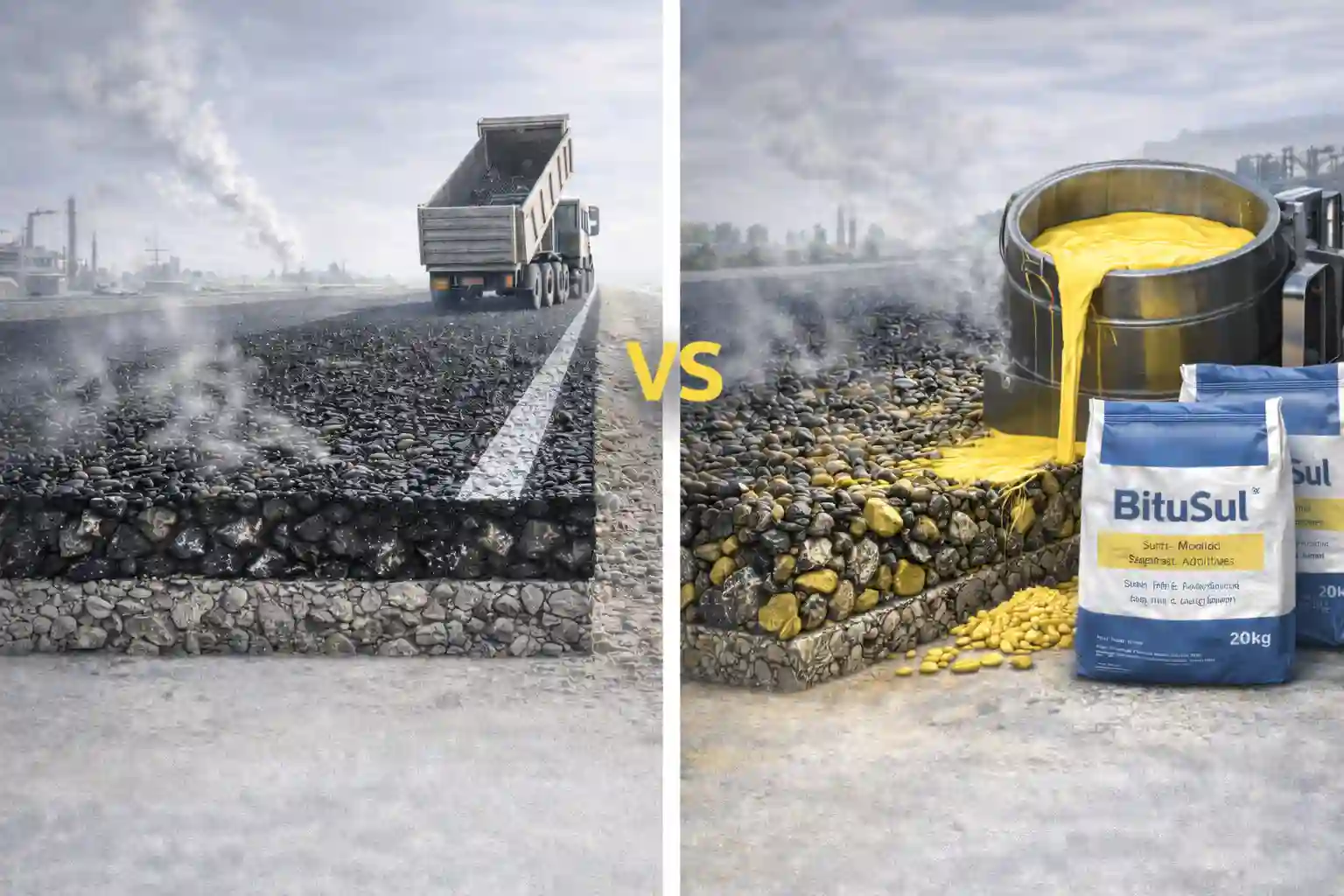
Impact of BituSul on Total Asphalt Cost
The price of this additive is roughly comparable to bitumen. When BituSul replaces a meaningful portion of bitumen in the mix:
- The total asphalt cost does not increase. At the same time, due to the higher mechanical properties of asphalt produced with BituSul (increased elastic modulus), the wearing-course (top layer) thickness can be reduced in design, which can reduce total asphalt costs by up to 25%.
- Whereas many conventional additives typically increase costs by 15% to 30%.
In other words, with BituSul, performance goes up while costs can go down—an attractive combination that draws attention from both clients and contractors in real projects.
Mechanical Performance Improvement and Longer Surface Life
Based on field results and standard tests, BituSul-modified asphalt compared to conventional asphalt shows:
- 2× reduction in rutting depth (AASHTO T324)
- About 25% increase in resilient modulus (ASTM D4123)
- About 4× increase in fatigue life (EN 12967)
- Improved durability against moisture and higher TSR in moisture susceptibility tests (AASHTO T283)
- At least 1.5× increase in Marshall stability (ASTM D6927)
These numbers are not just “vague qualitative improvements.” They mean that on heavy-traffic routes and in harsh conditions, the asphalt surface can enter the distress phase several times later.
Mixing and Placement Temperature for Asphalt with BituSul
One challenge in modified-asphalt production is the higher mixing and paving temperatures. BituSul helps:
- Slightly reduce mixing temperature
- Lower energy consumption in production
- Make paving and compaction smoother
Lower temperatures affect fuel costs, workplace conditions for crews, and emissions.
Examples of Projects Implemented with BituSul Asphalt
In recent years, BituSul has been used in various projects, including:
- Parking areas and heavily trafficked urban roads
- Highway access roads and major ramps
- Sections of intercity freeways with heavy traffic
- Industrial roads and access routes to cement plants and heavy industries
In these projects, field inspections have shown that:
- Surface rutting was significantly reduced
- Early cracking was not observed
- Compared to conventional asphalt, the road surface retained quality over a longer period
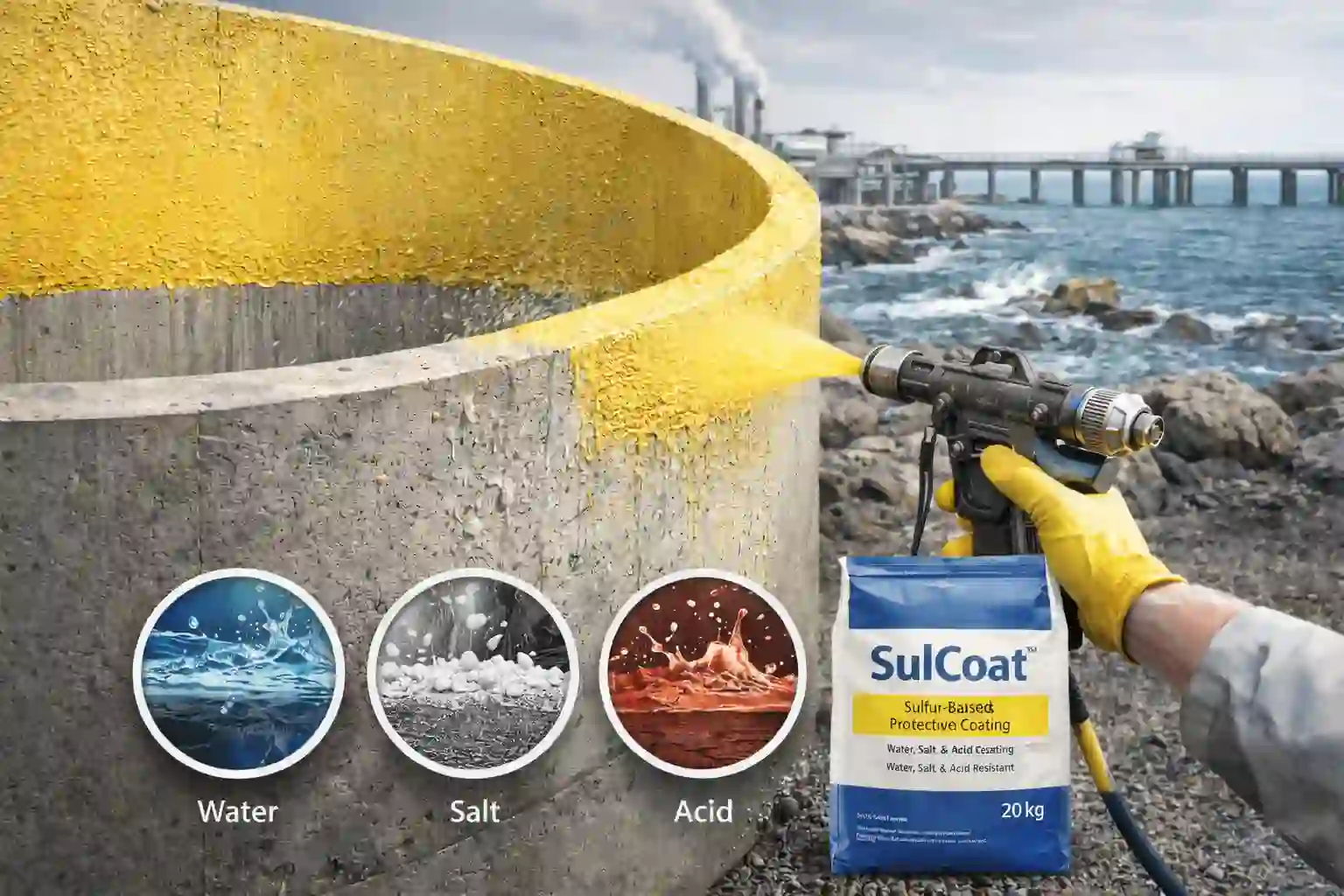
SulCoat Sulfur Coating; Insulation Against Moisture, Salt, and Acid
In surface protection, sulfur-based composite coatings represent a new generation of barriers resistant to moisture, salt, and acid. SulCoat is a prominent example of a sulfur coating designed to replace systems such as bitumen membranes, epoxy, and polyurethane in harsh conditions.
What Is SulCoat and What Problem Does It Solve?
SulCoat is a composite coating based on stabilized sulfur, formulated to protect concrete structures in aggressive environments. It is designed to deliver stable performance against moisture, salt, and acids while remaining practical to apply without excessive complexity.
In many projects, conventional coatings such as epoxy or polyurethane are challenging due to high cost, application sensitivity, and performance limitations in specific environments. SulCoat addresses this exact gap by offering a viable alternative for long-term protection.
Key Performance Advantages of SulCoat Compared to Conventional Coatings
One reason sulfur coatings are gaining attention is the balance between performance and cost. In many projects, conventional coatings are either too expensive or unreliable under certain environmental conditions.
Key advantages of SulCoat include:
- Rapid film formation and quick return to service
- Good adhesion to properly prepared concrete
- High resistance to freeze–thaw cycles
- Very low permeability to water and harmful ions
- Stable performance in saline and acidic environments
Types of SulCoat Sulfur Coating Classes
This coating is typically produced in three performance classes:
- SulCoat-MR: moisture-resistant coating, suitable for back walls and foundations
- SulCoat-SR: salt-resistant coating, suitable for jetties, coastal bridge piers, and structures in contact with seawater
SulCoat-AR: acid-resistant coating, suitable for acid basins, chemical industries, and petrochemical environments
SulCoat Types Based on Service Environment
Depending on the dominant environmental aggressor, SulCoat is used in several classes. This classification enables selection based on real project conditions rather than generalized assumptions.
Moisture-Resistant Coating
This class is used for structures continuously exposed to water or high humidity. Water reservoirs, transfer channels, concrete elements in humid regions, and some urban structures are among typical applications.
Salt-Resistant Coating
In coastal environments where chloride ions are the primary driver of concrete deterioration, salt-resistant coatings are critical. Jetties, coastal retaining walls, bridge piers near seawater, and marine precast elements are key examples.
Acid-Resistant Coating
In chemical and petrochemical industries, acid exposure is one of the most severe causes of concrete damage. Acid-resistant coatings are used for storage basins, corrosive-fluid channels, industrial floors, and concrete tanks.

Application Process and Performance Features of SulCoat
Applying SulCoat is relatively straightforward, provided proper surface preparation is done. First, the surface must be clean, dry, and free from loose or weak material.
Then the coating is melted in a thermal reactor at around 140°C and sprayed onto the target surface using a spray gun. This method enables a continuous layer on both horizontal and vertical surfaces.
Although SulCoat application is simpler than many industrial coatings, surface preparation is decisive for final performance. The substrate must be clean, dry, and free of loose particles. If weak or delaminated concrete is present, localized repair before coating is essential.
After melting at controlled temperature, the coating is applied using spray equipment. Maintaining proper application temperature and uniform thickness are key factors for achieving optimal performance.
The most important reported technical features of this coating include:
- Rapid film formation and suitable adhesion in less than three hours
- High resistance to freeze–thaw cycles per ASTM C1262
- Adhesion up to about 8 MPa on concrete (ASTM D234)
- Very low permeability to moisture (ASTM 642)
- Resistance to penetration of acids and salts in AR and SR classes
- Semi-thermal-insulation behavior and resistance to fire spread
The base color is typically yellow or light brown, and depending on formulation, colored versions can also be produced. This is attractive for urban furniture, flooring, and facades exposed to aggressive environmental conditions.
SulCrete Sulfur Concrete as a New Generation of Concrete for Aggressive Environments
(SulCrete sulfur concrete; a Portland-cement-free concrete with high chemical resistance)
SulCrete sulfur concrete is a new generation of specialty concrete for corrosive environments, where Portland cement and water are removed and replaced by sulfur cement and aggregates processed at elevated temperature.
The production process is typically carried out in the 130°C to 150°C range, resulting in a dense concrete that is highly resistant to the penetration of aggressive agents.
SulCrete is a type of sulfur concrete produced by combining stabilized sulfur cement and aggregates at approximately 130°C to 150°C. In this system:
- No Portland cement is used
- No water is required for mixing and curing
These two features fundamentally differentiate SulCrete from conventional concrete.
Composition, Production, and Strength Development in Sulfur Concrete
In SulCrete sulfur concrete, molten sulfur cement acts as the binder and encapsulates the aggregates (natural or industrial).
A key advantage is the ability to use industrial byproducts as aggregates such as steel slag, copper slag, recycled aggregates, and even low-value materials like beach sand and lumachel.
After casting, sulfur concrete typically reaches about 85% of its final strength within roughly 24 hours. This is critical for projects with tight commissioning timelines.
Mechanical Properties and Durability of Sulfur Concrete vs. Conventional Concrete
Comparing reported properties of sulfur concrete and conventional concrete provides a clear picture of the advantages:
- Compressive strength in the 25 to 70 MPa range
- Higher tensile and flexural strength compared to reference concrete
- Maximum moisture absorption around 0.06%, versus about 3% for conventional concrete
- Very low creep and good elastic behavior
- Very high resistance to sulfuric acid, hydrochloric acid, and other acids

Production and Curing Characteristics of SulCrete
In the SulCrete production process:
- After mixing sulfur cement and aggregates at controlled temperature, the mixture is transferred into molds
- Within about 24 hours, the element achieves up to 85% of its final strength
- Rapid strength gain enables fast demolding, higher production turnover, and earlier commissioning
From an industrial perspective, this means reduced capital idle time and higher throughput per unit time.
Use of Byproducts and Industrial Waste as Aggregates
One major advantage of SulCrete is the flexibility in choosing aggregate types. In producing this concrete, you can use:
- Steel slag
- Copper slag
- Recycled aggregates
- Materials such as lumachel and beach sand in regions with limited stone aggregates
This is attractive economically and environmentally, because it brings part of industrial waste into a beneficial production cycle.
SulCrete Performance Classes
SulCrete concrete is produced in three classes depending on the aggressive environment:
- SulCrete-MR
Suitable for humid environments and structures in contact with water and moist soil - SulCrete-SR
Suitable for soils and environments containing sulfate ions and salts - SulCrete-AR
Suitable for acidic environments, acid basins, industrial wastewater, and strong corrosives such as sulfuric acid and hydrochloric acid
This class separation enables targeted design for highly specific applications.
Key Applications of SulCrete Concrete
Based on recent execution experience, SulCrete has notable applications in:
- Acid-resistant channels and basins in chemical, metallurgical, and petrochemical industries
- Acid and sludge storage tanks: where conventional concrete deteriorates quickly
- Prestressed concrete sleepers in desert regions and shifting sands: exposed to moisture, salt, and chemical attack
- New Jersey barriers and precast road elements: for cold regions with intermittent freezing
Acid-resistant tiles and urban precast elements: around industrial zones and areas where chemical washdown is used
Comparison of Some SulCrete Properties with Conventional Concrete
To make the behavioral differences between SulCrete and conventional concrete clearer, some specifications can be summarized side by side:
| Parameter | SulCrete Range | Conventional Concrete Range |
|---|---|---|
| Compressive strength (MPa) | About 50 to 80 | About 25 to 70 |
| Tensile strength (MPa) | About 5 to 8 | About 2 to 5 |
| Flexural strength (MPa) | About 8 to 9 | About 4 to 8 |
| Density (kg/m³) | About 2300 | About 2300 |
| Water absorption (%) | About 0.1 to 0.2 | About 1.4 to 4 |
| Thermal expansion coefficient (1/°C × 10⁻⁶) |
About 15 | About 10 to 15 |
| Elastic modulus (GPa) | About 50 | About 28 |
| Thermal conductivity (W/m·K) | About 2.08 | About 1.28 |
| Creep (%) | About 0.15 | About 0.5 |
This table shows that:
-
SulCrete achieves a higher level in compressive, tensile, and flexural strength
-
Water absorption is significantly lower, which is critical for aggressive environments
-
Lower creep means better long-term stability
Recycling and Life-Cycle of SulCrete Concrete
One attractive point about SulCrete is its unlimited recyclability. This concrete can be:
-
Crushed
-
Melted again
-
And reused to produce new components
This makes SulCrete attractive for systems where end-of-life planning and material management are part of the overall design strategy.
Practical Applications of Sulfur-Based Products in Civil Projects
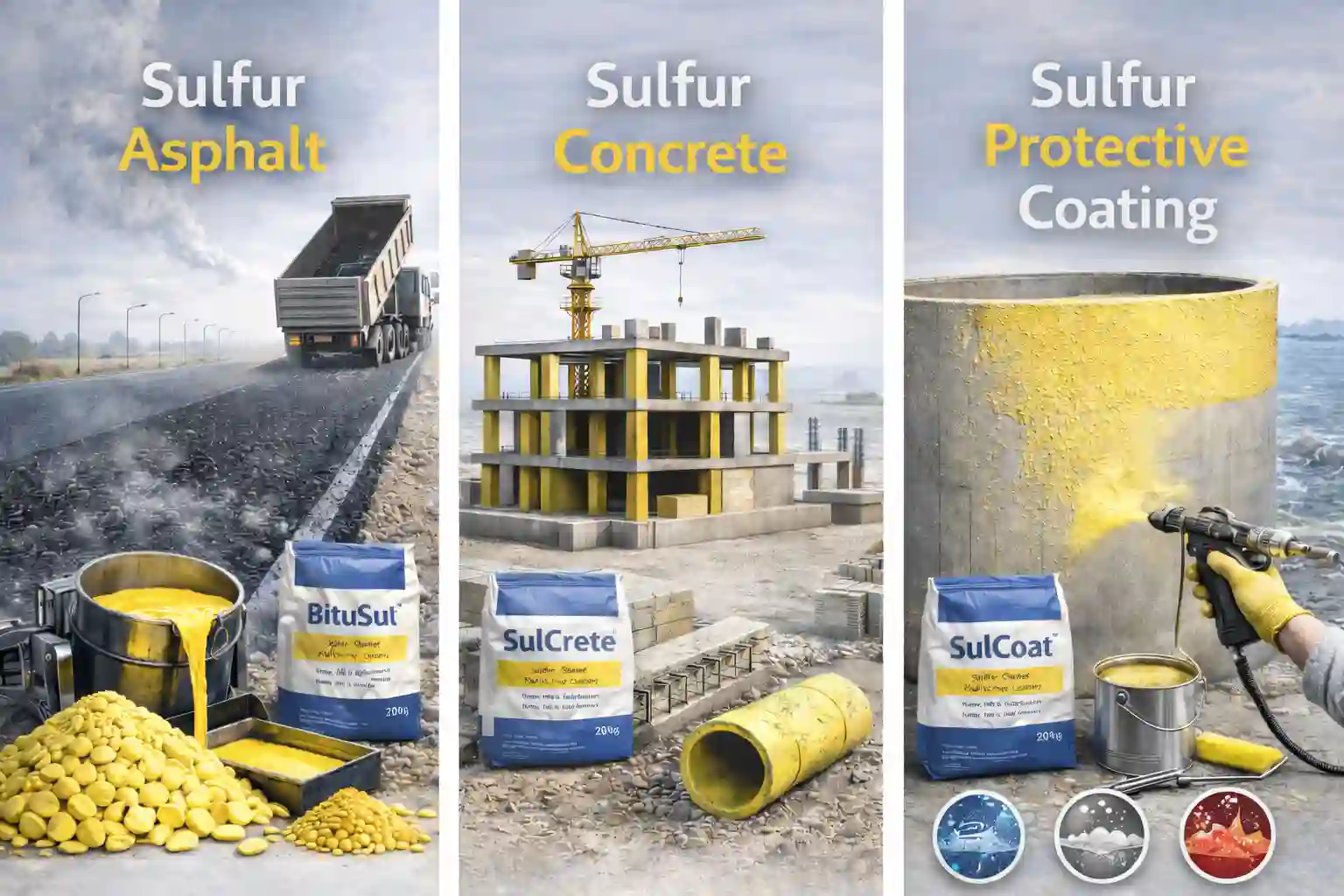
– Intercity Roads, Freeways, and Heavy-Duty Parking Areas
For intercity roads, freeways, and heavy-traffic parking areas, sulfur asphalt with BituSul can significantly increase pavement service life. Several pilot projects in recent years have shown that:
- Rutting in heavy-traffic lanes was markedly reduced
- Fatigue cracking entered the critical stage later
- The need for early repairs in the first years of service decreased
In multi-level parking structures and industrial yards, faster reopening after placing sulfur asphalt is another important benefit. Because strength develops quickly, traffic loading can start sooner, reducing downtime.
– Coastal Structures, Basins, and Elements Exposed to Saline Environments
Jetties, seawalls, bridge piers near seawater, and structures exposed to saline environments are primary candidates for SulCoat sulfur coating.
Applying a salt-resistant barrier layer on concrete surfaces can substantially reduce chloride ingress and extend structural life.
– Chemical Industries, Petrochemical Facilities, and Industrial Wastewater Treatment Plants
In chemical and petrochemical industries, acid basins, sludge channels, and corrosive solutions are often the main durability challenge for concrete.
Applying SulCoat-AR on concrete, or constructing basins and channels using SulCrete sulfur concrete, can minimize chemical attacks.
– Railway Sleepers, Urban Furniture, and Precast Elements
Due to rapid strength development and factory production capability, sulfur concrete is a strong option for precast components.
Railway sleepers in desert regions, urban furniture elements, floors exposed to salting and freezing, and protective blocks can all benefit from sulfur concrete.
Environmental and Safety Considerations for Using Sulfur-Based Products
Gas Emissions During Production and Placement of Sulfur Asphalt
One common concern regarding sulfur asphalt is the potential release of H2S and SO2 gases during production and placement.
Field experience and technical reports show that if production and paving temperatures are kept within the appropriate range (below about 145°C), gas concentrations at the worksite remain well below occupational exposure limits.
Nevertheless, safety practices such as proper ventilation, using respirators in enclosed areas, and temperature control are part of the execution protocol for this asphalt type.
Recycling and Life-Cycle of Sulfur-Based Products
Sulfur-based products—especially sulfur concrete and sulfur coatings—have the advantage that, at end of service life, they can be reheated and recycled. This helps move material life cycles closer to a circular economy and reduces consumption of natural resources.
Conclusion and Key Notes for Selecting Sulfur-Based Products
1. When Is Sulfur Asphalt the Better Choice?
In projects facing heavy axle loads, limited maintenance budgets, and rutting concerns, sulfur asphalt with BituSul is a serious option. Reduced bitumen cost, longer pavement life, and faster reopening to service are three main reasons designers and practitioners consider this technology.
2. Sulfur Coatings vs. Conventional Coatings
For structures exposed to severe moisture, saline environments, or acids, sulfur coatings such as SulCoat can be a suitable alternative to bitumen membranes, epoxy, and polyurethane—especially where rapid strength gain, high adhesion, and good freeze–thaw performance are important.
3. Sulfur Concrete for Highly Corrosive Environments
Wherever Portland-cement concrete struggles against acids, sulfates, chlorides, and wastewater conditions, sulfur concrete should be on the table as a serious option. Acid basins, industrial wastewater channels, railway sleepers in desert environments, and urban components exposed to salting are among the most important applications of this concrete type.

 Loading...
Last Seen


Users Comment
Sulfur Concrete for Chemical Industries: Definition, Benefits & Uses
The Top 10 Industrial Chemicals Shaping the World in 2025
How Urea Can Hydrate and Exfoliate Your Skin
Sodium carbonate| Soda ash; features and applications
Copper Sulfate; Features and applications
Sulfur; Features and applications
Zinc sulfate; Features and applications
Urea; Features and applications
Sodium bicarbonate; Features and applications
Ammonium Sulfate; Features and applications
What is the use of caustic soda? An Overview of the caustic soda uses
Caustic soda flakes and the methods of production