




Iran War Raises Caustic Soda Freight Risk
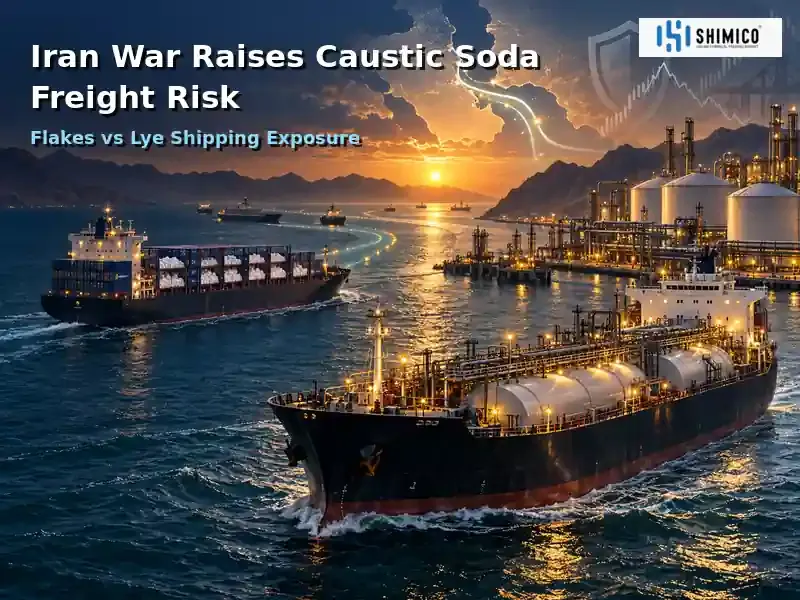
Direct answer: The Iran war has raised the delivered-cost risk for both caustic soda flakes and caustic soda lye, even where producers still have material available.
Liquid caustic soda faces greater exposure to chemical-tanker availability, tank scheduling, war-risk insurance and port delays. Flakes avoid some tanker constraints, but buyers still face container surcharges, dangerous-goods acceptance, disrupted sailings and longer transit times.
The main buyer question is no longer which form has the lowest quoted price. It is which cargo can leave the origin, remain insured, reach the destination and clear the terminal inside the plant’s operating window.
This distinction matters because a low FOB quote can coexist with a high delivered cost. Freight, insurance and delay charges may rise after the product value is agreed. A buyer can secure attractively priced caustic soda at origin and still fail to obtain an executable vessel, tank container or liner booking.
The first price shock also produced conflicting signals. China retained high chlor-alkali operating rates and ample output. Other Asian producers reduced rates or declared force majeure. Product prices did not move in one direction across every region, yet replacement cost rose for importers that depended on exposed routes.
The current caustic soda story is not a universal shortage. It is a split market in which origin, physical form, vessel access and destination infrastructure decide the real cost. This reading follows the regional evidence reported by Procurement Resource on 2 June 2026.
Iran War Caustic Soda Freight Risk: What Changed After the Shipping Shock?
The Iran war affected caustic soda through several connected channels. The Strait of Hormuz disruption raised fuel and bunker costs. Insurers reassessed voyages near exposed waters. Shipowners demanded stronger compensation for delay and route risk. Chemical producers also faced pressure from energy, feedstock and co-product markets.
Caustic soda does not trade as an isolated product. Chlor-alkali plants produce chlorine and caustic soda together. Weak chlorine or PVC economics can reduce plant operating rates even when caustic demand remains firm. This co-product relationship can tighten caustic availability without a direct shortage of salt or electricity at the buyer’s destination.
Procurement Resource reported that US caustic soda prices rose about 3.7% after the Strait of Hormuz disruption. The same report described roughly three dozen force majeure declarations across Asia and the Middle East. Chinese chlor-alkali plants were estimated to be operating at about 83% to 84%, while plants in Japan, South Korea and Taiwan were closer to 60% to 70%.
Those figures explain why a single global caustic soda price is misleading. Supply can look comfortable in China while importers elsewhere pay more for prompt, deliverable cargoes. Freight can move faster than the product price.
Iran War Caustic Soda Prices: Why CFR Can Rise Faster Than FOB
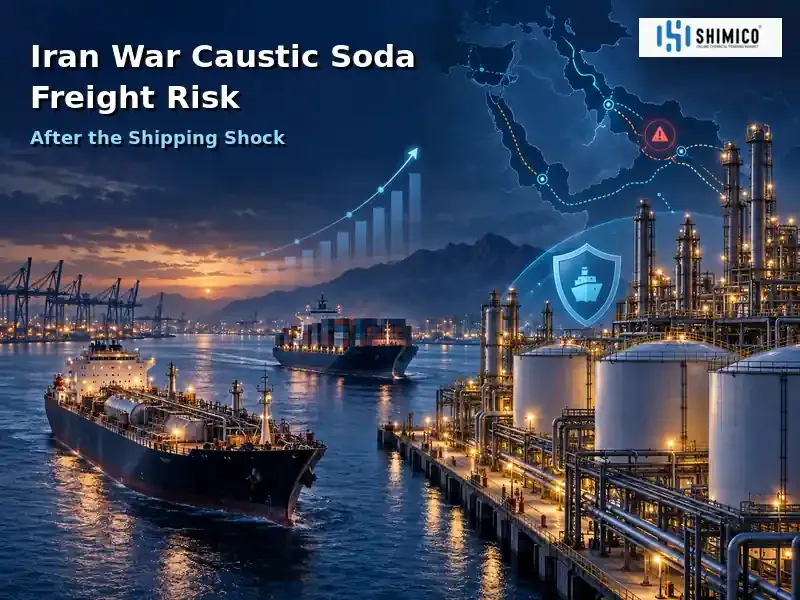
FOB reflects the product and loading obligations at the named origin. CFR includes ocean freight to the named destination. When bunker surcharges, tanker scarcity or war-risk premiums climb, CFR can rise even if the FOB product assessment stays flat.
This gap became visible during the 2026 disruption. Procurement Resource reported that CFR landed values rose faster than FOB prices as fuel and freight costs increased. The result matters to buyers in India, Pakistan, Southeast Asia, East Africa and other import-dependent markets. A stable origin price does not protect the delivered budget.
Buyer warning:
Do not compare a flakes FOB quote with a lye CFR quote as if they cover the same cost. Match origin, concentration, shipment month, parcel size, destination, insurance and discharge obligations before ranking offers.
Iran War Caustic Soda Supply: Why Inventories Delayed the Full Impact
Stocks acted as a temporary buffer. Buyers used terminal inventory, supplier allocations and previously booked cargoes before returning to the spot market. That delayed the visible shortage in some countries. It did not remove the underlying shipping exposure.
The Guardian reported on 10 May 2026 that stockpiles had softened the early economic impact, while chemical industry representatives described a slower rise in prices for caustic soda, ammonia, methanol and other industrial chemicals. The report also noted that shipping normalization could take months even after a route reopening.
This creates a trap for procurement teams. A quiet spot market may reflect inventory drawdown or reduced industrial consumption. It does not prove that replacement cargoes have become easier to ship.
Strait of Hormuz Caustic Soda Supply: Which Cargoes Face More Iran War Risk?
The Strait of Hormuz matters to caustic soda buyers through direct and indirect exposure. Cargoes loaded at Gulf ports may face transit restrictions, vessel hesitation and insurance changes. Cargoes loaded elsewhere still face higher bunker costs and competition for tankers or containers diverted from riskier routes.
Physical form changes the route to market. Liquid caustic soda needs a compatible tanker, tank container or approved road and rail equipment. Flakes use bags, pallets and dry containers, but carriers still treat sodium hydroxide as dangerous goods. Neither form moves like ordinary general cargo.
Iran War Liquid Caustic Soda Shipping Risk: Tankers, Tanks and Laycan
Liquid caustic soda carries the greater route-specific exposure. A supplier may have product in storage but no suitable tanker inside the required laycan. The vessel must have compatible tanks, coatings, pumps, lines, cleaning records and terminal approval. A generic statement that shipping remains available does not answer these requirements.
A delayed liquid cargo creates costs at several points. The vessel may wait for berth access. The destination tank may remain reserved. A plant may purchase emergency local supply. Demurrage can accumulate if discharge equipment, documentation or tank capacity is not ready.
Iran War Caustic Soda Lye Risk: Concentration Changes the Freight Calculation
Commercial liquid caustic soda often trades near 50% NaOH. The exact grade and concentration must come from the contract and batch COA. At 50%, half the physical cargo weight is water. That fact raises freight exposure per tonne of active NaOH when shipping costs increase sharply.
The concentration also affects storage and temperature management. The OxyChem Caustic Soda Handbook describes 50% liquid grades, shipping methods, unloading systems, heating and physical properties. Buyers must use supplier instructions and site engineering standards for the offered concentration.
These technical facts belong in the logistics decision, not as a repeat of a product landing page. During conflict, every extra tonne, heating requirement and hour at berth changes the delivered-cost risk.
Iran War Caustic Soda Flakes Export Risk: Containers and Dangerous-Goods Acceptance
Flakes avoid the need for a dedicated liquid chemical tanker. That gives exporters more routing choices. It does not make the cargo immune to war-related freight pressure.
Shipping lines can restrict dangerous-goods bookings, reduce allocations, add surcharges or change transshipment schedules. Exporters also need sound moisture-resistant packaging. Sodium hydroxide flakes absorb moisture and carbon dioxide from air. Damaged bags can cake, leak or lose usable quality during a long transit.
Containerized cargoes face their own delay costs. Port storage, detention, demurrage, rolled bookings and replacement documentation can erase the apparent advantage of a low FOB price. Buyers need a confirmed sailing plan rather than a general promise that containers are available.
Iran War Caustic Soda Flakes Risk: Why Packaging Becomes a Delivery Issue
A conflict-related delay extends the time that flakes spend inside containers and transshipment yards. Heat, humidity and damaged liners become more relevant. The buyer should confirm bag construction, pallet treatment, container condition and survey rights before shipment.
Flakes commonly contain much more active NaOH per physical tonne than 50% lye. This can lower the freight burden per tonne of active material. The buyer still needs to add packaging, warehouse handling and dissolution costs before declaring flakes cheaper.
Iran War Caustic Soda Flakes vs Lye: Which Form Is More Exposed?
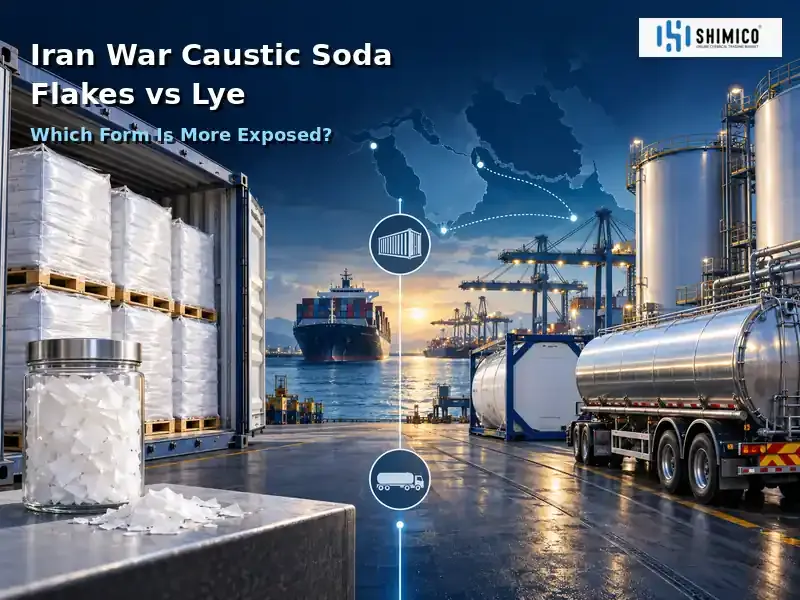
Liquid caustic soda is usually more exposed to vessel compatibility, tank availability, insurance and discharge delays. Flakes are usually more exposed to liner acceptance, container schedules, bag integrity and transshipment disruption.
The stronger option depends on the destination. A coastal plant with dedicated lye tanks and an established regional supplier may receive liquid material at a lower total operating cost. An inland buyer or long-distance importer may prefer flakes because it can move more active NaOH in a smaller physical shipment.
The table below organizes these differences. Each point is also stated in the surrounding text so the answer remains readable outside the table.
Procurement note:
Flakes often carry less freight per tonne of active NaOH on long routes. Lye may still win when a nearby supplier, regular tanker program and existing storage remove packaging and dissolution costs.
Iran War Caustic Soda Freight Cost: How Buyers Should Compare FOB, CFR and CIF
A useful comparison starts with the same delivery month, destination and active NaOH requirement. The buyer should separate the product value from freight, insurance and destination costs. This exposes the part of the offer that changed after the war.
For flakes, include packaging, palletization, dangerous-goods charges, container loading, ocean freight, detention, discharge and inland haulage. For lye, include vessel or tank-container freight, heating where required, insurance, terminal charges, tank rental, pumping, demurrage and inland delivery.
Iran War Caustic Soda Landed Cost: Compare Active NaOH, Not Wet Tonnes
A physical tonne of 50% lye contains about 0.50 tonne of active NaOH. A physical tonne of 99% flakes contains about 0.99 tonne. A buyer that compares only dollars per wet tonne will understate the freight burden of liquid material.
The calculation below is a screening method:
Delivered cost per active tonne = delivered cost per physical tonne ÷ NaOH mass fraction
If 50% lye costs $400 per physical tonne delivered, the simplified active-NaOH cost is $800. If 99% flakes cost $650 per physical tonne delivered, the simplified active-NaOH cost is about $657. These figures are illustrations, not current quotations. A complete calculation must add plant-specific storage, dissolution and handling costs.
Iran War Caustic Soda Contracts: Check War-Risk and Freight Clauses
Short validity periods are common when carriers change surcharges quickly. The contract should state whether freight and insurance are fixed at confirmation or may change before loading. If the seller can pass through a new surcharge, the clause needs an evidence requirement, calculation method and financial limit.
Force majeure language deserves the same attention. A broad clause may excuse delayed shipment without giving the buyer a clear cancellation point. Define notice periods, replacement rights, maximum delay and document requirements before payment.
Iran War Caustic Soda Prices: Which Import Markets Face the Highest Risk?
Import risk depends on more than distance from Hormuz. Supplier concentration, stock cover, terminal capacity, alternative origins and industrial demand decide how quickly a shipping shock reaches local prices.
India and Pakistan have short routes to Gulf producers but remain exposed to regional vessel and insurance conditions. East African buyers may face fewer sailing options and longer replacement lead times. Southeast Asian buyers can source from several Asian origins, yet they compete with large industrial consumers for spot material.
Iran War Caustic Soda Risk in India and Pakistan
South Asian buyers often compare Gulf, Northeast Asian and domestic supply. When Gulf routes tighten, demand can shift toward Asian exporters. That shift may raise container rates for flakes and prompt-cargo premiums for lye even if Chinese production remains high.
Port capability also matters. A buyer with no dedicated lye tank cannot replace flakes with a liquid cargo during an emergency. Product form is part of supply security.
Iran War Caustic Soda Risk in East Africa and Southeast Asia
East African importers can face smaller parcel sizes, fewer direct services and higher unit freight. A rolled container or missed tanker schedule can add weeks rather than days. Buyers should calculate stock against the longest credible replenishment time.
Southeast Asia has more regional supply options, but local force majeure events and reduced operating rates can tighten prompt availability. Procurement Resource placed Southeast Asian imports around $380 to $400 per tonne on a dry basis in late May, while Northeast Asian flakes were reported near $500 to $510 per tonne FOB. These dated references should not be treated as current SHIMICO offers.
Iran War Caustic Soda Price Outlook: Three Buyer Scenarios
No responsible forecast can reduce this market to one target price. Buyers should connect route conditions, operating rates, freight and inventories. Three scenarios cover the main exposure.
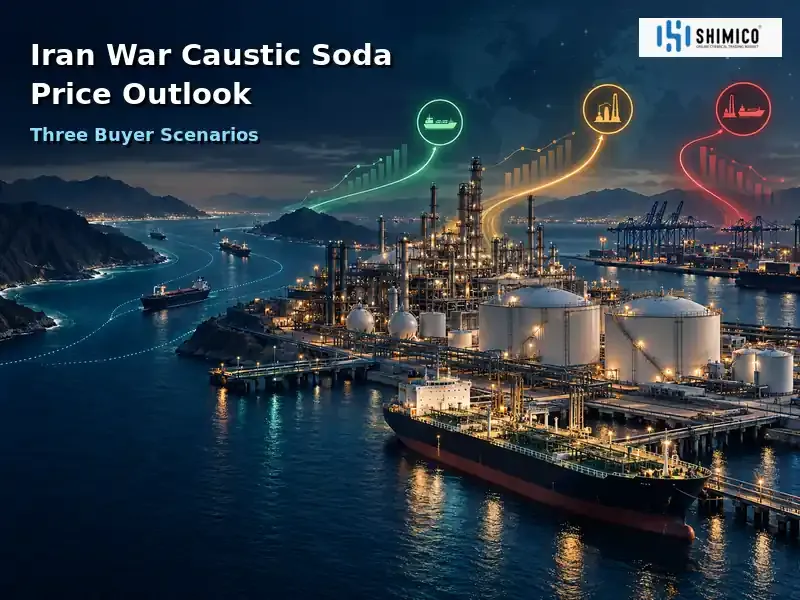
Iran War Caustic Soda Scenario 1: Hormuz Shipping Improves
Regular vessel movement and lower insurance premiums would reduce the delivery component first. FOB product values may remain supported if producers need time to clear delayed contracts or rebuild operating rates.
Buyers should request shorter quote validity and compare Gulf supply with Northeast Asian alternatives on the same arrival window. A reopened route does not instantly release every stored or delayed cargo.
Iran War Caustic Soda Scenario 2: Product Supply Improves but Freight Stays High
Chinese oversupply can cap flakes values while bunker charges and insurance keep CFR offers firm. This is the most confusing scenario because market reports may show weaker FOB prices at the same time buyers receive expensive delivered quotations.
Separate product, freight and insurance lines. The breakdown shows whether waiting could improve the total cost or only expose the plant to a later shortage.
Iran War Caustic Soda Scenario 3: Shipping and Plant Rates Tighten Together
This scenario carries the highest upward risk. More force majeure declarations, lower chlor-alkali operating rates and reduced shipping access would remove both product and logistics capacity.
Sellers may shorten validity, reduce optional quantities and prioritize buyers with confirmed payment and destination readiness. A verified higher-priced cargo can carry less production risk than a low offer without allocation or a vessel plan.
Iran War Caustic Soda Buyer Checks Before Booking Flakes or Lye
A war-exposed quotation becomes useful only after the seller proves product control and a workable shipment path. Technical documents alone do not prove allocation. An old bill of lading does not prove the current cargo exists.
For flakes, verify produced stock, batch COA, bag construction, container allocation, dangerous-goods acceptance, loading port and sailing date. For lye, verify concentration, tank status, compatible vessel, laycan, insurance, discharge rate and destination capacity.
The following checklist turns these requirements into comparable fields:
- Product control: produced, stored, allocated, planned or loaded.
- Origin: producing plant and actual loading terminal.
- Specification: NaOH concentration, impurities and batch COA.
- Shipment: parcel size, container or vessel status, laycan and expected arrival.
- Commercial basis: FOB, CFR or CIF, validity, currency and payment.
- Risk allocation: insurance adjustment, demurrage, route change and cancellation.
- Inspection: sampling point, test method, weight determination and off-spec procedure.
- Destination readiness: warehouse or tank capacity, discharge system and free time.
Fraud and performance warning:
A quote far below the relevant regional reference needs stronger verification, not faster payment. Confirm seller identity, bank details, stock control, inspection rights and the shipment plan.
Compare Iran War Caustic Soda Flakes and Lye Suppliers on SHIMICO
SHIMICO allows industrial buyers to review separate supply options without turning this market analysis into a duplicate product landing page. Buyers seeking containerized export material can review caustic soda flakes suppliers. Plants with suitable tanks and unloading systems can compare caustic soda lye suppliers.
State the grade, concentration, quantity, origin, destination, Incoterm and required arrival window. These fields reduce offers that look similar but cover different freight and delivery risks.
For the broader event context, read SHIMICO’s report on the Iran war impact on fertilizer and chemical markets and its analysis of Strait of Hormuz chemical price risks.
Compare Executable Caustic Soda Supply
Check concentration, product form, origin, shipment status and delivery terms before comparing prices. Use SHIMICO to review suppliers or publish a chemical requirement.
Iran War Caustic Soda Freight Risk FAQ
Why has the Iran war raised caustic soda freight risk?
The war disrupted shipping through the Strait of Hormuz and raised bunker, insurance and route costs. Caustic soda lye needs compatible tanker capacity, while flakes depend on container allocation and dangerous-goods acceptance. Delivered costs can rise even when product remains available at origin.
Are caustic soda flakes safer from Iran war shipping disruption?
Flakes avoid some chemical-tanker constraints and carry more active NaOH per physical tonne. They remain exposed to container surcharges, rolled sailings, port congestion, dangerous-goods restrictions and moisture damage during extended transit.
Why can caustic soda CFR prices rise while FOB prices stay stable?
CFR includes ocean freight to the destination. Bunker surcharges, war-risk insurance and vessel scarcity can raise the delivered price without an equal change in the product value at origin.
Should buyers choose caustic soda flakes or lye during the Iran war?
Long-distance and containerized buyers may favor flakes because they move less water per tonne of active NaOH. Nearby plants with established tanker supply and compatible storage may still find lye cheaper to handle. Compare the complete delivered cost and arrival certainty.
Is the 2026 caustic soda shortage global?
No. China retained relatively high chlor-alkali operating rates while other Asian and Middle Eastern producers faced lower rates or force majeure. The market is divided by origin, shipping access and destination inventory.
What should a buyer verify before paying for a caustic soda cargo?
Verify the legal seller, producing source, stock status, batch COA, shipment booking, carrier or vessel, insurance, inspection rights, payment sequence and destination readiness. A product sheet alone does not prove cargo allocation.
Iran War Caustic Soda Sources and Publication Record
- China Oversupply Caps Caustic Soda Even as Europe Capacity Shrinks, Procurement Resource, 2 June 2026.
- Degree of Complacency: Are Supply Chains Prepared for Impact of Ongoing Iran War?, The Guardian, 10 May 2026.
- Caustic Soda Handbook, OxyChem, accessed 21 September 2026.
- Sodium Hydroxide Solution Compound Record, PubChem, National Library of Medicine, accessed 21 September 2026.
- Guidelines for the Provisional Assessment of Liquid Substances Transported in Bulk, International Maritime Organization, 13 May 2019.
Last Seen

Users Comment
Methanol Prices After the Iran War: Supply, Freight and Buyer Risks
Sulfur Prices After the Iran War: Is the Shortage Easing or Just Shift
Urea Prices During the Iran War: Is the Shortage Over or Just Shifting
Strait of Hormuz Disruption: Which Chemical Prices Could Rise First?
Aramco loan $2 billion to Petro Rabigh to cover cash shortfall
Moldova exports gas to Ukraine for storage injections