





Industrial Purchasing Guide
Caustic Soda Flakes: Properties, Grades, Uses, Price and Bulk Purchase Guide
What Are Caustic Soda Flakes, and Why Are They One of Iran’s Most Widely Used Industrial Chemicals?
Anyone who has worked in a factory, car wash, industrial carpet-cleaning operation or commercial kitchen has probably heard the term caustic soda flakes. But what exactly are they? Why are they used so widely across Iranian industries, and what should a buyer examine before placing an order?
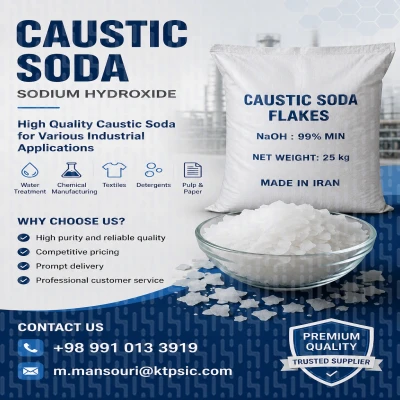
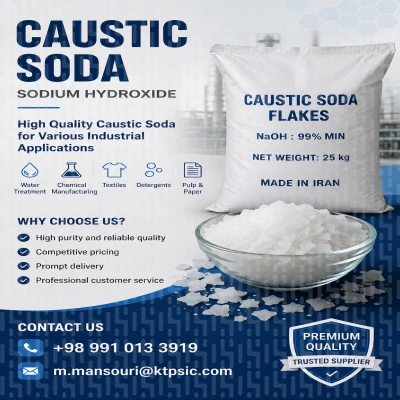
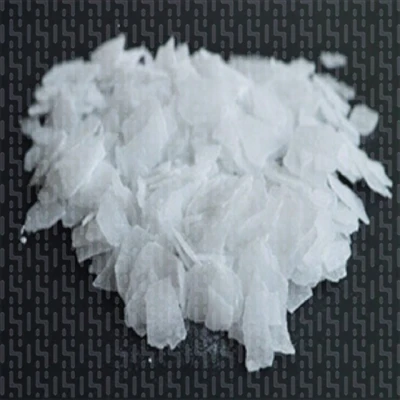
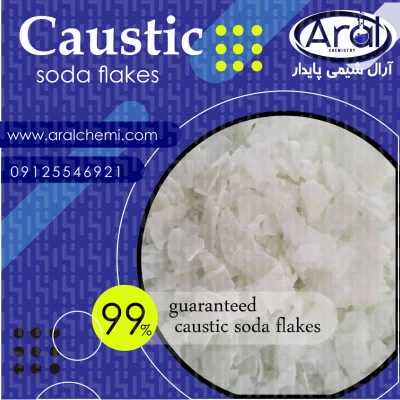
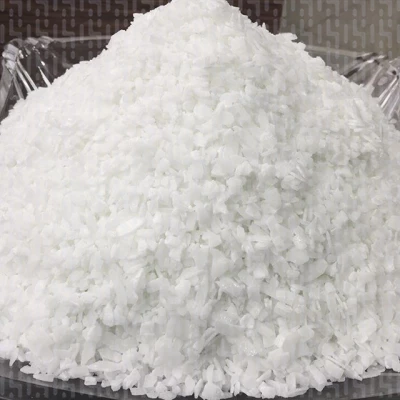
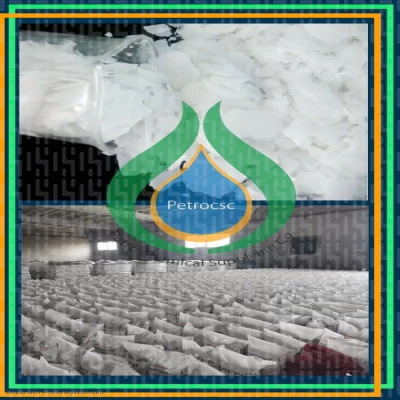
Caustic soda flakes, also called solid sodium hydroxide, are a powerful alkaline chemical with the formula NaOH. They are manufactured and sold as white flakes. The material is used in industries ranging from leather and textiles to gold extraction, soap production, water treatment, detergents, carpet cleaning and food processing.
In the market, the same product may be described as caustic soda flakes, sodium hydroxide flakes, flake caustic or simply caustic soda. The objective of this page is not merely to define the product. It is intended to help purchasing managers, technical specialists, quality-control teams, HSE personnel, detergent manufacturers, industrial carpet cleaners, water-treatment facilities, leather and textile factories, exporters and other industrial users evaluate the grade, purity, packaging, price, wholesale conditions and technical documents before making a decision.
In the Iranian market, the expressions “caustic soda flakes,” “flake caustic soda” and “solid caustic soda” normally refer to the same substance: solid sodium hydroxide. The word “flakes” describes the physical form—thin solid flakes—rather than a different chemical.
A common mistake is to ask only for the price. In industrial purchasing, price is not a single isolated number. The final cost depends on purity, moisture, the absence of caking, packaging type, brand, delivery city, loading conditions, the availability of COA and MSDS documents, order volume and even the supplier’s track record. A low-priced product that has absorbed moisture or lacks a clear analysis may create a much higher cost in the production line.

A large share of global sodium hydroxide production comes from the chlor-alkali electrolysis process. Chlorine and sodium hydroxide are co-products of the same process, so their production economics are closely connected.
Physical Properties of Caustic Soda Flakes | Appearance and Basic Identification
Under standard conditions, caustic soda flakes appear as white to cream-coloured flakes. They are odourless and may have a slightly glossy surface. Direct contact must be avoided because sodium hydroxide can cause severe chemical burns.
The melting point is approximately 318°C, and the material is highly soluble in water. Dissolution is strongly exothermic, so the temperature of the solution can rise rapidly. This behaviour is important in applications such as industrial degreasing and drain cleaning.
- Colour: white to cream
- Appearance: flakes or granules
- Odour: odourless
- State: hygroscopic solid that absorbs atmospheric moisture
- Melting point: approximately 318°C
- Boiling point: approximately 1388°C
- Density: 2.13 g/cm³
- Water solubility: very high; approximately 111 g/100 mL at 20°C
- pH of a 1 M solution: approximately 14
Chemical Properties of Caustic Soda Flakes | Why Is It So Powerful?
Sodium hydroxide is a strong base. In water, it dissociates almost completely:
NaOH → Na⁺ + OH⁻
The hydroxide ion is responsible for the product’s strong alkalinity, degreasing power and ability to hydrolyse fats, proteins and acids. Caustic soda reacts vigorously and exothermically with acids. It can react with aluminium and zinc to release hydrogen gas, and it reacts with carbon dioxide in air to form sodium carbonate.
Dissolving NaOH in water releases heat and produces a solution with a very high pH. A one-percent solution has a pH of roughly 13, which is sufficient for many surface-stripping, paint-removal and degreasing operations. The reaction with aluminium is especially important industrially because sodium hydroxide dissolves aluminium and releases flammable hydrogen. Aluminium containers should therefore not be used for storing or handling caustic soda.

Technical Specifications of Caustic Soda Flakes
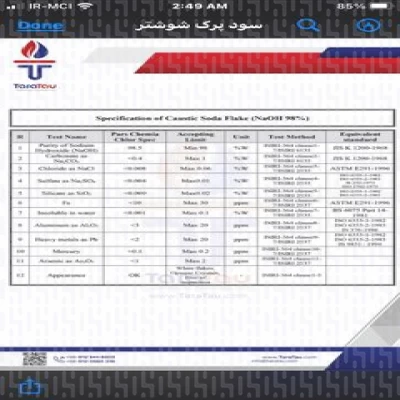
The following table summarises the key physical and chemical properties presented in the supplied source text. The figures are reference values and should not replace the batch-specific COA supplied with an industrial shipment.
A practical purchasing decision should also consider bulk density, flake size, moisture, sodium carbonate, sodium chloride, iron and other impurities. The theoretical crystal density shown above is not the same as the bulk density of a bag of flakes, which depends on particle shape and packing.
Types of Caustic Soda Flakes by Purity and Grade | Which Grade Should You Choose?
Caustic soda flakes are commonly offered in three broad grades. Selecting the wrong grade may increase cost or compromise the process result.

Industrial-Grade Caustic Soda Flakes | 95–98% Purity
Industrial grade is the most widely traded type in Iran. A purity range of about 95–98% is generally suitable for detergents, carpet cleaning, car washes, wastewater treatment, industrial degreasing, papermaking and industrial soap production. It is usually less expensive than higher-purity grades and represents the largest share of wholesale and commodity-market transactions.
Food-Grade Caustic Soda Flakes | 98%+ Purity
Food-grade sodium hydroxide is produced with high purity and tighter controls on heavy metals. It may be used for pH adjustment, olive processing, bakery applications, cocoa processing and noodle production. The supplied text states that this grade should comply with food-related specifications such as FCC or BP and should have strict mercury limits. Industrial-grade material must not be substituted for food-grade product.
Pharmaceutical or Laboratory Grade | 99%+ Purity
The highest-purity grade is intended for pharmaceutical manufacturing, controlled pH adjustment in drug processes and research laboratories. It should comply with specifications such as BP, USP or an appropriate reagent standard. Its price is higher and its market volume in Iran is more limited.
Industrial Production of Caustic Soda Flakes | From Salt to White Flakes
The principal production route is the electrolysis of sodium chloride brine. Three main cell technologies are described in the source text.

Diaphragm Cell
This is an older production method in which the anode and cathode are separated by a porous diaphragm. The sodium hydroxide solution produced is normally dilute and requires concentration. Residual sodium chloride is generally higher than in membrane-cell product, so the final material is mainly suited to industrial applications.
Mercury Cell
In the mercury-cell route, sodium forms an amalgam with mercury and then reacts with water. The method can produce high-purity sodium hydroxide, but environmental concerns have caused it to be phased out or prohibited in many countries. The supplied text states that it is not used in Iran.
Membrane Cell | The Modern Standard
The membrane-cell process uses an ion-exchange membrane between the anode and cathode. It produces a relatively concentrated sodium hydroxide solution, which is further evaporated and converted into flakes in a flaker. The process gives high purity, low residual chloride and no mercury from the cell process. The source text identifies large Iranian chlor-alkali producers as users of this technology.
According to the source, most modern global chlor-alkali capacity is based on membrane or diaphragm technology, while mercury-cell capacity has largely been removed from service.
Euro Chlor: How Is Chlorine Produced?
Applications of Caustic Soda Flakes | Where Is Sodium Hydroxide Used?
Caustic soda is one of the most widely used basic chemicals in industry. Its strong alkalinity, neutralisation capacity and ability to break down fats and organic matter make it useful in numerous processes.

Detergents and Soap Manufacturing
In detergent and cleaning formulations, sodium hydroxide is used for industrial degreasing and pH adjustment. Soap production depends on the saponification reaction between caustic soda and vegetable or animal fats. The supplied text estimates that approximately 130–140 grams of caustic soda may be required per kilogram of soap, depending on the oil formulation and saponification value. Stable purity and controlled moisture are important for consistent manufacturing.
Water and Wastewater Treatment
Sodium hydroxide is used to adjust pH, neutralise acidic wastewater, support precipitation of heavy metals and reduce corrosion risk in water-distribution systems. The required dose must be calculated from actual water chemistry and process testing rather than copied from another plant.
Industrial Carpet Cleaning and Car Washes
In carpet-cleaning and car-wash operations, diluted caustic solutions may be used for prewashing, oil and grease removal and pH adjustment. Because sodium hydroxide can damage fibres, coatings, aluminium and skin, concentration and contact time must be controlled.
Gold and Precious-Metal Extraction
In cyanide leaching, sodium hydroxide is used to maintain an alkaline pH, commonly above about 10.5, to reduce the formation of toxic hydrogen cyanide gas. The source text highlights this function in Iranian gold-processing operations.
Food Processing
Food-grade sodium hydroxide may be used in olive processing, lye breads such as pretzels, Dutch-process cocoa, Asian noodles and controlled pH adjustment. Only an approved food grade with appropriate impurity documentation should be used.
Textiles and Leather
In textiles, sodium hydroxide is used in cotton mercerisation, scouring, dyeing and bath-pH control. In leather processing, alkaline chemicals are used in liming and related hide-preparation stages. Process concentration and worker protection are critical.
Drain Cleaning and Maintenance
Caustic soda hydrolyses fats, hair and other organic matter in blocked drains. It is therefore a common active ingredient in industrial drain cleaners. Because dissolution releases considerable heat and the material is highly corrosive, users must follow the product SDS and should not apply it to incompatible piping, particularly aluminium.
Industrial-grade caustic soda must not be used in food or pharmaceutical applications unless it has been specifically approved and documented for that purpose. Heavy-metal limits and applicable food or pharmacopeial standards must be verified.
Safety When Working with Caustic Soda Flakes
Caustic soda is a hazardous and strongly corrosive chemical. Careless handling can cause severe chemical burns to the skin and eyes and may damage the respiratory and digestive systems.
- Chemical-resistant gloves: use appropriate nitrile, neoprene or rubber gloves selected from the SDS.
- Eye protection: use sealed goggles and, where splash risk exists, a face shield.
- Protective clothing: wear long sleeves, protective footwear and a chemical-resistant apron.
- Ventilation: avoid dusty handling in poorly ventilated spaces.
- Skin contact: immediately rinse with abundant water for at least 15 minutes and remove contaminated clothing.
- Eye contact: rinse continuously and obtain urgent medical attention.
- Mixing: add caustic soda gradually to water; do not pour water onto a concentrated mass of flakes.
- Storage security: keep the product locked away from unauthorised persons and children.

Keep caustic soda away from acids and incompatible metals. Mixing it with strong acids can generate intense heat and splashing. Reaction with aluminium, zinc and some other metals may release flammable hydrogen gas.
OSHA Chemical Data: Sodium HydroxideNOAA CAMEO Chemicals: Sodium Hydroxide
Purity, COA and MSDS in Caustic Soda Purchasing
For industrial purchasing, three elements deserve particular attention: the Certificate of Analysis, the SDS or MSDS, and the packaging specification. The COA indicates whether the batch matches the seller’s claim. The SDS describes hazards, emergency measures and safe handling. Packaging details show whether the product can withstand transport and storage without absorbing moisture.
What Should Be Checked in the COA?
A useful COA should identify the product, batch number, production or testing date, NaOH assay, moisture, sodium carbonate, sodium chloride, iron and other relevant impurities. A generic undated analysis without a batch number or identifiable manufacturer is not sufficient for a bulk order. Export buyers should request the documents before loading.
What Matters in the MSDS or SDS?
The SDS should explain corrosivity, incompatibility with acids and metals, transport requirements, storage conditions, personal protective equipment, spill response, first aid and waste management. The document should match the actual product and supplier rather than being a random internet sheet.
The cheapest offer is not always the lowest-cost industrial choice. Incomplete analysis, weak packaging or unreliable delivery can create a much larger cost in production.
Packaging and Storage of Caustic Soda Flakes
Packaging is part of product quality. Sodium hydroxide is hygroscopic, so torn bags, weak sealing, humid warehouses and poor loading can cause caking and deterioration. Buyers should inspect the packaging condition, label, production date, batch number and transport method.
25 kg Bags
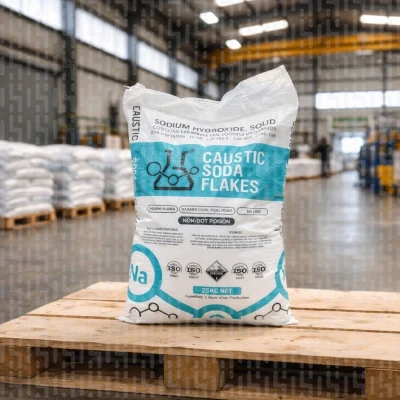
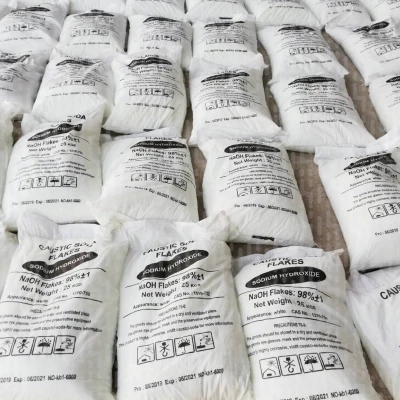
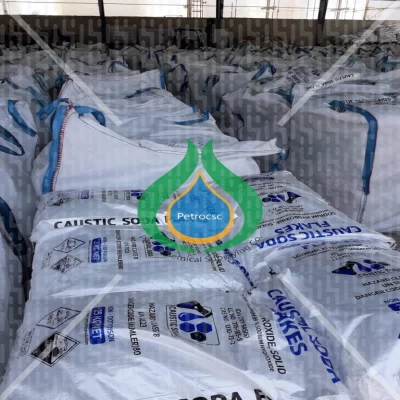
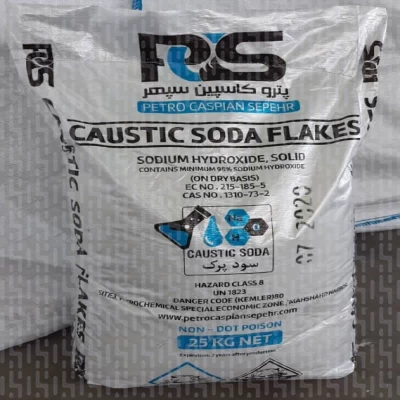
The 25 kg bag is a common retail and small-industrial format in Iran. It is usually a multilayer moisture-resistant bag with an inner polyethylene liner and a secure seal. The label should show the brand, purity, batch number, production date, net weight and safety information. It suits carpet cleaners, car washes, small detergent workshops, laboratories and industrial users with relatively low monthly consumption.
50 kg Bags
Fifty-kilogram polypropylene woven bags with an inner moisture barrier are used for semi-bulk purchasing. Strong stitching, a suitable liner and clear labelling are important. This format may suit medium workshops, soap producers, water-treatment companies and industrial-cleaner manufacturers.
500 kg Jumbo Bags
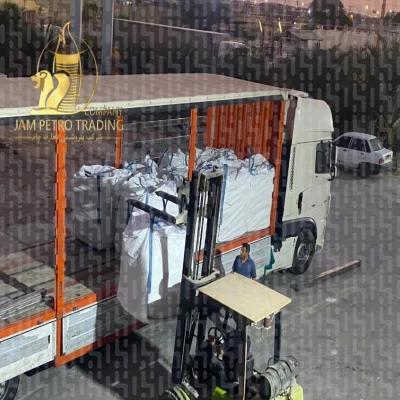
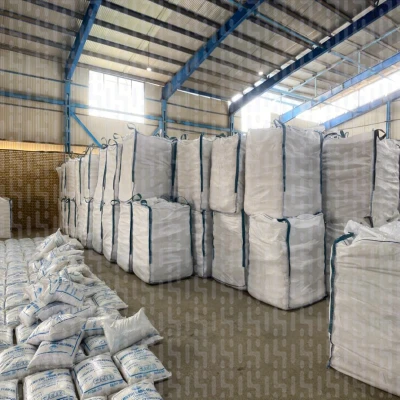
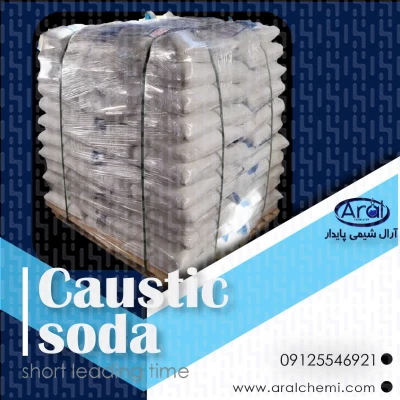
A 500 kg FIBC or big bag is designed for medium industrial users. The bag is typically woven polypropylene with a moisture-resistant PE liner and lifting loops for forklift or crane handling. The supplied text associates this format with factories consuming approximately 2–10 tonnes per month.
1,000 kg Jumbo Bags
One-tonne jumbo bags are widely used for large industrial buyers and export shipments. They reduce packaging and handling cost per kilogram and can be suitable for container loading. The liner, safety factor, UV resistance, lifting loops and moisture protection should be specified in the purchase order.
Metal or Plastic Drums for Sensitive Grades
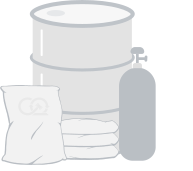
Food, pharmaceutical, cosmetic and laboratory grades may be packed in sealed HDPE or suitable corrosion-resistant drums. These packages provide better protection against moisture, dust and external contamination, but they cost more than bags or FIBCs.

Warehouse Storage, Loading and Delivery
Store caustic soda in a dry, cool, covered and ventilated warehouse protected from rain and moisture. Keep acids, incompatible chemicals and reactive metals in separate storage zones. Place bags on clean, dry pallets rather than directly on a damp floor.
Loading and Delivery Inspection
The truck floor should be clean and free of sharp objects. The load must be protected against rain and humidity. On receipt, the buyer should check bag count, weight, package condition, label-to-invoice conformity and technical documents. Export shipments require advance coordination of loading time, packing list, customs documents and container condition.
How Should a Supplier Be Selected?
Define the application first. Detergents, leather, textiles, water treatment, carpet cleaning, approved food processing and export orders may require different grades. Then define the minimum purity, packaging, quantity and delivery location. Ask for COA and SDS documents and compare offers on an equivalent delivered basis.
A price far below the market average should be investigated. The product may be old, moisture-damaged, poorly packed, incompletely documented or unsuitable for the buyer’s process. For a reliable quotation, provide the supplier with the order quantity, delivery city, packaging, grade, minimum assay, documentation requirements, delivery date, end use and payment terms.

How to Distinguish Genuine Caustic Soda from Adulterated Material
The source describes sodium chloride dilution as a form of market adulteration because both materials are white solids. A diluted shipment may look like caustic soda while providing a much lower NaOH assay. Visual inspection alone cannot confirm purity.
Why Does Authenticity Matter?
Low-purity or contaminated material can damage the production process, expose workers to unexpected hazards and reduce final-product quality. In food, cosmetic and pharmaceutical applications, non-compliant material can endanger consumers and lead to production shutdowns.
Simple Preliminary Checks
- Water-solubility observation: good caustic soda should dissolve readily, although this is not a quantitative purity test.
- Appearance: flakes should be relatively uniform and free from unusual colours or foreign particles.
- Heat release: dissolution should release noticeable heat, but the test must be carried out by trained personnel with proper protection.
- Odour: sodium hydroxide is essentially odourless; an unusual odour may indicate contamination.
Home-style testing with caustic soda is hazardous and cannot replace laboratory analysis. Do not taste, touch or casually dissolve the product. Use an accredited laboratory and a controlled sampling plan.
Laboratory Tests for Confirming Purity
- Acid-base titration: used to determine NaOH assay.
- Sodium carbonate determination: indicates carbonation or storage deterioration.
- Heavy-metal analysis: essential for food, pharmaceutical and sensitive grades.
- Chloride and iron analysis: useful for evaluating process suitability and production route.
- Moisture determination: helps identify water uptake and calculate active material accurately.

Avoid suppliers who refuse to provide a COA or provide documents without an identifiable batch, date, issuer or approval.
Common Warning Signs of Adulterated or Poor-Quality Product
- A price far below comparable market offers
- Non-uniform, discoloured or contaminated flakes
- Incomplete dissolution or visible insoluble material
- Unexpectedly weak assay or process performance
- Missing label, production date, batch number, COA or SDS
Exporting Caustic Soda Flakes from Iran
The supplied text presents Iran as a regional producer with export potential. Neighbouring markets such as Iraq, Afghanistan, Pakistan and Central Asia are identified as common destinations, along with potential routes to East Africa, CIS markets and parts of Asia.
Typical export documents include a Certificate of Analysis, Certificate of Origin, commercial invoice, packing list, transport document and any required export permits. Some destinations may require independent laboratory inspection, special labelling or additional hazardous-goods documentation.

Today’s Caustic Soda Price, 98% Flake Price and Factors Affecting Bulk Sales
There is no single price that applies to every buyer. A 25 kg bag, a one-tonne jumbo bag and a bulk contract have different cost structures. Industrial, food and export grades are also priced differently. Delivery city, freight, stock availability, brand, purity and payment terms all affect the final quotation.
What Changes the Industrial Caustic Soda Price?
1. Exchange Rates and the Global Chlor-Alkali Market
Caustic soda pricing is connected to chlor-alkali economics, export opportunities and currency movements. The source recommends following market reports such as ICIS caustic soda market coverage.
2. Seasonal Demand
The supplied text states that demand may increase in winter because of paper and textile consumption and in late summer because of food processing and water-treatment demand. Actual seasonality should be checked against current plant and market data.
3. Order Volume and Payment Terms
Large orders generally receive lower unit prices. Cash, advance payment, credit terms, contract duration and repeat purchasing can materially change the offer. A comparison should always use the same delivery basis and packaging.
How Is an Export Price Evaluated?
An export quotation includes more than the product price. Packaging, pallets, loading, inland transport, customs, insurance, documentation and delivery terms must be included. The destination, Incoterm, quantity and required documents should be stated in the enquiry.
A good price is a balanced combination of purity, intact packaging, valid documentation, dependable delivery and reasonable total landed cost. Choosing only the lowest number may lead to caking, rejected cargo, production stoppage or quality disputes.
Relative Price Guide by Order Size
- Request comparable quotations from several suppliers.
- Use current commodity-market information as a negotiation reference.
- For repeated purchasing, negotiate an annual contract or a transparent price formula.
- Include freight and handling in the final comparison.

Caustic Soda Purchasing Checklist
Purchasing may appear straightforward, but common mistakes include buying adulterated material, ordering the wrong grade, accepting moisture-damaged bags or relying on an irrelevant COA. The supplied page proposes the following checklist.
Supplier and Batch Checklist
- Request a batch-specific COA reporting NaOH assay, sodium carbonate, sodium chloride, iron and other relevant impurities.
- Confirm the applicable national, customer or international specification.
- Use a representative sampling plan for large consignments.
- Check production date, storage history and remaining shelf life.
- Review quality and environmental management certificates where relevant.
- Ask for references or previous-buyer feedback.
- Confirm packaging, delivery city, unloading arrangement, payment terms and complaint procedure.
Buying and Selling Caustic Soda through Shimico
The source describes Shimico as a B2B route for reviewing chemical listings, finding suppliers and publishing purchase or sale requests. A buyer can compare grade, purity, packaging, technical documents, delivery location and commercial conditions before making a decision.
For a useful enquiry, specify the end use, required grade, minimum purity, order quantity, packaging, delivery city, COA and SDS requirements, delivery date and payment terms. Complete information helps suppliers provide a more accurate and comparable quotation.
Buy Caustic Soda Flakes or Publish a Chemical Listing
Compare offers from chemical suppliers, request batch documentation and publish a purchasing or selling listing.
Request a Caustic Soda Price Publish a Free ListingFrequently Asked Questions About Caustic Soda Flakes
What are caustic soda flakes and what are they used for?
Caustic soda flakes are solid sodium hydroxide, NaOH. They are used in soap and detergent production, water and wastewater treatment, pulp and paper, chemical manufacturing, oil and gas, textiles, leather, approved food processing, mining and industrial cleaning.
How much do caustic soda flakes cost and where can they be purchased?
The price depends on grade, purity, order volume, packaging, brand, delivery location, freight and payment terms. Buyers should compare batch-specific COAs and delivered prices rather than relying on a single retail number.
What is the difference between Grade 1 and Grade 2 caustic soda?
The supplied text associates Grade 1 with a minimum of about 98% NaOH and Grade 2 with a lower minimum purity. The applicable national standard and the current batch COA should be checked before purchase.
How can adulterated caustic soda be identified?
Visual checks are not sufficient. Warning signs include unusual colour, non-uniform particles, missing documents, abnormal insoluble material and unexpectedly low process performance. Purity should be confirmed by representative sampling and laboratory titration.
How is caustic soda used for drain cleaning?
Because sodium hydroxide is highly corrosive and dissolution is strongly exothermic, drain-cleaning use should follow a purpose-made product label and SDS. Do not improvise doses, mix it with acids or use it in incompatible aluminium systems.
What is the difference between flakes and liquid caustic soda?
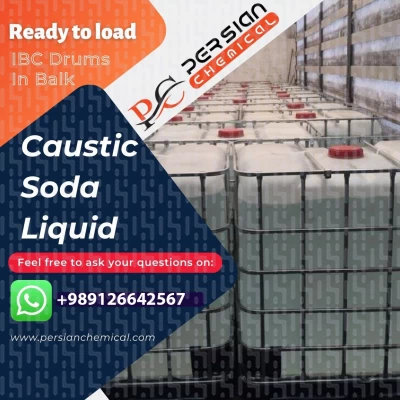
Flakes are a high-concentration solid, commonly around 98% NaOH, and are easier to transport without shipping water. Liquid caustic is a ready-to-use aqueous solution, often around 33% or 50%, and is convenient for large continuous dosing systems but requires compatible tanks and pumps.
What is membrane-grade caustic soda?
Membrane-grade sodium hydroxide is produced in a membrane chlor-alkali cell. It generally has lower salt and process contaminants than diaphragm-cell material. The precise grade is defined by the manufacturer’s specification and COA.
What is the difference between food-grade and industrial caustic soda?
Food-grade material is manufactured and documented to meet food-contact impurity limits and applicable regulatory standards. Industrial grade is not automatically suitable for food use.
How should caustic soda flakes be stored to prevent caking?
Keep bags sealed in a dry, covered and ventilated warehouse, on dry pallets and away from moisture, acids and reactive metals. Close opened packages immediately and follow the manufacturer’s shelf-life instructions.
Is caustic soda dangerous?
Yes. It is strongly corrosive and can cause severe skin and eye burns. Use appropriate PPE, emergency eyewash and shower facilities, ventilation and SDS-based procedures.
Who are the principal suppliers mentioned in the Iranian source text?
The supplied text names several Iranian producers, traders and market routes, including Arvand, Chloran, Petro Gohar Pars, Niroo Chlor, Kimia Pars Shayankar and Shimico. Current legal identity, production status and documentation should be independently verified.
How is caustic soda used in soap making?
Soap is produced by saponifying oils or fats with a calculated quantity of sodium hydroxide. The exact dose depends on the saponification value of the oil. The process requires accurate formulation, controlled temperatures and full chemical PPE.
Which industries use caustic soda?
Major users include water treatment, pulp and paper, detergents, soap, oil and gas, chemicals, textiles, leather, approved food processing, pharmaceuticals, mining and metal treatment.