






What Is Ammonium Sulfate? A Comprehensive Review of Its Chemical, Industrial, and Agricultural Nature
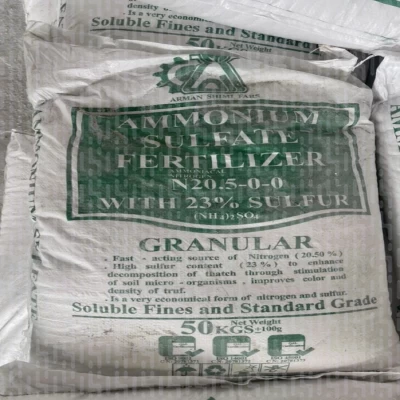
Ammonium sulfate (Ammonium Sulfate) is an inorganic chemical compound with the formula (NH₄)₂SO₄ that exists at room temperature as white crystals or powder.
This substance is formed by the reaction of ammonia with sulfuric acid and, due to its molecular weight of 132.14 grams per mole, is considered one of the most stable ammonium salts in the chemical industry.
Its high molar mass and significant nitrogen content of approximately 21 percent ammonium nitrogen have made this compound one of the most in-demand nitrogen fertilizers in the global market.
The brief answer is this: ammonium sulfate is not only a high-quality nitrogen fertilizer, but it is also used across a wide range of industries, from petrochemicals and steel to pharmaceuticals and food. A deep understanding of this material is essential for any industrial or agricultural buyer intending to buy ammonium sulfate.
📌 Basic Information on Ammonium Sulfate
- Scientific name: Ammonium Sulfate
- Chemical formula: (NH₄)₂SO₄
- Molecular weight: 132.14 g/mol
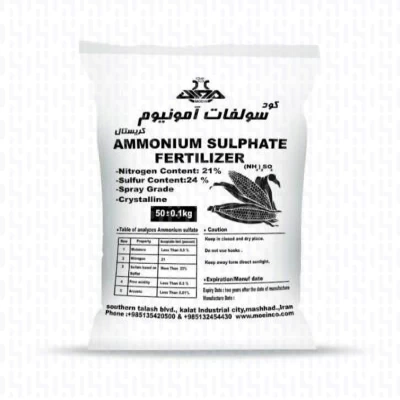
- Nitrogen content: ~21%
- Sulfur content: ~24%
- CAS Number: 7783-20-2
- Classification: Mineral fertilizer / industrial chemical
Ammonium Sulfate from a Technical and Industrial Perspective
From the perspective of analytical chemistry, ammonium sulfate is a dibasic ammonium salt in which two ammonium ions (NH₄⁺) form ionic bonds with one sulfate ion (SO₄²⁻).
This strong ionic structure allows the material to dissolve readily in water; its solubility at 20 degrees Celsius is approximately 76.4 grams per 100 milliliters of water, and it creates a slightly acidic environment in aqueous solutions with a pH of approximately 5.5 to 6.
From an industrial perspective, two characteristics of this material are more important than all others:
First, its relative thermal stability up to 280 degrees Celsius before decomposition, and second, its low moisture absorption compared with urea or ammonium nitrate.
These two characteristics make ammonium sulfate a more reliable option for storage and transportation in hot and humid parts of Iran, such as Khuzestan and coastal regions.

“Ammonium sulfate is one of the oldest and most widely used nitrogen fertilizers. The simultaneous combination of nitrogen and sulfur in a single granule makes this fertilizer a highly effective option for soils suffering from sulfur deficiency.”
— International Plant Nutrition Institute (IPNI)Why Is Demand for Buying Ammonium Sulfate Increasing in the Global Market?
The global ammonium sulfate market reached a value of more than 6.8 billion dollars in 2024 and is forecast to exceed 8.5 billion dollars by 2030, with an annual growth rate of 3.2 percent.
This steady growth results from several simultaneous factors:
The increase in demand for sulfur-containing fertilizers in agricultural lands that have struggled with sulfur deficiency for years, the growth of water-sufficient and petrochemical industries that produce ammonium sulfate as a by-product, and the rising demand in the pharmaceutical industry for protein purification.
Physical and Chemical Properties of Ammonium Sulfate
A precise understanding of the physical and chemical properties of ammonium sulfate is the basis for every technical decision regarding its purchase, storage, or use. These properties not only affect how the material is used, but also serve as the main criteria for comparing different grades and brands in the market. The most important of these characteristics are examined below from a practical perspective.
Appearance, Color, and Physical Form of Ammonium Sulfate
Pure ammonium sulfate appears as colorless crystals or a white-to-gray powder.
Product color is one of the important quality indicators in the market: high-purity product is completely white, but ammonium sulfate obtained from coking or iron-smelting processes, such as Esfahan Steel ammonium sulfate, may have a slightly yellow or gray color.
This color change is caused by residual organic impurities from the production process and does not necessarily indicate lower quality for agricultural applications, although it creates limitations for laboratory and pharmaceutical uses.

Molecular Structure and Solubility in Water
The molecular structure of ammonium sulfate is based on ionic bonding: two positively charged NH₄⁺ ions are arranged around one doubly negatively charged SO₄²⁻ ion.
This symmetrical ionic arrangement creates a stable orthorhombic crystal lattice. Solubility in water is one of the most prominent characteristics of this material:
- At 0°C: solubility 70.6 g/100 mL
- At 20°C: solubility 76.4 g/100 mL
- At 60°C: solubility 88 g/100 mL
- At 100°C: solubility 103.8 g/100 mL
This high solubility makes it possible to use soluble ammonium sulfate in drip-irrigation systems and for foliar spraying, one of its most important applications in modern Iranian agriculture. It should be noted, however, that at low temperatures below 10 degrees Celsius, recrystallization may occur in irrigation pipes.
Effect of pH on the Quality and Performance of Ammonium Sulfate
Because of the partial hydrolysis of the ammonium ion, an aqueous ammonium sulfate solution creates a mildly acidic environment with a pH of approximately 5.5 to 5.8. This characteristic has important consequences:
⚠️ Important Note for Farmers
Long-term use of ammonium sulfate in soils with a low pH (below 6) can cause further soil acidification. Under these conditions, soil testing is recommended before application, and liming should be carried out simultaneously if necessary. In alkaline soils (pH above 7.5), such as many Iranian lands, this mild acidity has a positive corrective effect.
Other Important Physicochemical Properties of Ammonium Sulfate
The bulk density of ammonium sulfate varies between 0.7 and 1.1 grams per cubic centimeter depending on its form (powder, granule, or crystal), while its true density is 1.769 g/cm³.
The thermal decomposition point of this material is 280 degrees Celsius; at this temperature, it decomposes into ammonia, water, nitrogen, and SO₂. This material has no true melting point and decomposes before melting.
Its moisture-absorption coefficient is very low at relative humidity below 79%, making it easier to store than other nitrogen fertilizers.
Technical Specifications Table for Ammonium Sulfate
The table below shows the standard technical specifications of agricultural- and industrial-grade ammonium sulfate. These values have been compiled on the basis of international ASTM standards and Iranian standards (National Standard No. 2488).
When buying ammonium sulfate, requesting a Certificate of Analysis (COA) from the seller and comparing it with these figures is a professional necessity.
| Parameter | Standard Value | Unit | Description |
|---|---|---|---|
| Purity (NH₄)₂SO₄ | ≥ 98% | % w/w | Agricultural grade |
| Nitrogen content | 21 ± 0.3 | % w/w | Ammonium nitrogen |
| Sulfur content | 24 ± 0.5 | % w/w | Sulfate sulfur |
| Moisture | ≤ 0.5 | % w/w | Maximum permitted |
| pH (10% solution) | 5.5 to 6 | - | Mildly acidic environment in aqueous solution |
| Solubility in water | Approximately 76.4 | g/100 mL at 20°C | Suitable for soluble applications and formulation |
| Supply form | Powder / granule / crystal | - | The product form should be selected based on the method of use |
🚚 For export orders, a minimum of one 20-foot container, equivalent to approximately 20 metric tons, is considered. For the markets of Turkmenistan and Kazakhstan, shipment by 20- to 25-metric-ton trucks is also possible.
Technical Analysis (COA) of Ammonium Sulfate and International Purity Standards
One of the professional criteria in bulk purchasing of ammonium sulfate is requesting and reviewing the Certificate of Analysis (COA) from the producer or supplier.
The COA is the official quality-control document for each production batch and should include precise values for nitrogen, sulfur, moisture, pH, particle size, and major impurities.
Any supplier that refuses to provide a COA or provides an incomplete document is showing a sign of low product quality.

International Standards Governing Ammonium Sulfate Quality
ASTM E1404: Standard for testing ammonium sulfate purity in chemical grade✅ Documents Available from Shimico
- Certificate of Analysis (COA) for each batch
- Technical Data Sheet (TDS)
- Material Safety Data Sheet (MSDS/SDS)
- Certificate of Origin (for export)
- Phytosanitary Certificate (if required)
Types of Ammonium Sulfate in the Iranian Market and Their Practical Differences
Ammonium sulfate is supplied in the Iranian market in three main forms, each of which is more suitable for specific applications. Choosing the proper type directly affects application efficiency, final cost, and the quality of the result.

Powdered Ammonium Sulfate | Specifically for Agriculture, Foliar Spraying, and Formulation
Powdered ammonium sulfate, with a particle size of less than 1 millimeter (30 to 120 mesh), has the fastest dissolution rate among the forms of this product.
This characteristic makes it ideal for preparing fertilizer solutions, use in sprinkler systems, and foliar spraying of ammonium sulfate.
Urmia powdered ammonium sulfate is considered first-grade in domestic and export markets because of its high whiteness and low impurity level.
The main weakness of the powdered form is the generation of dust during handling and soil application, which can be problematic in enclosed environments.
In large agricultural projects where fertilizer-spreading machinery is used, the granular form is preferred.
Granular Ammonium Sulfate | Industrial Agricultural Standard and Export
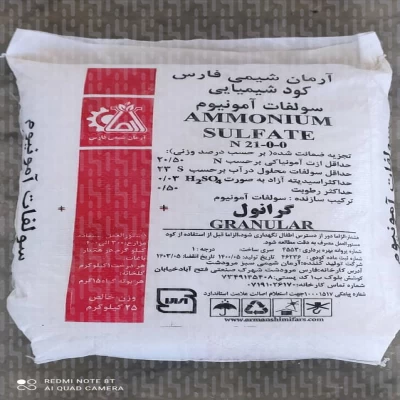
Granular ammonium sulfate, with a particle diameter of 2 to 5 millimeters (SGN 250–300), is the most in-demand form for mechanized agricultural applications.
Uniform distribution with disc spreaders, negligible dust, the ability to blend with other granular fertilizers (NPK), and longer storage life are the key advantages of this form.
Urmia granular ammonium sulfate, as the premium domestic grade, is in high demand in the export markets of Turkmenistan and Kazakhstan.
Crystalline and Laboratory Ammonium Sulfate | Pharmaceutical and Biotechnology Grade
Laboratory-grade ammonium sulfate, with a purity of 99.5% and above (ACS Reagent or Molecular Biology grades), is used for sensitive applications such as protein precipitation, preparation of laboratory buffers, and cell culture.
This grade is usually supplied in packages ranging from 500 grams to 25 kilograms, and its price is considerably higher than agricultural grades.
The large-crystal form (Crystal Grade), with uniform crystals measuring 1 to 3 millimeters, is suitable for laboratory applications and specialized food industries.
Industrial Production Methods for Ammonium Sulfate in Iran and Worldwide
The production source of ammonium sulfate directly affects the quality, color, and purity of the final product. In the Iranian market, there are three main production routes that professional buyers should understand:

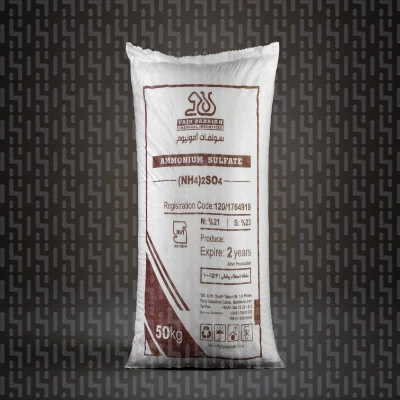
Direct Synthesis Method (Petrochemical) — Urmia and Fajr Parsian Products
In this method, pure ammonia reacts with concentrated sulfuric acid in a controlled reactor: 2NH₃ + H₂SO₄ → (NH₄)₂SO₄.
The product of this process has high purity, a uniform white color, and very low impurities. Urmia Petrochemical and Fajr Parsian use this method, and their products are regarded as reference standards in Iran's domestic market.
Recovery from Coke-Oven Gas (Coke Oven By-product) — Esfahan Steel Product
In steel plants that use coke ovens, ammonia present in the exhaust gas is absorbed with sulfuric acid and converted into ammonium sulfate. Esfahan Steel ammonium sulfate is obtained through this process.
The advantage of this method is a lower production cost because ammonia is a by-product, while its disadvantages include the possible presence of organic impurities and a gray or yellowish color in the product. Nevertheless, its nitrogen and sulfur contents generally comply with agricultural standards.
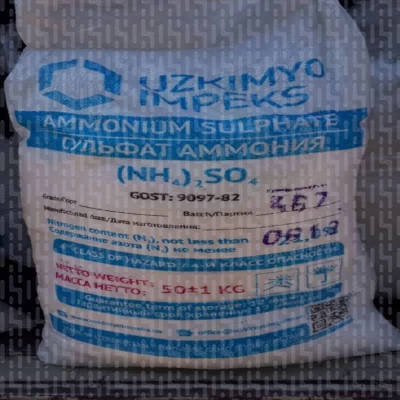
Flue-Gas Neutralization Method (Gypsum Process) — Products from Uzbekistan and Russia
In this method, which is common in Central Asian countries, ammonia reacts with gypsum (calcium sulfate) to produce ammonium sulfate.
Uzbekistan ammonium sulfate, which is also present in the Iranian market, is often produced through this method.
The price of Uzbek ammonium sulfate is usually lower than that of domestic material, but its quality control is less uniform and requires a more detailed review of the COA.
Applications of Ammonium Sulfate in Agriculture; A Comprehensive Consumption Guide for Different Crops
As a fertilizer that supplies nitrogen and sulfur simultaneously, ammonium sulfate has a special position among nitrogen fertilizers in Iranian agriculture.
In Iran's alkaline soils, which account for 70 percent of the country's agricultural lands, the mildly acidifying characteristic of this fertilizer has a dual effect:
In addition to nourishing the plant, it shifts soil pH toward the desirable range and increases the availability of other nutrients such as iron, zinc, and manganese.
In this section, the optimum application rate, timing, and method are examined crop by crop.

Ammonium Sulfate for Pistachios; The Best Nitrogen Fertilizer for Calcareous Soils
Ammonium sulfate for pistachios is one of the most frequently searched topics among Iranian farmers. Pistachio orchards are mainly located in the alkaline soils of Kerman, Rafsanjan, and Khorasan, where the pH is often between 7.5 and 8.5.
In these soils, urea and ammonium nitrate are less efficient because nitrate nitrogen leaches rapidly, and the ammonium nitrogen of urea is converted into NH₃ gas at high pH.
Ammonium sulfate has a dual advantage under these conditions: the ammonium ion (NH₄⁺) remains more stable at high pH, and the sulfate ion (SO₄²⁻), by reducing rhizosphere pH, facilitates the absorption of zinc, iron, and boron.
Application recommendation: 300 to 500 kilograms per hectare in two applications, at the beginning of the growing season (Esfand–Farvardin) and after fruit thinning (Ordibehesht). In mature pistachio orchards, dividing the application into three stages improves absorption efficiency.
Ammonium Sulfate for Wheat; Supplying Base Nitrogen in Light Soils
Ammonium sulfate for wheat is particularly recommended in fields with light and sandy soils where nitrogen leaching is high. In irrigated wheat fields, a base application of 150 to 250 kilograms per hectare together with the final autumn plowing ensures the soil nitrogen reserve for the tillering stage.
In low-rainfall regions, combining ammonium sulfate with urea (ratio 50:0) reduces cost while preserving the benefits of sulfate sulfur.
Research by the University of Tehran has shown that applying 10 kilograms of sulfate sulfur per hectare in sulfur-deficient wheat fields increases grain yield by up to 15 percent.
Ammonium Sulfate for Tomatoes; Improving Fruit Quality and Color Development
Ammonium sulfate for tomatoes, because it supplies nitrogen and sulfur simultaneously, promotes stronger vegetative growth, better flowering, and more desirable fruit coloration.
Sulfur is essential for the synthesis of methionine and cysteine (sulfur-containing amino acids), which play an important role in protein quality and resistance to fungal diseases.
Application recommendation: 20–300 kilograms per hectare as a soil application in three stages: before planting, at flowering, and at the start of fruiting.
For greenhouse tomatoes, injection into the drip-irrigation system at a concentration of 0.5–1 percent is the most precise application method.
Ammonium Sulfate for Grapes and Alfalfa; Export Crops Sensitive to Sulfur
Iranian vineyards, particularly in Malayer, Takestan in Qazvin, and Khorasan, are often located in calcareous soils deficient in sulfur and zinc.
Applying ammonium sulfate as a winter fertilizer (200–3 kilograms per hectare) or as foliar spraying of ammonium sulfate during fruit growth improves berry quality, sugar content, and product shelf life.
For alfalfa, one of Iran's most important forage crops, applying ammonium sulfate after each cutting period (100–150 kilograms per hectare) results in faster plant recovery and higher crude protein content in the forage.
Foliar Spraying of Ammonium Sulfate; A Rapid-Action Method under Acute Deficiency Conditions
Foliar spraying of ammonium sulfate is one of the effective methods for rapidly correcting nitrogen deficiency during sensitive growth stages. The recommended concentration for foliar application is between 1 and 3 percent (10 to 30 grams per liter of water). Compared with soil fertilization, this method accelerates absorption by up to three times.
⚠️ Important Note on Foliar Spraying
Foliar spraying of ammonium sulfate should be carried out during the cool hours of the day (early morning or after sunset). Spraying during the heat of the day causes leaf burn. Concentrations above 3 percent are phytotoxic to most crops.
🧪 Ammonium Sulfate Safety and MSDS
Under normal conditions, ammonium sulfate is a relatively stable material and less hazardous than many nitrogen fertilizers; however, compliance with safety principles remains essential in bulk purchasing, high-tonnage transportation, and warehouse storage. The MSDS or SDS for ammonium sulfate specifies how the material behaves during skin or eye contact, dust inhalation, exposure to high heat, or long-term storage, and what equipment is required when handling it.
⚠️ Basic Safety Points When Working with Ammonium Sulfate
This material is not flammable and does not present an explosion hazard under normal conditions, but at high temperatures it may decompose and release irritating gases such as ammonia and sulfur compounds.
Prolonged exposure to product dust can also cause mild irritation of the eyes, skin, or respiratory system; therefore, proper ventilation and a dust mask are important when emptying bags, moving jumbo bags, or working in enclosed spaces.

👁 Eye Contact
If product dust enters the eyes, rinse with clean water, and seek medical attention if irritation continues.
😷 Dust Inhalation
In dusty environments, use of a suitable mask is recommended, and if respiratory irritation occurs, move the person to fresh air.
🧤 Skin Contact
Short-term contact generally does not cause a serious problem, but washing with soap and water after handling the product is advisable.
🦺 Required Personal Protective Equipment
For loading, unloading, and handling ammonium sulfate, especially the powdered form, it is preferable to use a dust mask, safety goggles, work gloves, and covering clothing.
This basic equipment prevents respiratory irritation, dust entry into the eyes, and workplace contamination, and is more important in large warehouses or packaging lines.
📦 Storage and Warehousing of Ammonium Sulfate
The quality of ammonium sulfate does not depend only on the manufacturing plant; storage method, stacking, warehouse humidity, bag integrity, and distance from incompatible materials also affect final quality.
Even a product with a good analysis may cake, suffer packaging damage, lose visual quality, and decline in sale value if it is stored in a humid warehouse or directly on the floor.
🏬 Standard Storage Conditions in an Ammonium Sulfate Warehouse
Ammonium sulfate bags should be stored in a dry, cool, and properly ventilated environment. It is better to place the product on pallets and prevent direct contact with the warehouse floor or walls.
This simple spacing reduces the possibility of moisture absorption and packaging damage and is particularly important for export orders or storage lasting several months.
🚫 Storage Warning: Ammonium sulfate should not be stored next to lime, caustic soda flakes, carbonates, or strong alkaline materials. Contact or mixing with these materials can release ammonia and reduce the quality of usable nitrogen.
💡 Shimico Recommendation: For high-tonnage purchases, determine the packaging type, condition of the bags, COA, transport conditions, and unloading destination before final loading. This prevents delivery disputes, additional transportation costs, and shipment rejection in sensitive orders.
📦 Types of Ammonium Sulfate Packaging; Bags, Jumbo Bags, Bulk, and Export Packaging
Choosing the type of ammonium sulfate packaging is not merely an appearance issue; packaging directly affects the final price, transportation cost, loading speed, shipment integrity, storage conditions, and even acceptance of the cargo at the export destination.
In bulk purchases, the buyer usually needs to specify before requesting a quotation whether the product is required in 50-kilogram bags, jumbo bags, bulk form, or export packaging.
50-Kilogram Ammonium Sulfate Bags; The Most Common Packaging in the Market
Ammonium sulfate in 50-kilogram bags is the most common packaging type in the Iranian market. This format is widely used for domestic sales, distribution among farmers, fertilizer warehouses, distribution centers, and medium-to-bulk orders.
The bags are usually made of laminated or double-layer polypropylene to provide acceptable resistance against tearing, surface moisture, and routine handling.

📌 50-kilogram ammonium sulfate bags are suitable for: Domestic purchasing, smaller-scale sales, convenient warehousing, agricultural use, and orders requiring manual unloading or staged distribution.
Ammonium Sulfate Jumbo Bags; An Economical Choice for Bulk Purchasing and Export
Ammonium sulfate jumbo bags are usually used in weights of 1,000 or 1,250 kilograms and are a more professional option for high-tonnage orders.
This packaging increases loading and unloading speed, reduces the number of packages, and is widely used for container or truck transport on export routes.
When purchasing jumbo bags, stitching quality, the presence of an inner liner, handle strength, discharge-spout type, and the bag's visual integrity are highly important.
For export, clean and undamaged jumbo bags give the shipment a more professional appearance at the destination and reduce the risk of cargo damage.
✅ Ammonium sulfate jumbo bags are suitable for: Bulk purchasing, export orders, container transport, faster loading, and customers with high-tonnage consumption.
Bulk Ammonium Sulfate; A Suitable Option for Industrial and High-Tonnage Use
Bulk ammonium sulfate is selected when the buyer has very high-volume industrial or agricultural consumption and packaging is not the main priority.
This method reduces packaging costs, but requires greater attention to the transport truck, cargo covering, route humidity, and unloading conditions.
Bulk transport is not suitable for every buyer. If the destination lacks a covered warehouse, unloading equipment, and moisture-control conditions, the possibility of contamination, moisture absorption, or decline in the product's visual quality increases.
Therefore, the transport route and unloading conditions should be reviewed before choosing bulk form.
⚠️ Important Note: In bulk transport, proper truck covering and prevention of product contact with moisture are essential. This model is recommended mainly for industrial buyers or very large-scale consumers.
Export Packaging for Ammonium Sulfate; Specifically for Containers and Foreign Markets
For ammonium sulfate export, the packaging must not only withstand long-distance transport but also be acceptable in terms of appearance, labeling, product information, and physical integrity.
In many export orders, 50-kilogram bags or jumbo bags are used with printed information including product specifications, net weight, grade name, country of origin, and details required for customs clearance.
For exports to markets such as Turkmenistan, Kazakhstan, Iraq, or Afghanistan, the packaging type should be coordinated with the unloading method at the destination.
Some buyers prefer jumbo bags because they unload faster; others request 50-kilogram bags because resale and domestic distribution are easier for them.
Smaller Packaging for Laboratory and Specialized Industrial Ammonium Sulfate
For laboratory, pharmaceutical, or specialized industrial grades, ammonium sulfate may be supplied in smaller packages such as 1-kilogram, 5-kilogram, 10-kilogram, or 25-kilogram units.
This format is not economical for general agricultural use, but is more suitable for laboratories, research and development units, sensitive industries, and controlled consumption.
| Packaging Type | Common Weight | Main Application | Key Advantage |
|---|---|---|---|
| Bag | 50 kilograms | Domestic market, agriculture, and distribution | Easier transportation and sale |
| Jumbo bag | 1,000 to 1,250 kilograms | Bulk purchasing and export | Fast and economical loading |
| Bulk | High tonnage | Industrial or high-volume agricultural use | Reduced packaging cost |
| Small packaging | 1 to 25 kilograms | Laboratory and specialized industrial use | Precise and controlled consumption |
💰 Industrial Purchasing Guide for Ammonium Sulfate and Factors Affecting the Daily Price
The price of ammonium sulfate in the Iranian market is not fixed. Producer brand, product form, packaging type, order volume, delivery destination, and exchange rate all affect the final price.
For this reason, the prices of Urmia, Esfahan Steel, Shiraz, or Uzbekistan ammonium sulfate may differ significantly on the same day.
Factors Affecting the Price of Ammonium Sulfate
🏭 Brand and Production Origin
Urmia and Fajr Parsian products are usually more expensive than Esfahan Steel because of their whiteness, purity, and uniformity. Uzbek product is more economical, but its COA and moisture should be reviewed more carefully.
📦 Form and Packaging
Granular material is usually more expensive than powdered material because it produces less dust and is easier to use in fertilizer spreaders. Jumbo bags also create different costs for export and containerized cargo.
🚚 Order Volume and Destination
Orders above 20 metric tons usually receive a better price. Ex-factory price, delivery in Tehran, delivery at the border, or delivery to an export destination each involve separate transportation and loading costs.
⚠️ Market Note: During peak-consumption seasons, such as land preparation periods for wheat, pistachios, alfalfa, and orchard crops, warehouse inventory moves faster and prices can change. Therefore, a quotation request must specify the brand, tonnage, destination, and packaging type.
💡 Requesting an Ammonium Sulfate Price from Shimico
To receive the current rate, simply send the product type, brand, order volume, delivery destination, and packaging type to the Shimico team.
The final price is announced after reviewing inventory, transport conditions, and required documentation.
For export orders, the minimum load is usually considered to be one 20-foot container, or approximately 18 to 20 metric tons.
Export and Import of Ammonium Sulfate; CIS Market Opportunities for Iran
Because of its strategic geographical position, access to inexpensive raw materials (natural gas for ammonia production), and proximity to the major Central Asian markets, Iran has high capacity for exporting ammonium sulfate.
Nevertheless, part of domestic demand is supplied through imports, mainly from Uzbekistan and Russia, indicating a gap between nominal capacity and actual production.

Exporting Ammonium Sulfate to Turkmenistan; A Nearby Market with Stable Demand
Ammonium sulfate exports to Turkmenistan are carried out through the Sarakhs border (Razavi Khorasan) and the Incheh Borun border (Golestan).
Turkmenistan's agricultural sector, especially cotton and wheat cultivation, which require large amounts of nitrogen and sulfur, is one of the main target markets.
Iran's advantage on this route is the shorter distance and lower transit cost compared with Russia or Ukraine.
Documents required for export to Turkmenistan include a pro forma invoice, export license, approved COA, Certificate of Origin (Iranian origin), and, in some cases, a Phytosanitary Certificate.
Exporting Ammonium Sulfate to Kazakhstan; A Larger Market with Stricter Quality Requirements
Exports to Kazakhstan are carried out through the Incheh Borun border or in transit through Turkmenistan.
Kazakhstan is a larger market with more precise quality requirements, and buyers in this country usually request a COA with complete analysis and confirmation by a reputable laboratory.
The product of Urmia Petrochemical has a stronger reputation in this market because of its high purity and export history.
Importing Ammonium Sulfate into Iran — When Is It Justified?
Importing ammonium sulfate into Iran, mainly from Uzbekistan, is economically justified when seasonal domestic demand exceeds local production capacity or when the imported product remains more competitive than domestic material after tariffs and transit costs are included. Import tariff code: HS 3102.21, current customs tariff 5 percent.
✅ Why Buy Ammonium Sulfate from Shimico?
In bulk purchasing of ammonium sulfate, price is not the only important factor. The buyer must be confident that the delivered product matches the registered order, declared analysis, packaging type, and delivery time.
Shimico simplifies this process, from selecting the proper brand to sourcing, reviewing documents, coordinating transportation, and delivering the cargo.
🏭 Supplying Ammonium Sulfate from Reputable Sources
The ability to supply Urmia, Fajr Parsian, Esfahan Steel, and more economical ammonium sulfate options according to customer requirements.
📄 Complete Cargo Documents
Provision of COA, MSDS, invoice, packing list, and documents required for domestic and export orders.
🚚 Transportation and Delivery Coordination
Planning transportation from the factory, warehouse, border, or requested destination according to order volume and delivery terms.
🌱 Ready to Buy Ammonium Sulfate in Bulk?
To request a price, compare suppliers, and post a sales listing, use Shimico. This route is designed for bulk buyers, factories, traders, and chemical suppliers.
✅ View listings for chemicals and agricultural fertilizers ✅ Post a free ammonium sulfate sales listing ✅ Suitable for tonnage purchases, export, import, and industrial supply
Reviews from Ammonium Sulfate Buyers on Shimico
★★★★★ Rezaei — Agricultural Input Supplier in Kerman
We were looking for white and reliable ammonium sulfate for pistachio growers. Both the analysis and loading time were important to us. Before issuing the pro forma invoice, Shimico asked about the application and tonnage and recommended the Urmia product. The cargo arrived clean, and the packaging was also intact.
★★★★★ Engineer Kazemi — Fertilizer and Agricultural Input Trading Unit
For several customers, we wanted prices for both Esfahan Steel and Urmia products. They explained the differences transparently and did not simply say that one was better than the other. This comparison allowed us to select the product suited to each customer's specific application.
★★★★☆ Ahmadi — Exporter to Central Asia
For shipment to Turkmenistan, coordination of documents and loading time was more important than the price itself. The Shimico team sent the COA documents and packaging specifications before loading, which made coordination with the destination buyer easier.
★★★★★ Sharifi — Purchasing Manager at a Compound Fertilizer Production Unit
For compound fertilizer formulation, particle size and product uniformity were important to us. Before buying, we asked about mesh size, moisture, and packaging and received technical answers. Our experience purchasing ammonium sulfate through Shimico was good, and we will request quotations through the same channel for future purchases.
Frequently Asked Questions About Ammonium Sulfate
What percentage of nitrogen does ammonium sulfate contain?
Standard ammonium sulfate contains 21 percent nitrogen in ammonium form (NH4+). Unlike urea, whose nitrogen is in amide form and must first decompose in the soil, the ammonium nitrogen in ammonium sulfate is available to plant roots more quickly and has suitable stability in many alkaline soils.
What is the difference between ammonium sulfate and urea? Which is better?
Neither is inherently better than the other; the choice depends on soil type, crop, application timing, and budget. Urea has a higher nitrogen content, but ammonium sulfate supplies approximately 24 percent sulfate sulfur in addition to nitrogen. In calcareous and alkaline soils, which are common in many parts of Iran, it can be a more effective option because of its mild acidifying property and sulfur supply.
Is ammonium sulfate suitable for all agricultural crops?
It can be used for many crops such as pistachios, grapes, wheat, corn, rice, sugar beet, alfalfa, and tomatoes, but the application rate should be determined based on soil testing, plant age, growth stage, and irrigation method. In acidic soils, excessive use of this fertilizer can further increase soil acidity; therefore, under such conditions, it should be applied under expert supervision.
What is the minimum order quantity for ammonium sulfate from Shimico?
The minimum purchase depends on current inventory, brand, packaging type, and delivery destination. For domestic customers, tonnage-level orders can be reviewed, and for export orders, container or truck quantities—approximately 18 to 25 metric tons—are usually used as the basis of calculation. For an exact quotation, it is better to specify the product type, destination, and order volume.
What is the difference between Uzbek and Iranian ammonium sulfate?
The main differences are production source, price, quality consistency, product color, and available documentation. Uzbek product is usually more economical in price, but for bulk purchasing, the COA, moisture, color, nitrogen content, sulfur content, and packaging conditions should be reviewed. For exports requiring Iranian origin, domestic product is a more suitable choice.
Can industrial ammonium sulfate be used for foliar spraying?
For foliar spraying, it is better to use an agricultural grade with suitable purity and controlled impurities. Products obtained from industrial by-product processes may not be suitable for foliar use in terms of color or impurities. For this application, the COA should be reviewed before purchase and, if necessary, a limited test should be conducted on a small area.
Scientific Sources, International Standards, and Technical References
- IPNI (International Plant Nutrition Institute): Complete guide to nitrogen fertilizer management — Nutrient Management for Field Crops
- ASTM E70: Standard for measuring the pH of aqueous solutions in the laboratory
- ASTM D1428: Test method for agricultural and industrial ammonium sulfate
- EN 13196: European standard for determining ammonium nitrogen in chemical fertilizers
- Iranian National Standard 2488: Specifications and test methods for ammonium sulfate
- FAO Fertilizer and Plant Nutrition Bulletin: United Nations Food and Agriculture Organization publication on sulfur-containing fertilizers
- REACH Regulation (EC) No 1907/2006: European Union regulations on the registration, evaluation, and authorization of chemicals
- GHS/UN Purple Book, 9th Revised Edition: Globally Harmonized System of Classification and Labelling of Chemicals
- Iranian Department of Environment: Guidelines for the management and storage of chemical fertilizers, 1401