





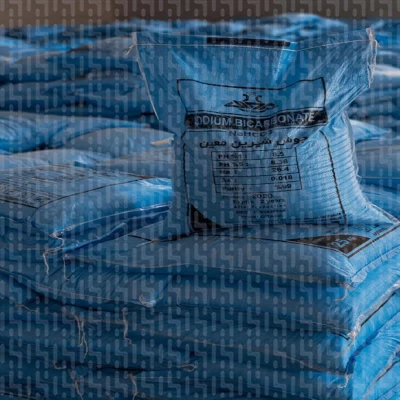

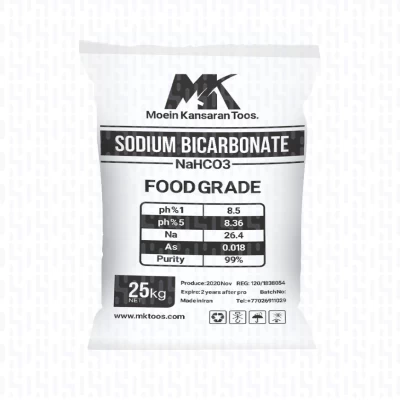
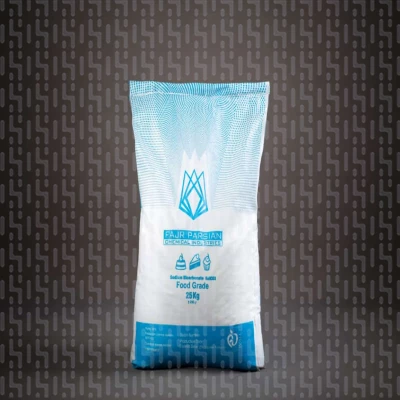
If you own a food manufacturing plant, an animal feed production line, an industrial workshop, or a packaging unit and are looking for a direct and reliable supply of baking soda at a competitive price and standard quality, on this page you will find everything you need for a smart and professional purchase.
The baking soda market in Iran and worldwide is expanding day by day, and at the same time, demand for wholesale, bulk, and per-kilogram purchases from large industries has increased.
But the fundamental question is: how do we determine which grade of baking soda is suitable for our production process?
Which brand and supplier can be trusted? What is the difference between food-grade, feed-grade, and industrial baking soda, and how can we identify the real market price?
In industrial baking soda purchasing, a small difference in grade or packaging can disrupt the entire production plan.
If the product is used for animal feed, food production, treatment, detergents, or export, clarify the grade, purity, COA, MSDS, packaging type, and transportation conditions before requesting a price.
What Is Baking Soda, and What Role Does Sodium Bicarbonate Play in Industrial Purchasing?
Baking soda, chemically known as sodium bicarbonate (Sodium Bicarbonate), is a mineral salt with the chemical formula NaHCO₃ .
This substance is identified by CAS number 144-55-8 and appears at room temperature as a white, crystalline, odorless powder.
Baking soda is soluble in water, and its solution has weak alkaline properties. For this reason, it is used in many industrial and food processes as a pH regulator and leavening agent.
In English technical documents, it is usually listed under the names:
- Sodium Bicarbonate
- Sodium Hydrogen Carbonate
- Bicarbonate of Soda
and in some markets under the name Baking Soda . The name Baking Soda is better known for food grade, but in industrial purchasing it is best to always verify the exact name Sodium Bicarbonate and the CAS number 144-55-8 in the inquiry, pro forma invoice, and product analysis.
This substance is a white, crystalline, mildly alkaline powder. It is not as strong or corrosive as caustic soda flakes or liquid caustic soda, but this mild behavior has made it useful in various industries.
- In food factories for pH control and as a leavening agent,
- in animal feed as a rumen buffer,
- in flue-gas treatment to neutralize acidic gases,
- in detergents for odor and alkalinity control,
- and in some chemical processes as an auxiliary material.

Baking Soda in English, German, Turkish, Italian, and Dutch
In import purchasing and correspondence with a foreign supplier, the correct translation of the product name prevents many mistakes. For B2B contracts, the English name and CAS Number are the most reliable.
The Difference Between Sodium Bicarbonate and Sodium Carbonate in Factory Purchasing
Sodium bicarbonate is different from sodium carbonate. Sodium carbonate is soda ash, or sodium carbonate, and creates stronger alkalinity.
Sodium bicarbonate is milder and releases carbon dioxide when it comes into contact with acid.
If your production unit requires gradual pH control, buffering, or a mild reaction, sodium bicarbonate is usually the more suitable choice.
If you need stronger alkalinity, heavy-duty washing, or glass and heavy-detergent processes, sodium carbonate may be a separate subject.
What Is the Difference Between Baking Soda and Baking Powder? A Selection Guide for Food Manufacturers
Physical Properties of Baking Soda for Load and Warehouse Control
A professional buyer does not look only at the purity percentage. Powder appearance, particle size, moisture, flowability, caking, and product behavior in the silo or mixer are also important.
Baking soda is usually supplied as a white powder or fine crystals. If ambient humidity is high, the powder can cake and create problems when discharged from bags, feeders, hoppers, or conveying systems.

Appearance, Color, and Particle Size of Sodium Bicarbonate
In food and feed grades, uniform whiteness, the absence of foreign particles, and a fine texture are important. In industrial grades, particle size and dissolution rate may be more important than appearance.
For lines that use automatic dosing, an extremely fine powder is not always better because it may generate more dust.
An excessively coarse powder can also dissolve more slowly. For this reason, for high-tonnage purchases, it is best to test a product sample in the actual system.
Moisture and Caking in Bulk Baking Soda Transportation
Sodium bicarbonate must remain dry. A product transported in unsuitable packaging, a damp container, or a humid warehouse may still show good purity on paper, but in practice it becomes difficult to handle in the production line.
The bags are difficult to open, the powder does not flow well, and the operator has to strike or sieve it. These small tasks create hidden costs when the load is 20 tons.
Chemical Properties of Baking Soda and Sodium Bicarbonate for Quality Control
Chemically, sodium bicarbonate is a mildly alkaline salt. It dissolves in water, reacts with acids, and can act as a buffer. When it reacts with acid, it releases CO2 gas.
This behavior is useful in the food, firefighting, treatment, and some chemical-process industries. At high temperatures, it also gradually decomposes and produces sodium carbonate, water, and carbon dioxide.

Is Baking Soda Basic or Acidic?
Baking soda is a weak base . An aqueous sodium bicarbonate solution has a pH of approximately 8 to 8.5, placing it in the mildly alkaline range.
This property is the reason for its widespread use in the food industry as a leavening agent and in the chemical industry as a pH regulator.
In some production processes, the acid-neutralizing property of baking soda is highly valuable, for example in the production of soft drinks or industrial paints.
In aqueous solution, baking soda exhibits mildly alkaline behavior. This means it is basic, but its alkalinity is not as strong as caustic soda flakes. This difference is important to industries.
If your factory wants to raise pH gradually or create a buffer in a sensitive system, sodium bicarbonate may be easier to control than stronger alkalis.
Nevertheless, the dosage must be determined through laboratory testing and production-line formulation.
Reaction of Sodium Bicarbonate with Acids and CO2 Generation
When it comes into contact with acid, sodium bicarbonate releases carbon dioxide. In the food industry, this behavior is used to create texture and volume. In dry-powder fire extinguishers and some industrial formulations, this gas release and powder behavior are also important.
In smoke and gas treatment, reaction with acidic gases such as HCl, SOx, and HF makes sodium bicarbonate useful in dry-injection systems.
For factory R&D and quality-control units, knowledge of sodium bicarbonate's chemical parameters is essential. These parameters are stated in the COA (Certificate of Analysis) and must comply with national and international standards.
Technical Specifications Table for Baking Soda and Sodium Bicarbonate: A Complete Purchasing Decision Guide
The following technical specifications are for initial product identification. Before the final purchase, always request the analysis sheet for the same production batch, not just a general sample.
If the load is used for the food or animal feed industries, heavy metals, microbial contamination, moisture, particle size, and packaging standards become more important. If the use is industrial, purity, particle size, moisture, and behavior during solution preparation may take priority.

- Was the COA issued by a reputable laboratory?
- Does the Batch number on the bag match the COA?
- Are the production and expiration dates clear?
- Is the packaging intact and free from tears?
Types of Baking Soda and Sodium Bicarbonate: A Guide to Selecting the Right Grade for Your Industry

Food-Grade Baking Soda: The Gold Standard for the Food and Pharmaceutical Industries
- Bakery and Confectionery: As a leavening agent in cakes, biscuits, bread, and cookies
- Beverage Industry: pH adjustment in soft drinks and mineral waters
- Dairy Products: Adjustment of milk and yogurt acidity
- Pharmaceutical Industry: Production of antacid tablets and mouthwash
- Meat Processing: Preserving the color and texture of processed meats
The price of food-grade baking soda is usually 15% to 25% higher than industrial grade, but this price difference is negligible compared with product safety and legal compliance. Direct bulk purchasing from a reputable supplier can reduce this difference to 10%.
✅ Important Note for Food Manufacturers: If your final product is to be placed on the market and the ingredient label is printed on it, be sure to use food-grade baking soda with ISO 22000 and HACCP certification. These certificates are checked during audits by the Food and Drug Administration.
Feed-Grade Baking Soda: Cost Optimization for the Livestock and Poultry Feed Industry
- Dairy-Cow Feed: Increasing milk yield and controlling ruminal acidosis
- Poultry Feed (Chicken, Turkey): Regulating electrolyte balance and reducing heat stress
- Aquaculture Feed: Adjusting water pH and improving the quality of the rearing environment
- Livestock Supplements: Improving digestion and nutrient absorption
💡 Purchasing Guide for Animal Feed Manufacturers: Always request a Feed Grade Certificate and veterinary organization approval. Some sellers offer industrial grade at a lower price as feed grade, which can cause health problems for livestock.
Industrial Baking Soda (Industrial/Technical Grade): For Detergents, Treatment, Textiles, and Technical Processes
- Water and Wastewater Treatment: pH adjustment and acid neutralization
- Oil and Gas Industry: Drilling fluids and well cleaning
- Chemical Industry: Production of sodium carbonate, borates, and other chemicals
- Plastics and Rubber Industries: Foaming agent and regulator
- Cleaners and Detergents: Industrial and household detergents
- Firefighting Industry: Class BC fire-extinguishing powders
- Textile and Leather Industries: Dyeing and tanning operations
⚠️ Serious Warning: Never use industrial baking soda in food products or animal feed. This is not only illegal, but can also lead to poisoning, product seizure, and heavy fines.
Comparison Table of Baking Soda Types: Food, Feed, and Industrial Grades

- If your final product is intended for human consumption, buy food grade even if it costs more.
- If you use it for animal feed, feed grade with a valid certificate is sufficient; food grade is an unnecessary extra cost.
- For purely industrial applications (such as water treatment), industrial grade is the best option in terms of cost-effectiveness.
Industrial Production Methods for Baking Soda and Sodium Bicarbonate

Solvay Process: The Global Standard for Industrial Production
- Brine Preparation: Table salt is dissolved in water to prepare a saturated solution.
- Ammoniation: Ammonia gas is added to the brine to produce an ammoniacal solution.
- Carbon Dioxide Injection: CO₂ gas (obtained from burning limestone) is injected into the solution. The chemical reaction causes sodium bicarbonate to precipitate.
- Separation and Filtration: The white baking soda precipitate is separated from the solution and filtered.
- Drying: The filtered product is dried at a controlled temperature to remove the remaining moisture.
- Grinding and Packaging: The dried baking soda is ground and packed in standard bags.
Extraction from Natural Deposits (Trona): A Green and Sustainable Option
- Mining: The Trona mineral is extracted from underground mines.
- Crushing and Dissolving: The extracted rock is crushed and dissolved in water.
- Purification and Filtration: Impurities and excess minerals are removed.
- Heating and Crystallization: The purified solution is heated so that pure sodium bicarbonate crystallizes.
- Drying and Grinding: The crystals are dried, ground, and packaged.
When you ask a supplier, "How is your product manufactured?" and do not receive a clear, documented answer, the product is probably imported or low quality.
Industrial Applications of Baking Soda: From the Food Industry to Oil and Gas

Applications of Sodium Bicarbonate in the Food Industry and Food Production Lines
- In the soft drink industry, baking soda is used to adjust pH to the range of 3.5 to 4.0 for optimal taste and to prevent microbial growth.
- In the dairy industry, this substance helps neutralize excess acidity in milk and prevent coagulation.
- Also, in meat processing, baking soda improves color, increases tenderness, and extends product shelf life
- and in the production of gummy candy and chewing gum, its buffering property is especially important for preserving flavor.
Applications of Baking Soda in the Pharmaceutical and Cosmetics Industries: USP/BP Standards
- antacid tablets for neutralizing stomach acid, such as Rennie,
- dialysis solutions for regulating blood pH,
- toothpaste and mouthwash with whitening and odor-neutralizing properties,
- and bath powders with skin-softening properties.
Applications of Baking Soda in Water Treatment, pH Control, and Chemical Processes
- In drinking-water treatment, this substance is used to raise the pH of acidic water to the range of 7.0 to 8.5.
- In industrial wastewater treatment, it is also used to neutralize acidic effluent before discharge into the environment.
- It is also used in swimming pools to regulate water alkalinity and in RO systems to reduce corrosion caused by dissolved CO₂.
Oil and Gas Industry: Drilling and Well-Completion Fluids
- In drilling fluids, it is used as a fluid pH buffer and to prevent corrosion of drilling pipes.
- In well-acidizing operations, it is also used to neutralize residual acid after the operation.
- It is also used for pipeline washing to remove acidic deposits and salts, and in completion fluids to control corrosion and maintain compatibility with the formation.
Applications of Baking Soda in Detergents and Industrial Cleaning Products
- In laundry powder, it acts as a water softener and improves surfactant performance.
- In dishwashing liquid, it is used to remove grease and unpleasant odors.
- It is also used in industrial surface cleaners for cleaning without scratching the surface and in vehicle detergents for removing oil stains and dirt.
Applications of Sodium Bicarbonate in Fire-Extinguishing Powder and Extinguishing Formulations
- This substance is used in Class BC dry-powder extinguishers to extinguish fires involving flammable liquids such as gasoline and oil, as well as electrical equipment.
- It is also used in automatic fire-suppression systems in warehouses and factories, and in small, portable vehicle extinguishers.
- An important safety point is that baking soda begins to decompose at temperatures above 50°C and releases CO₂ gas, and this property makes it suitable for fire extinguishing.
Applications of Baking Soda in Livestock and Poultry Feed and Animal Supplements
In the livestock and poultry industry, feed-grade baking soda is used mainly for its buffering role and to help balance acidity.
Animal-feed factories usually need a product that disperses well in the mixer, does not have high moisture, and can be controlled in terms of contamination and particle size.
Feed-grade purchasing must be carried out under the supervision of an animal nutrition specialist and based on the ration formula.
Applications of Sodium Bicarbonate in Acid-Gas and Industrial Flue-Gas Treatment
One of the major applications of sodium bicarbonate worldwide is dry injection for treating exhaust gases.
In these systems, sodium bicarbonate powder reacts with acidic gases such as HCl, SOx, and HF and helps reduce pollutants.
This application is relevant to power plants, waste incinerators, metal industries, energy lines, and units with industrial stacks. In such uses, particle size, contact surface, moisture, and reaction rate are highly important.
Applications in Textiles, Leather, Dyeing, and Finishing
In some textile, leather, and dyeing processes, sodium bicarbonate is used as a mild alkaline material or as a process-condition regulator.
If a factory works with dyes, sensitive fibers, or leather, changing the supplier without testing can alter the color result, softness, or product stability. In this area, consistent quality is more important than occasional, short-term purchasing.
Baking Soda Safety, Storage, and MSDS: What Every HSE Manager Should Know

Hazard Classification and Warning Symbols for Sodium Bicarbonate
Personal Protective Equipment (PPE) for Baking Soda
For working with baking soda in an industrial environment, the following personal protective equipment is recommended.Standard Storage and Warehousing Conditions for Baking Soda
First Aid in the Event of Contact with or Inhalation of Sodium Bicarbonate
Proper Disposal of Waste and Scrap
How to Store Baking Soda in an Industrial Warehouse
Baking soda should be stored in a dry, cool, ventilated warehouse away from moisture. Pallets must not be placed directly on a damp floor.
Bags should be kept away from damp walls. It is best to place a suitable cover over the product, but not in a way that causes condensation and traps moisture.
These simple details make the difference between a sound shipment and a caked shipment in high-tonnage purchases.

Pallet Arrangement and Moisture Control for Baking Soda
Place pallets on a dry, sound surface. If the warehouse floor is washed or the load is near the entrance, keep moisture pathways away from the shipment.
Powdered product is not a sponge, but it does not tolerate moisture. With a little neglect, the bags become heavy, misshapen, and difficult to discharge.
Separating Baking Soda from Acids and Incompatible Materials
Do not store sodium bicarbonate next to acids. If your warehouse contains citric acid, phosphoric acid, hydrochloric acid, or other acidic materials, maintain adequate distance and physical separation. A reaction between acid and sodium bicarbonate can release CO₂ gas and disrupt warehouse operations.
Baking Soda Packaging for Bulk and High-Tonnage Purchases
Packaging in baking soda purchasing is not merely about appearance. For powdered cargo, packaging means moisture control, reduced waste, discharge speed, transportation integrity, warehousing costs, and even production-line organization.
A factory that consumes several tons of sodium bicarbonate per day does not need the same packaging as a factory that uses a few bags per month.
Below, each packaging type is explained separately so that the selection can be made more realistically.

25 kg Baking Soda Packaging for Regular Factory Consumption
The 25 kg bag is the most common choice for many factories. It is easier to handle manually and on pallets, allows orderly warehousing, and is suitable for lines with moderate daily consumption.
For food and feed grades, the quality of the inner liner and bag stitching is important. If a bag tears in transit or absorbs moisture, it may appear that only one bag is damaged, but in an order of several hundred bags, the amount of waste becomes significant.
20, 30, and 50 kg Bagged Baking Soda for Special Conditions
Some buyers request 20, 30, or 50 kg packaging instead of 25 kg. A 20 kg bag is easier to handle manually, but the packaging cost per ton is higher.
A 50 kg bag is more economical for some industrial uses, but places more strain on workers and pallets. Before selecting it, ask warehouse and production staff which weight they can actually handle more comfortably.
500 kg and 1-Ton Baking Soda Jumbo Bags for Continuous Consumption
Jumbo bags are suitable for factories with high consumption and appropriate discharge equipment.
If you have a feeder, hopper, overhead crane, or standard forklift, jumbo bags can increase discharge speed and reduce packaging costs.
But if the discharge area is not prepared, a jumbo bag becomes a problem. Powdered product in a jumbo bag must be protected from moisture and is best stored on a pallet with suitable covering.
Bulk Baking Soda Packaging for High-Tonnage Purchases
Bulk purchasing makes sense when consumption is very high, an appropriate unloading system is available, and contamination is strictly controlled.
Bulk supply is attractive in terms of price, but the risks of moisture, mixing, contamination, and quality-control difficulties are higher.
For food or feed grade, bulk supply is recommended only when the transportation chain is fully controlled. Otherwise, bags or jumbo bags are safer.
Pallets, Shrink Wrap, and Containers for Sodium Bicarbonate Export
For export, packaging must be acceptable at both origin and destination. A 25 kg bag on a pallet, shrink-wrapped and carrying an English label, is a common choice for foreign customers.
For sea routes, container humidity control, the use of sound pallets, and correct stacking become more important.
A damp container can affect the appearance of the entire shipment even if the product left the factory in sound condition.
🌍 Iranian and Foreign Sodium Bicarbonate Brands for Market Comparison
In bulk purchasing of sodium bicarbonate , or baking soda, the brand is important, but it is not everything.
A foreign brand may be excellent for food, pharmaceutical, or export grades, but may not be economically reasonable for a simple industrial use.
On the other hand, if your customer is sensitive to the country of origin, COA, data sheet, or brand name, an unbranded product or one without documentation can create problems. Therefore, brands should be compared based on grade, analysis, packaging, price, and availability.

Solvay
Europe / International | Industrial, Food, Feed, and Flue-Gas Treatment
Solvay is one of the best-known names in the global sodium bicarbonate market. This brand is seen in industrial grades and products such as SOLVAir for flue-gas treatment. If your application is in cement, steel, power plants, or pollution control, request the exact product grade; the Solvay name alone is not sufficient.
ARM & HAMMER / Church & Dwight
United States | Food, Industrial, Water Treatment, and Pharmaceutical
ARM & HAMMER is not only a well-known Baking Soda brand. In the industrial sector, its sodium bicarbonate is offered for food, water treatment, environmental, pharmaceutical, and industrial applications. If a foreign customer mentions this name, be sure to examine food, pharmaceutical, and industrial grades separately.
Tata Chemicals
India / Europe | Feed, Food, Pharmaceutical, and Technical
Tata Chemicals offers several grades of sodium bicarbonate, ranging from feed and food grades to pharmaceutical and technical grades. Therefore, in foreign purchasing, it is not enough to say that you want Tata. It must be specified whether the product is for animal feed, food industries, pharmaceuticals, dialysis, or industrial use.
Tosoh
Japan | Industrial and Chemical Grades
Tosoh is one of the Japanese names that can be considered in the sodium bicarbonate market. This brand is mainly relevant to buyers who are sensitive to country of origin, import specifications, and quality consistency. In import purchasing, match the data sheet, COA, and packaging against the invoice.
Qemetica / CIECH
Poland / Europe | Sobic, Food, Industrial, and Health
Qemetica, also known as CIECH, supplies Sobic in different grades. Some grades of this brand are offered for food, industry, and more sensitive applications. For purchasing, request the TDS and COA for the exact grade required.
Şişecam / Eti Soda
Turkey | Soda Chain, Industrial, and Export
Şişecam and Eti Soda are important Turkish names in the soda and bicarbonate chain. For the Iranian market, Turkish brands are sometimes more attractive in terms of transit time, logistics costs, and availability. Nevertheless, examine the grade, bag type, COA, and delivery terms separately.
Kaveh Soda Maragheh Baking Soda and Domestic Brands
Iran | Food, Feed, Industrial, and Bulk Sales
In the Iranian market, names such as Kaveh Soda Maragheh baking soda and domestic sodium bicarbonate suppliers are frequently seen.
If a domestic product has transparent analysis, sound packaging, regular delivery, and a reasonable price, it is a good choice for many industrial and feed applications. Its main advantage is faster availability and lower risk compared with imports.
Baking Soda Import and Export: An International Trade Guide
Iran operates as both an importer and an exporter of baking soda. Understanding the challenges and opportunities of international trade in this product can help you make better decisions.
Importing Baking Soda: Legal and Customs Considerations
For imports, the brand name on the bag alone is not sufficient. The batch number, COA, original packaging, production date, country of origin, and supply route must be verifiable. For well-known foreign brands, compare the official data sheet with the shipment specifications.Exporting Baking Soda: Target Markets and Iran's Competitive Advantage
With competitive pricing and a strategic geographical position, Iran can export to the markets of Iraq, Afghanistan, Turkmenistan, Pakistan, and the Persian Gulf countries. For export, the following are generally required:- COA
- MSDS
- Packing List
- Commercial Invoice
- Certificate of Origin
- and, where necessary, health documents or destination-country standards.
🛒 Smart Baking Soda Purchasing Guide: 7 Points Before a Bulk Order
Industrial purchasing of baking soda , or sodium bicarbonate , is not merely a price comparison. If the product does not match your required grade, even a low price will prove expensive later.
One incorrect shipment can disrupt the production formula, reduce final-product quality, or cause document rejection for an export shipment. Therefore, review these 7 points carefully before placing a bulk order.

🎯 Specify the Baking Soda Grade Precisely
The buyer's biggest mistake is asking only, "How much per kilogram?" First, you must specify what the product will be used for. Food grade is suitable for the food industry and sensitive formulations.
Industrial grade is used for detergent production, water treatment, leather, paint, and general industrial applications. Feed grade is for livestock and poultry feed and must not be mixed with products intended for human consumption.
🧪 Obtain a Sample Before a High-Tonnage Order
For bulk purchasing, obtaining a sample is not a formality; it is essential. Even if the supplier is reputable, the product may not be compatible with your current production line or formulation.
It is best to obtain a 1 to 5 kg sample and test it under actual conditions. Compare its dissolution rate, solution pH, moisture level, particle-size uniformity, and effect on the final output with the previous material.
📄 Take the COA and Technical Documents Seriously
A professional supplier must provide, for every production batch, Certificate of Analysis , or the COA. This sheet must show purity, moisture, pH, impurities, heavy metals, production date, batch number, and product grade.
For sensitive grades, the SDS, data sheet, and related certificates are also important. If the seller avoids providing documents, do not take the purchase lightly.
💰 Treat an Extremely Low Price with Caution
The price of baking soda depends on grade, purity, packaging type, order volume, exchange rate, transportation cost, and market inventory. If a price far below the market is offered, do not celebrate too quickly.
The product may have absorbed moisture, lack documentation, be low quality, be old warehouse stock, or even be the wrong grade. A good price is valuable only when it comes with valid analysis and sound delivery.
🚚 Clarify Payment and Delivery Terms
Before finalizing the order, specify where the shipment will be delivered: the factory gate, the seller's warehouse, the freight terminal, or your site.
Transportation cost is not a small amount in high-tonnage orders and sometimes has a major effect on the final cost.
Also clarify payment terms, delivery time, responsibility for packaging damage, and the possibility of replacing the goods in the event of nonconformity before making payment.
🔁 Do Not Depend on Only One Supplier
If your production line has continuous consumption, complete dependence on one supplier is risky. It is best to have at least one primary supplier, one secondary supplier, and one backup option. This reduces the risk of supply interruption and also strengthens your position in price negotiations.
🧑🔬 Do Not Underestimate Technical Support
A good supplier does not merely sell bags. When you have questions about formulation, dosage, warehousing, safety, or grade selection, the supplier must be able to provide practical guidance. Sometimes this technical support is more important than a few percentage points of discount because it prevents purchasing errors, incorrect use, and production-line downtime.
For a smart baking soda purchase, first specify the final use, then assess the grade, sample, COA, price, packaging, and delivery terms together. The cheapest option is not always the best choice; the best option is a product that matches the needs of your production line and is delivered with valid documentation.
Current Baking Soda Price and Factors Affecting Wholesale Rates
The price of baking soda depends on grade, purity, brand, packaging, order quantity, domestic or foreign origin, transportation cost, market inventory, and payment terms.
The price of a 25 kg bag is not the same as the bulk or jumbo-bag price.
Food-grade and industrial-grade prices are not always the same either. For export, the cost of labels, pallets, shrink wrap, documentation, and transportation to the port is also included.

Why Is the Per-Kilogram Price Different from the Tonnage Price?
In per-kilogram or low-volume orders, packaging, warehousing, preparation, and retail-sale costs have a larger share.
In tonnage orders, the per-kilogram price usually improves, but transportation terms, loading, delivery time, and payment become more important.
If you have a defined monthly consumption, a periodic contract may be better than spot purchasing.
What Information Should a Baking Soda Price List Include?
A good price list does not provide only a number. It should specify the grade, brand, packaging type, available quantity, delivery city, price validity, tax, transportation cost, and documents accompanying the product.
If the price is only a raw figure, a proper comparison cannot be made. One supplier may be cheaper but offer no pallet, no COA, or uncertain delivery time.
When comparing wholesale prices, always assess the final delivered price at the destination. The price ex-seller's warehouse is not the same as the price delivered to your factory.
Why Is SHIMICO a Good Choice for Bulk Baking Soda Trading?
For an industrial buyer, quickly finding a supplier that can be evaluated is important. SHIMICO, as a chemical trading platform, helps buyers and sellers connect more easily.
Whether you are looking for food-grade, feed-grade, industrial, bagged, bulk, domestic, or foreign baking soda, you can request quotations, review listings, and create a shorter path for bulk purchasing.

🏭 Are You Ready to Request a Baking Soda Quote for Industrial Use?
In the SHIMICO You can review suppliers, request prices, and post your chemical listings for bulk sodium bicarbonate trading.
✅ Trading food-grade, feed-grade, and industrial baking soda
✅ Ability to review chemical suppliers
✅ Suitable for bulk orders, bags, jumbo bags, and high tonnage
✅ A simpler path for posting free chemical listings
For industrial purchasing, prepare information about the application, quantity, packaging, and destination to receive a more accurate quotation.
Scientific Sources and References for Sodium Bicarbonate
This article was prepared based on reputable international standards, scientific articles, and the experience of chemical-industry specialists. The main sources used are listed below.- United States Pharmacopeia (USP) - Monograph for Sodium Bicarbonate
- British Pharmacopoeia (BP) - Standards for Pharmaceutical Grade Sodium Bicarbonate
- Food Chemicals Codex (FCC) - Food Grade Specifications
- Iranian National Standard (ISIRI) No. 2458 – Food-Grade Sodium Bicarbonate
- Solvay Technical Documentation - Industrial Applications of Sodium Bicarbonate
- Church & Dwight Product Safety Data Sheet (MSDS)
- Globally Harmonized System (GHS) - Classification and Labeling
- Iranian Journal of Food Science and Technology – Applications of Baking Soda in Food Processing
- European Food Safety Authority (EFSA) - Safety Assessment of Sodium Bicarbonate
- National Institute for Occupational Safety and Health (NIOSH) - Workplace Safety Guidelines