






Buy NPK Fertilizer | Prices and Wholesale Sales of Granular, Powdered, and Water-Soluble Complete NPK Fertilizer
This page is written for professional farmers, greenhouse operators, commercial orchard growers, agricultural input distributors, fertilizer manufacturers, agricultural cooperatives, and bulk buyers. When buying NPK fertilizer, the numbers on the bag are not the only things that matter. The form of nitrogen, solubility of phosphorus and potassium, chloride content, micronutrients, moisture, particle size distribution, COA, registration number, and shipping conditions determine how a formula performs in the field or a fertigation system.
Buying NPK Fertilizer in Bulk: Choosing Complete Fertilizer by Formula, Solubility, and Application
When an industrial buyer searches for buy NPK fertilizer , they are usually not looking for a bag of fertilizer for home use. Their concerns are reliable supply, reproducible analysis, bulk pricing, loading schedules, intact packaging, and a product that does not cause complaints in the field, orchard, or distribution network.
A water-soluble 20-20-20 formula is not the same as a granular 15-15-15 NPK in terms of application, raw materials, and method of use. This distinction should be clear from the first inquiry.
For a professional order, the N-P2O5-K2O formula, nitrogen form, percentages of water-soluble phosphorus and potassium, magnesium and sulfur content, trace elements (TE), chloride and sodium levels, moisture, solution pH, EC, and insoluble matter are examined. For drip irrigation, solubility and precipitation are more important. For soil broadcasting, granule uniformity, mechanical strength, and particle segregation matter more.

For a wholesale inquiry, do not provide only the formula name. Specify the application, project area or size, irrigation system, crop sensitivity to chloride, packaging, order quantity, and whether a COA is required. This information rules out unsuitable offers.
Buying Bulk NPK Fertilizer for Distributors and Agricultural Cooperatives
A distributor needs batch consistency, packaging quality, traceability, and a repeatable formula. Noticeable changes in color, particle size, or solubility between two shipments can undermine confidence in the distribution network. For bulk orders, the reference sample, contractual specifications, and laboratory dispute-resolution procedure should be agreed on before final payment.
Documents Required for Bulk NPK Fertilizer Purchases and Industrial Delivery
The pro forma invoice, COA for the actual batch, relevant registration or permit number, packaging specifications, loading location, delivery schedule, and sampling method must be clear before purchase. For contracts delivered in several stages, consistency of analysis between batches should also be written as a measurable clause.
Buying NPK Fertilizer for Greenhouses and Drip Irrigation Systems
In greenhouses and fertigation, water quality is part of fertilizer selection. Bicarbonate, calcium, magnesium, salinity, and water pH affect dissolution, precipitation, and injection programs. Water-soluble NPK fertilizer must be compatible with the stock tank, injector, and the system's acidity management program.
Water Testing Before Buying Greenhouse NPK Fertilizer
Water EC, pH, bicarbonate, sodium, chloride, calcium, and magnesium should be evaluated alongside the fertilizer analysis. These results determine the stock solution concentration and which compounds belong in tank A or tank B.
Buying Granular NPK Fertilizer for Soil Application and Large Farms
For soil application, granule size and uniformity affect mechanical spreading. Very fine granules cause dust and segregation, while oversized particles disrupt the spreading pattern. Granule strength, moisture, and anti-caking coating quality also matter in bulk purchases.
What Is NPK Fertilizer and What Do the NPK Numbers Mean?
NPK refers to fertilizers containing nitrogen, phosphorus, and potassium. The three numbers on the label respectively indicate the weight percentage of total nitrogen expressed as N, phosphate expressed as P2O5, and potash expressed as K2O. This simple technical point prevents many purchasing mistakes because the second and third numbers do not necessarily represent the percentages of elemental phosphorus and potassium.
FAO uses this same order for fertilizer grades and explains 12-32-16 as 12% N, 32% P2O5, and 16% K2O. A compound or complex fertilizer contains at least two of the three primary nutrients. A complete NPK fertilizer supplies all three.

FAO states that fertilizer analysis on the bag is presented in the order N, P2O5, and K2O, and the grade should be explicitly stated in international purchase contracts.
FAO Fertilizer Specifications
What Is the Role of Nitrogen in NPK Fertilizer?
Nitrogen contributes to protein and chlorophyll production and vegetative growth. Its deficiency is often associated with reduced growth and yellowing of older leaves, but diagnosis should be supported by plant condition and testing. Excess application can also cause unbalanced vegetative growth, delay maturity, and increase nitrate leaching risk.
How Is Phosphorus Declared as P2O5 in NPK Fertilizer?
Phosphorus is usually declared as P2O5 on fertilizer labels. It supports energy transfer, root function, cell division, and plant reproduction, but it can quickly become fixed in calcareous and alkaline soils. Buying high-phosphorus fertilizer without considering plant-available soil phosphorus may add costs and disturb micronutrient balance.
How Is Potassium Declared as K2O in NPK Fertilizer?
Potassium is expressed as K2O on the label. It contributes to water regulation, stomatal function, enzyme activation, and crop quality. The potassium source also matters. Both potassium chloride and potassium sulfate supply potassium, but their accompanying chloride and sulfur loads differ.
Converting NPK Fertilizer Analysis from P2O5 and K2O to Elemental Nutrients
Specialized comparisons may require converting P2O5 into P and K2O into K. Apply scientific conversion factors consistently across all offers. For routine purchasing, use the same units shown on the COA and label in the contract to prevent unit discrepancies.
Blue, red, pink, white, or gray color is not a reliable indication of nitrogen, phosphorus, or potassium percentage. Color may come from raw materials, coating, commercial dye, or the manufacturing process. Read the label and COA, not the granule color.
Physical Properties of NPK Fertilizer: Granules, Powder, Crystals, and Liquid NPK
The physical form of fertilizer affects transport, storage, application method, and price. Granular NPK is commonly used for soil broadcasting and mechanical spreading. Powdered and crystalline fertilizers are available in the water-soluble fertilizer market. Liquid fertilizer is also sold for injection programs or specialized formulations. No physical form is universally superior; selection should follow the application system.
Important physical properties include particle size, granule uniformity, resistance to crushing, dust, moisture, bulk density, tendency to cake, and solubility. In large orders these characteristics directly affect transportation cost, storage behavior, and fertilizer spreader performance.

Properties of Granular NPK Fertilizer for Soil Broadcasting
Suitable granules should have a controllable particle size distribution. FAO provides example moisture and particle size specifications for certain complex NPK grades, including 15-15-15 and 17-17-17. These figures are not universal standards for all products, but show why moisture and particle size belong in professional purchasing specifications.
Bulk Density of NPK Fertilizer and Spreader Calibration
Bulk density affects hopper capacity, weight per unit volume, and spreader calibration. When two granules with different density and size are mixed in a blend, segregation becomes more likely. For accurate spreading, calibrate the equipment using the product actually purchased.
Properties of Water-Soluble NPK Fertilizer for Fertigation
In fertigation, dissolution speed, insoluble matter content, and solution clarity matter. The product should enter the stock tank without significant precipitation. Yara emphasizes high solubility and irrigation-system use for its YaraRega range, as does Haifa for Poly-Feed. These claims should be checked for the specific grade using its TDS and a real test with farm water.
Storage Properties of Powdered and Crystalline NPK Fertilizer
Powders and crystals have greater exposure to atmospheric moisture, and some formulas cake more quickly. Moisture-resistant packaging, intact seals, and dry storage are important. Leaving a bag open in humid conditions can reduce flowability and alter the effective weight of dry matter.
Properties of Liquid NPK Fertilizer for Injection and Storage Tanks
Liquid fertilizers require checks for density, pH, settling, solution stability, and tank compatibility. Nutrient percentages in liquids must be compared using actual analysis. Comparing the cost of one liter of liquid fertilizer with one kilogram of solid fertilizer without converting both to nutrient content does not provide an accurate economic picture.
Chemical Properties of NPK Fertilizer: pH, EC, Chloride, Nitrogen Forms, and Nutrient Solubility
Chemical properties determine how an NPK formula behaves in water and soil. Two 20-20-20 products may differ in nitrogen form, potassium source, chloride, magnesium, sulfur, micronutrients, and acidity. Those differences can change their performance in a greenhouse, saline soil, or hard water.
For soluble fertilizers, examine the percentages of nitrate, ammonium, and urea nitrogen, water-soluble phosphorus and potassium, solution pH, EC, and insoluble matter. Potassium source and chloride level are more important for chloride-sensitive crops. For products containing TE, identify whether micronutrients are chelated or supplied as salts.

NPK Fertilizer pH and Its Effect in a Fertigation Tank
Fertilizer solution pH can affect the dissolution of some substances and the likelihood of precipitation. An acidic fertilizer may behave differently from a neutral formula in bicarbonate-rich water. A single NPK application will not predictably correct soil pH; pH management requires evaluating soil, water, alkalinity, and fertilizer source.
NPK Fertilizer EC and the Salt Load of Complete Fertilizer
EC indicates the concentration of dissolved ions. A concentrated stock solution may have very high EC, so injection rate and water salinity must be calculated. In greenhouses and with sensitive crops, fertilization should be based on the target nutrient-solution EC, not solely on the NPK percentages printed on the package.
Chloride in NPK Fertilizer and Choosing the Potassium Source
Chloride does not present the same limitation for every crop. Some formulas use potassium chloride, while others use potassium sulfate or nitrate. ICL presents both chloride-free and chloride-containing Nova NPK formulas for different conditions. Buyers should consider crop sensitivity, irrigation water salinity, and price together.
Nitrogen Forms in NPK Fertilizer: Nitrate, Ammonium, and Urea
The three nitrogen forms do not behave identically. Nitrate moves readily in soil solution, ammonium can be retained on soil exchange surfaces, and urea generally requires microbial conversion before widespread plant uptake. Their proportions affect rhizosphere pH, nutrient availability rate, and loss risks. The product TDS should state these proportions in specialized formulas.
Nitrogen Forms in NPK Fertilizer When Calculating a Nutrition Program
If the nutrition program specifies a nitrate or ammonium share, total nitrogen percentage is not enough. Buyers should read each form's proportion in the TDS and account for other nitrogen sources, root-zone temperature, and irrigation conditions.
NPK Fertilizer COA and Technical Specifications Before Bulk Purchase
The COA should refer to the actual production batch. A catalog or sales page shows only target specifications. To approve a bulk shipment, buyers need the batch number, production date, and test results from that batch. A generic COA without a lot number reduces traceability.
A professional COA should at least verify nitrogen, P2O5, K2O, moisture, and, for soluble products, solubility or insoluble-matter indicators. When micronutrients are included, Fe, Zn, Mn, Cu, B, and Mo content should appear with clear units. Cl and sometimes Na are also checked in low-chloride formulas.

N, P2O5, and K2O Percentages in an NPK Fertilizer COA
These three values must match the contracted formula. Acceptable tolerances depend on market regulations and the agreement. For exports, buyers should specify destination-market standards. For European Union fertilizers, the Fertilising Products Regulation provides a framework for declaring nutrients and demonstrating compliance.
Moisture and Insoluble Matter in an NPK Fertilizer COA
High moisture can increase caking and reduce flowability. Insoluble matter in fertigation fertilizers can affect filters and drippers. Acceptable percentages depend on product type and production technology. There is no single fixed figure for all formulas.
Trace Elements (TE) in an NPK Fertilizer COA
The abbreviation TE alone is insufficient. Buyers need to know which micronutrients are present and their percentages. In soluble products, iron, manganese, zinc, and copper may be provided as EDTA or other chelates. Chelate type affects stability across different pH levels.
Retained NPK Fertilizer Samples for COA Verification
In bulk purchases, keep part of the approved sample in a sealed, dry container. Record the batch number, sampling date, and both parties' names on the label so that a shared reference is available for retesting if a dispute arises.
The following table summarizes purchase parameters. Each has been explained above so the assessment does not depend on the table alone.
| NPK Fertilizer COA Parameter | What to Check | Why It Matters | Document |
|---|---|---|---|
| N-P2O5-K2O Formula | Matches the Ordered Grade | Basis of Nutrient Content | Batch COA and Label |
| Nitrogen Form | Nitrate, Ammonium, Urea | Different Behavior in Water and Soil | TDS and COA |
| Moisture | Contractual Product Limit | Caking and Storage | COA |
| Solubility/Insoluble Matter | For Fertigation | Precipitation and Clogging Risk | TDS and Water Test |
| Chloride and Sodium | For Sensitive Grades | Salinity and Crop Sensitivity | COA |
| Micronutrients | Type and Content of Fe, Zn, Mn, Cu, B, Mo | Actual TE Supply | COA |
| Batch Number | Matches the Bag | Shipment Traceability | Label and COA |
| Particle Size Distribution | For Granules | Mechanical Spreading and Segregation | TDS or Sieve Test |
The formula printed in a sales advertisement does not replace the COA for that specific shipment. In bulk orders, the analysis certificate, batch number, and retained sample must match the contract.
Types of NPK Fertilizer by Formula: Balanced, High-Phosphorus, High-Potassium, and High-Nitrogen NPK
The NPK formula should follow nutritional needs, not the other way around. A balanced grade such as 20-20-20 is not automatically appropriate for all crops and stages. A high-phosphorus product may be useful in particular conditions, but repeated use is unjustified if soil tests show high phosphorus. A high-potassium formula likewise makes sense only when crop needs, quality objectives, and soil and water conditions support it.
Balanced, high-nitrogen, high-phosphorus, and high-potassium formulas are sold in the market. They may also contain MgO, SO3, or TE. Some products are completely water-soluble and others are intended for soil application. Buying based solely on the three numbers overlooks many specifications.

Balanced 20-20-20 and 19-19-19 NPK Fertilizer
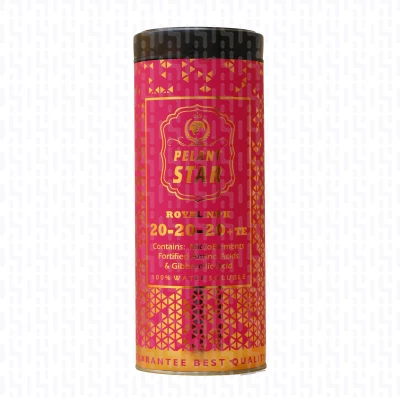
20-20-20 and 19-19-19 have equal declared proportions of the three nutrients and are well known in the soluble fertilizer market. Haifa and Yara offer examples of balanced NPK in their soluble or granular ranges. Actual use should be assessed against the nutrition plan and all fertilizers applied during the season.
High-Phosphorus NPK Fertilizer: 10-52-10, 12-44-12, and 15-30-15
High-phosphorus formulas are used for establishment, rooting, and periods when phosphorus needs have been confirmed. ICL Nova NPK 12-44-12+TE and Haifa Poly-Feed 12-43-12 are commercial examples. Repeated high-phosphorus application without testing can increase phosphorus accumulation and disturb zinc and iron nutrition.
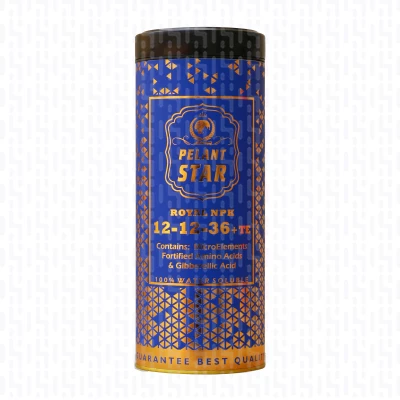
High-Potassium NPK Fertilizer: 12-5-40, 15-5-30, and 12-12-36
High-potassium formulas are used when K demand is higher and for some quality-related objectives. Potassium source, chloride, and EC matter. Haifa offers 12-5-40 and ICL offers high-potassium formulas among its soluble products. Rates should reflect crop removal, soil, and water conditions.
Choosing the Potassium Source in High-Potassium NPK Fertilizer
In high-potassium formulas, K may be supplied by potassium nitrate, potassium sulfate, or other sources. The source affects accompanying nitrate, sulfur, chloride, solubility, and price, and should be identifiable from the COA or TDS.
High-Nitrogen NPK Fertilizer: 30-10-10 and 26-12-12
High-nitrogen formulas are designed for situations where nitrogen's share is greater than P and K. Using them late in the reproductive stage or in soil already rich in nitrogen may upset nutrient balance. Nitrogen form and risks of salinity or leaching should be considered in the program.
NPK Fertilizer with TE and Complete Fertilizer Containing Micronutrients
TE indicates that the product contains trace elements, but their quantities and forms must be specified in the analysis. A few hundred ppm of iron is not the same as several percent iron. In fertigation, chelated Fe, Zn, Mn, and Cu may provide greater stability in solution.
Comparing Granular NPK, Water-Soluble NPK, Powdered NPK, and Liquid NPK Fertilizers
Choose the physical form based on the application route. A large farm with a centrifugal spreader has different needs from a hydroponic greenhouse. Granules are suitable for soil broadcasting and base fertilization, whereas completely soluble formulas are designed for fertigation tanks. Liquid products have different cost implications and advantages in transportation and tank storage.
Granular does not mean slow-release. Many granular NPK fertilizers dissolve when they contact water. Slow release requires special coating technology or a particular formulation. Nor does powder mean faster nutrient uptake. Supply rate depends on solubility, soil moisture, temperature, roots, and soil chemistry.

Caking of NPK Fertilizer Versus Slow Release
Caking is a physical storage problem and should not be confused with controlled nutrient release. Caked granules may still be fast-dissolving fertilizer. Slow-release fertilizer must have a defined coating technology or release mechanism.
Granular NPK Fertilizer for Soil Application
Uniform granules allow mechanical broadcasting and can reduce material segregation. In complex NPK, each granule may contain a similar combination of nutrients. Yara explains the distinction between single-nutrient and complex fertilizers using this principle.
Water-Soluble NPK Fertilizer for Fertigation
Water-soluble fertilizer should dissolve quickly in actual farm water and produce limited precipitation. Haifa Poly-Feed and ICL Solinure are examples of specialized water-soluble product ranges. Chloride, sodium, pH, and EC should be compatible with irrigation water and the crop.
Liquid NPK Fertilizer for Injection Systems
With liquid fertilizer, transporting water adds to costs, but injection and dosing may be simpler. Suitable storage tanks are required. Precipitation, phase separation, and crystallization in cold weather should be evaluated against the TDS and practical experience.
The following table summarizes differences among forms; each row was explained in the preceding text.
| NPK Fertilizer Form | Main Application | Purchasing Advantage | Check Before Ordering |
|---|---|---|---|
| Granular | Soil Broadcasting and Base Fertilization | Mechanical Spreading and Convenient Transport | Particle Size, Moisture, Caking |
| Soluble Powder/Crystals | Fertigation and Nutrient Solutions | Formula Precision and Dissolution | Insolubles, EC, Chloride, pH |
| Liquid | Injection and Ready-Made Formulas | Direct Dosing | Density, Settling, Stability |
| Complex NPK | Uniform Nutrient Distribution | Several Nutrients in Each Granule | Grade, Particle Size, Moisture |
| Bulk Blend | Dry Mixture of Several Granules | Formula Flexibility | Particle Size Compatibility and Segregation |
Difference Between Complex NPK and Bulk-Blended NPK Fertilizer for Industrial Buyers
In complex or compound fertilizers, nutrients are combined in a single granule through a chemical manufacturing or granulation process. In a bulk blend, several finished granular fertilizers, such as urea, DAP, and a potassium source, are mixed in defined proportions. Both methods can produce acceptable commercial products, but their physical behavior and quality control differ.
The main problem with a poor blend is granule segregation during transportation and spreading. If particle sizes, densities, or shapes differ too much, the mixture separates during vibration or unloading. This risk is lower in complex fertilizer because each granule contains a similar nutrient ratio. Price and formula flexibility may favor blending.

Buying Complex NPK Fertilizer for Uniform Spreading
Complex fertilizer is advantageous where uniform distribution of nutrients in individual granules matters. Yara describes its complex fertilizers as containing multiple nutrients in each granule. Buyers should examine granule strength, size, and grade.
Buying Bulk-Blended NPK Fertilizer for Custom Formulas
A blending plant can adjust a formula more quickly using available raw materials. Quality depends on physical compatibility, mixing uniformity, and sampling controls. A poor-quality blend may have a correct analysis on paper yet distribute nutrients unevenly in the field.
How NPK Fertilizer Is Made: Bulk-Blended, Complex, Soluble, and Liquid NPK Production
Production method depends on product form and target market. In bulk blending, ready-made granules are mixed at defined weight ratios after checking size and moisture. In complex NPK, raw materials are combined through chemical processing and granulation. For soluble fertilizer, higher-purity and more soluble ingredients are selected and formulated as powders or crystals. Liquid fertilizer is made by dissolving or reacting ingredients in the liquid phase.
Manufacturing quality does not depend on the mathematical formula alone. Weighing accuracy, mixing uniformity, temperature and moisture control, drying, screening, anti-caking coating, and sampling affect the final product. Salt purity and insoluble content are especially important for soluble fertilizer production.

Checking NPK Fertilizer Uniformity on the Production Line
Sampling at several points along the line and at different production times helps detect fluctuations. An average result from one composite sample should not hide major variation. A professional plant records and keeps consecutive batch results traceable.
Producing NPK Fertilizer by Bulk Blending
Raw materials should be as compatible as possible in particle size and density. Weighing uses accurate systems and mixing time is controlled. After blending, sampling from several points helps assess uniformity. Damp or caked materials do not yield a stable blend.
Producing Complex NPK Fertilizer by Granulation
In complex production, a slurry or melt containing nutrients is converted into granules. Dryers, coolers, screens, and recycling of off-size particles form part of the line. The objective is granules with a uniform grade and size and enough strength for transport.
Producing Water-Soluble NPK Fertilizer
Raw materials must have suitable solubility and purity. MAP, MKP, potassium nitrate, magnesium sulfate, and nitrogen sources may be used in different formulas. Chemical incompatibility and precipitation should be controlled both in formulation and in the stock tank.
Producing Liquid NPK Fertilizer and Checking Stability
The solution must remain stable throughout the storage temperature range. If concentration is close to the solubility limit, cooling may cause crystallization. Stability, density, pH, and suspended-solids tests are part of liquid-product control.
Choosing NPK Fertilizer Using Soil, Water, and Leaf Tests Before Purchase
Fertilizer recommendations cannot be written solely from the product name. Soil testing shows phosphorus, potassium, organic matter, pH, EC, and some micronutrients. Water testing for irrigation systems reveals calcium, magnesium, bicarbonate, sodium, chloride, and salinity. Leaf or tissue analysis provides a closer picture of plant nutrient uptake at sampling time.
FAO distinguishes crop nutrient requirements from fertilizer quantities required. Part of the need may be supplied by soil, crop residues, organic fertilizers, or irrigation water. NPK fertilizer should cover the actual shortfall in the program. Buying a fixed formula for every field overlooks this principle.

Soil Testing to Select an NPK Fertilizer Ratio
Olsen phosphorus, exchangeable potassium, organic matter, soil texture, and lime content require interpretation. Test results should be evaluated against the laboratory method, crop, and region. A fertilizer recommendation based on one figure alone is unreliable without knowing sampling depth and fertilization history.
Water Testing Before Buying Water-Soluble NPK Fertilizer
Hard, bicarbonate-rich water can form precipitates with phosphate. Sodium and chloride may create salinity constraints. When water provides substantial calcium and magnesium, these amounts should be counted toward total nutrients in the fertilizer plan.
Leaf Testing to Adjust an NPK Fertilizer Program
Plant tissue helps identify trends toward deficiency or excess, but sampling time and plant part must be standardized. Leaf analysis combined with soil data and yield informs better decisions than reacting to leaf appearance alone.
NPK Fertilizer for Fertigation: Solubility, Stock Tanks, and Preventing Precipitation
Fertigation allows nutrients to enter the root zone with irrigation water in several applications. Its benefits depend on proper dosing, irrigation uniformity, and water-quality control. Unsuitable fertilizer or incompatible mixtures can affect filters, injectors, and drippers.
Yara and Haifa both market dedicated water-soluble NPK ranges for fertigation. YaraRega and Poly-Feed Drip are examples providing different NPK ratios for different growth stages. They show that water-soluble NPK is not limited to 20-20-20.

NPK Fertilizer Solubility in a Stock Tank
Stock solution concentration must stay below the actual solubility limit at the water temperature. Cold water dissolves less of certain salts. Adding powder rapidly to a small volume of water can cause clumps and localized precipitation. The order in which ingredients are dissolved also matters.
Jar Testing NPK Fertilizer with Actual Farm Water
Mix a small amount of fertilizer using the same water, ratio, and accompanying materials, and check for sediment, cloudiness, gel formation, or heat. A jar test does not replace complete field testing, but it reveals obvious incompatibility before the mixture enters the system.
Mixing NPK Fertilizer with Calcium During Fertigation
Concentrated phosphates and sulfates should not be mixed with calcium in one stock tank without checking compatibility, because calcium phosphate or calcium sulfate precipitation may occur. Two-tank A/B systems separate incompatible compounds.
Filtering and Flushing the System After Applying NPK Fertilizer
Flushing the lines with clean water after injection is helpful. Monitor pressure loss and dripper flow. White deposits, sludge, or crystals in a tank indicate that the mixing plan or water quality requires reassessment.
Before preparing a concentrated stock solution, perform a jar test with actual farm water. A fertilizer remaining clear in distilled water does not guarantee it will remain free of precipitation in well water rich in bicarbonate and calcium.
NPK Fertilizer for Foliar Spraying: Selecting the Formula, Concentration, and Compatibility
Foliar application is a supplemental nutritional route and does not replace root feeding for supplying large quantities of N, P, and K. Leaves can absorb only limited salt amounts. Excessive concentration can cause burns. Temperature, humidity, leaf surface, and water quality affect uptake and safety.
Products intended for foliar spraying should have high solubility and low insoluble matter. Haifa Poly-Feed Foliar and comparable ranges are designed for this route. Manufacturer instructions and a limited-area trial before widespread application are important.

Water Quality for NPK Fertilizer Foliar Spraying
Hard or bicarbonate-rich water can change tank pH and affect dissolution or compatibility between pesticides and fertilizers. Check water quality and product labels before mixing several materials.
Foliar NPK Fertilizer and Leaf-Burn Risk
Solution EC and accompanying salts are decisive. Young leaves and hot conditions are more sensitive. Spraying in extreme heat or onto water-stressed plants raises the risk. Combining several fertilizers and pesticides without testing may increase salt concentration and chemical reactions.
Compatibility of NPK Fertilizer with Pesticides and Other Fertilizers
Tank-mix compatibility should be checked against both product labels and a jar test. Changes in color, precipitates, gel, or heat production indicate incompatibility. Physical compatibility does not guarantee biological safety for the plant, so test on a limited area.
NPK Fertilizer for Saline Soil and Saline Water: Choosing Low-Chloride NPK and Managing EC
Under saline conditions, every additional unit of salt matters more. The aim is not to eliminate fertilizer, but to select the source and timing with the least unnecessary osmotic pressure. Low-chloride potassium sources, split fertilizer applications, and leaching management may be part of the plan. Diagnosis should rely on water and soil EC and SAR.
Products labeled low-chloride should disclose their actual chloride content in a TDS or COA. ICL offers chloride-free Nova NPK formulas for greenhouses and sensitive crops as well as chloride-containing formulas for other conditions. This distinction shows that chloride must be managed by application, not according to a blanket rule.

Leaching Salts When Applying NPK Fertilizer in Saline Soil
Leaching works only when drainage functions and reasonably good-quality water is available. Adding water without removing salts from the root zone does not solve the problem. Fertilizer and irrigation plans must be coordinated.
Chloride-Free NPK Fertilizer for Sensitive Crops
Sources such as potassium sulfate and potassium nitrate reduce chloride input. Their higher price may be justified for sensitive crops. For tolerant crops and low-chloride water, limited use of chloride-containing sources may be more economical.
NPK Fertilizer EC and Splitting Applications
Dividing fertilizer into several applications can reduce peaks in soil-solution salinity. This approach is more controllable in drip systems. Total nutrient amounts must still match crop demand.
NPK Fertilizer Applications in Orchards: Buying NPK for Pistachios, Citrus, Grapes, and Fruit Trees
Perennial orchards have a large soil and root reservoir, and nutrition programs should reflect crop load, tree age, leaf analysis, soil, and water. A fixed formula throughout the entire season is not logical. Nitrogen ratios during early growth, potassium demand as fruit develops, and soil phosphorus status should be evaluated separately.
In pistachios, salinity, boron, sodium, and potassium are common management concerns. For citrus, nitrogen, potassium, magnesium, and micronutrients matter. In grapes, nitrogen and potassium balance affects vegetative growth and quality. These examples do not constitute a recommendation of one formula for all crops.

Leaf Testing Before Buying Orchard NPK Fertilizer
Leaf samples should be collected at a standardized age, position, and time. Comparing them with reference ranges for the crop and region gives a more accurate basis for changing N, P, or K than leaf color alone.
Buying NPK Fertilizer for Pistachios Based on Soil and Leaf Analysis
Pistachios in many regions of Iran face saline soil and water. NPK purchases should consider chloride, salinity, potassium, and micronutrients. Excess nitrogen can increase vegetative growth and disrupt orchard balance.
Buying NPK Fertilizer for Citrus with Emphasis on Nitrogen and Potassium
Citrus removes significant nutrient quantities with the crop. Programs should respond to tree age, yield targets, and leaf analysis. Water-soluble high-potassium fertilizer may be used during part of the season, but it does not replace calcium, magnesium, or micronutrients.
Buying NPK Fertilizer for Grapes and Managing Vegetative Growth
Grapes need balance. Excess nitrogen can increase shading and shoot growth. Potassium should also be adjusted to soil conditions and fruit quality. NPK must form part of a complete nutrition plan.
NPK Fertilizer in Field Crops: Buying NPK for Wheat, Corn, Rice, and Canola
Field crops use large quantities of fertilizer, making the cost per kilogram of nutrient particularly important. In wheat and corn, nitrogen forms a large part of the program, while phosphorus and potassium are adjusted according to soil tests and yield potential. Flooded conditions in rice change nitrogen and phosphorus behavior. Canola also requires greater attention to sulfur.
For large fields, granular NPK or blends can be used as a base fertilizer, with additional top-dress nitrogen supplied separately. Buying expensive, highly soluble products for soil broadcasting is not always economical. Product form should fit the application method.

Buying NPK Fertilizer for Wheat and Base Fertilization
Phosphorus and some nitrogen and potassium are usually included in base fertilization, but quantities depend on soil and yield targets. NPK can replace several base fertilizers in one spreading operation if its nutrient ratios match the field's needs.
Buying NPK Fertilizer for Corn and Its Higher Nitrogen Requirements
Corn consumes substantial nitrogen. Base NPK may supply some N, with the remainder supplied from a separate source. Potassium becomes more important in low-potassium soils or high-yield systems.
Buying NPK Fertilizer for Rice and Managing Flooded Conditions
In flooded paddies, ammonium nitrogen behaves differently from nitrate. Phosphorus and potassium programs should also account for soil and water management. Fertilizer selection should follow local guidance and soil testing.
NPK Fertilizer Applications in Greenhouses and Vegetables: Buying NPK for Tomatoes, Cucumbers, and Peppers
In greenhouses, even small fertilizer errors become apparent quickly. EC, pH, nitrate-to-ammonium ratio, calcium, magnesium, and micronutrients must be considered alongside NPK. The three numbers on a bag cannot describe a complete greenhouse nutrient solution.
Balanced formulas during growth, higher phosphorus during establishment, and higher potassium at certain stages may be part of the program, but it should be adjusted using drainage water, growing-medium EC, water quality, and growth stage. NPK with TE has advantages but may not provide enough calcium and magnesium.

NPK Fertilizer Stock Solution in a Greenhouse
Stock-tank concentration, injection ratio, and irrigation volume must be set so that the EC and quantity of each nutrient in the final solution can be calculated. Greenhouse management is not based merely on the bag's numbers; they must be converted to milligrams of each nutrient per liter of irrigation water.
Buying NPK Fertilizer for Greenhouse Tomatoes
Tomatoes do not require a constant nutrient ratio throughout the season. Increasing fruit load changes potassium demand, and calcium management for fruit quality remains a separate concern. Using one NPK product all season usually reduces program flexibility.
Buying NPK Fertilizer for Greenhouse Cucumbers
Cucumbers are sensitive to changes in EC and salinity. Fertilizer must dissolve completely, and chloride and sodium in both water and fertilizer must be controlled. Drainage-water analysis helps identify salt accumulation.
Buying NPK Fertilizer for Peppers and Long-Season Crops
During a long harvest period, the program should reflect vegetative growth, flowering, fruit load, and light conditions. Adjusting the N-to-K ratio over the season is common. NPK should be combined with calcium, magnesium, and micronutrients in the complete plan.
NPK Fertilizer for Saffron, Ornamentals, and Nurseries: Choosing NPK Without a Universal Prescription
Specialty crops such as saffron and ornamentals are more sensitive to generic recommendations because of their product value. For saffron, corm reserves and the timing of its growth cycle must be considered. Nurseries require controlled growth and good root quality. With ornamentals, growing-medium salinity and leaf appearance respond rapidly to nutritional errors.
Rather than recommending a fixed number of spoonfuls or grams for all conditions, calculate application rates from nutrient concentration, water volume, growing medium, and the manufacturer's instructions. One spoonful of two different 20-20-20 products can weigh differently, leaving the actual dose uncertain.

Buying NPK Fertilizer for Saffron
The saffron program should be based on soil testing, field age, corm density, and growth stage. High phosphorus and potassium should be applied only when the need and timing are confirmed.
Buying NPK Fertilizer for Ornamental Plants and Nurseries
Potting media have low buffering capacity and salinity rises quickly. Professional production prioritizes soluble formulas with manageable EC, suitable micronutrients, and precise dosing.
NPK Fertilizer Raw Material Producers in Iran: Urea Petrochemical Plants, DAP, and Potassium Sulfate
To understand Iran's NPK supply chain, consider the primary material sources rather than lists of competing retailers. Nitrogen is supplied through petrochemical urea and ammonia. Phosphorus may enter formulas through DAP, MAP, or phosphoric acid. Potassium comes from MOP, SOP, potassium nitrate, or soluble salts. Some specialized materials are imported.
Pardis, Shiraz, Khorasan, Kermanshah, Lordegan, Masjed Soleyman, and Hengam petrochemical companies participate in the urea and ammonia supply chain. Razi Petrochemical, which produces ammonia, urea, and diammonium phosphate, is part of the nitrogen and phosphate fertilizer chain. Urmia Petrochemical also produces ammonium sulfate and potassium sulfate. These companies do not necessarily sell finished NPK directly to every buyer; sales channels require separate verification.
Verifying the Origin of NPK Fertilizer Raw Materials
The petrochemical producer named on a seller's invoice should be traceable through allocation documents, waybills, or origin records. For finished NPK, the raw-material source alone does not establish the quality of the complete formula; a final-product COA remains necessary.
The following table shows these plants' roles in supplying raw materials. Each row has been explained in the previous two paragraphs; the table is only for quick comparison.
| Primary Producer | NPK-Related Product | Role in NPK Formula | Purchasing Check |
|---|---|---|---|
| Pardis Petrochemical | Urea and Ammonia | Nitrogen Source | Grade, Biuret, Particle Size, Sales Channel |
| Shiraz Petrochemical | Urea and Ammonia | Nitrogen Source | COA and Supply Status |
| Khorasan Petrochemical | Urea and Ammonia | Nitrogen Source | Grade and Loading Location |
| Kermanshah Petrochemical Industries | Urea and Ammonia | Nitrogen Source | Availability and Shipment Analysis |
| Lordegan Urea Fertilizer Plant | Urea and Ammonia | Nitrogen Source | Production and Delivery Status |
| Masjed Soleyman Petrochemical | Urea and Ammonia | Nitrogen Source | Granule Form and COA |
| Razi Petrochemical | Urea, Ammonia, and DAP | N and P Source | DAP Analysis and Sales Channel |
| Urmia Petrochemical | Ammonium Sulfate and Potassium Sulfate | N+S and K+S Source | Solubility, Moisture, and Analysis |
How Does Buying NPK Raw Materials from a Petrochemical Company Differ from Buying Finished NPK Fertilizer?
A petrochemical plant makes base materials. An NPK factory combines, granulates, or dissolves them with other sources. Buyers of finished fertilizer should verify the quality of the complete formula rather than judging it solely by the petrochemical producer of one ingredient.
Supplying Phosphorus and Potassium for NPK Fertilizer Production in Iran
Phosphorus can come from DAP, MAP, and other phosphate sources. Potassium enters formulas from SOP, MOP, and potassium nitrate. The selected source affects chloride, sulfur, solubility, and final price.
International NPK Fertilizer Brands: Comparing Yara, Haifa, ICL, and SQM for Specialty NPK
International brands should be compared by specific grade. Yara offers compound and fertigation product families. Haifa focuses extensively on water-soluble fertilizers and potassium nitrate. ICL offers Nova NPK and Solinure lines for fertigation. SQM also offers specialized soluble products and potassium nitrate sources.
A brand name cannot replace the COA, production date, country of origin, import permit, or storage requirements. For imported goods, packaging authenticity, batch, label, TDS, and supply chain must be verified. Similar formulas from two brands may differ in nitrogen forms and micronutrients.

Authenticity of International NPK Fertilizer Brands
Cross-check batch numbers, label design, manufacturing country, importer name, production date, and customs documents against manufacturer information. Intact packaging without proof of origin is not enough for a bulk purchase.
Yara NPK Fertilizer for Complex Products and Fertigation
YaraMila is a range of compound NPK fertilizers, and YaraRega is marketed for fertigation. In some YaraRega products, all nutrients occur together in one granule, with formulas containing different NPK ratios, sulfur, magnesium, and micronutrients.
Haifa NPK Fertilizer and Poly-Feed
Haifa Poly-Feed is a family of completely water-soluble fertilizers. Greenhouse, Drip, and Foliar formulas are offered for different application routes. Some grades are designed without chloride and sodium.
ICL NPK Fertilizer and Nova NPK
ICL Nova NPK offers soluble formulas for fields and greenhouses, including chloride-free and chloride-containing options. Solinure is another soluble range for different growing conditions.
SQM NPK Fertilizer and Soluble Products
SQM operates in specialty plant nutrition and potassium nitrate sources. Its soluble brands are used for fertigation and foliar application. Selection should be based on the analysis and destination market.
NPK Fertilizer Packaging: 10, 20, 25, and 50 kg Bags and Export Packaging
Packaging is more than a product's appearance. Moisture, tears, and contamination can change fertilizer quality. Soluble and powdered fertilizers have a greater need for moisture-resistant inner liners. Granular NPK should likewise be protected from rain and direct ground contact.
In the specialty market, 10, 20, and 25 kg bags are common for soluble fertilizers. Granular fertilizer may be sold in 25 or 50 kg bags, and in jumbo bags for large orders. Check actual weight, batch number, formula, manufacturer, and storage instructions on the label.

25 kg Bags of Soluble and Powdered NPK Fertilizer
A 25 kg bag is also used by many international specialty ranges. Haifa lists 25 kg packs for certain Poly-Feed products. Bags should be sealed and free of tears, with intact inner liners.
50 kg Bags of Granular NPK Fertilizer
Larger packs reduce packaging costs but are more difficult to handle manually. Palletizing, stretch wrap, and strapping are important for bulk loads. Damp or caked bags should be examined before large-scale unloading.
Jumbo Bags of NPK Fertilizer for Bulk Orders
Jumbo bags are suitable for some industrial users and blending plants. Lifting capacity, liner, lifting loops, and discharge arrangements must fit customer equipment. Outdoors, jumbo bags do not replace covered storage.
NPK Fertilizer Storage and Safety: SDS, Caking, Heat, and Fertilizer Warehouses
The safety requirements of NPK depend on its composition. Some formulas containing ammonium nitrate can decompose at high temperature, and certain grades can undergo self-sustaining decomposition. Therefore, the SDS for the actual product must govern storage. Applying one grade's SDS to every NPK fertilizer is a mistake.
Yara warns that contact with heat sources and certain contaminants can accelerate decomposition in ammonium-nitrate-containing NPK fertilizers. Fertilizer should be kept away from heat, combustible materials, acids, and incompatible contaminants. Dry storage and access control also help preserve product quality and safety.

Yara's safety guidance emphasizes keeping ammonium-nitrate-containing NPK away from heat sources and obtaining an up-to-date SDS for the transport and storage of the specific grade.
Yara Fertilizer Security and Safety
Preventing NPK Fertilizer Caking in Storage
Caking is affected by moisture, stack pressure, temperature fluctuations, and the nature of the salts. Dry warehousing, FIFO inventory rotation, keeping bags off floors and away from walls, and checking packaging damage are basic measures.
The FIFO Method for Storing NPK Fertilizer
Use or dispatch the oldest intact batch first. Record batch numbers and receipt dates on stock cards. This reduces prolonged storage, caking, and the risk of products being forgotten at the back of the warehouse.
NPK Fertilizer Transport Safety and SDS Checks
Transport classification depends on the formula. Some fertilizers are subject to dangerous-goods transport regulations, and others are not. The Transport Information section of the SDS should be checked before international shipping or special loading.
Controlling NPK Fertilizer Dust During Loading
Broken granules and rough unloading generate dust. Choose respirators, ventilation, and appropriate unloading methods based on workplace assessment. Dry sweeping can put settled dust back into the air.
Calling a product an agricultural fertilizer does not make every formula harmless. Chemical composition, ammonium nitrate, micronutrients, and transport classification can create different requirements. Use the SDS for the exact grade.
Loading and Delivering NPK Fertilizer: Checking Weight, Pallets, Batch Numbers, and Shipment Condition
For bulk shipments, product quality is not controlled only in the laboratory. Record bag counts, net weight, pallet condition, contamination on the truck floor, torn packaging, moisture, and batch numbers at loading and delivery. A shipment with a good COA but wet bags can still cause problems at its destination.
Yara's handling guidance emphasizes that the transport chain affects a fertilizer's physical quality. Excessive drops, repeated handling, and pressure increase granule breakage and dust. Covering loads in humid conditions and preventing contact with incompatible materials are important.

Sampling NPK Fertilizer at Delivery
Take samples from multiple points or bags using the agreed method. A handful taken from the surface of one bag does not represent a shipment weighing tens of tons. A jointly sealed retained sample is useful for dispute resolution.
Checking NPK Fertilizer Weight in Bulk Purchases
Compare origin and destination weighbridge results, bag counts, and nominal weights. Specify bag tolerances and how shortages are calculated in the contract. Weight labels and weighbridges are especially important for jumbo bags.
Exporting and Importing NPK Fertilizer: HS Code, COA, Certificate of Origin, and Export Packaging
Mineral or chemical fertilizers containing all three nutrients N, P, and K generally fall under HS 3105.20 in the international Harmonized System. Packs of up to 10 kg or special compositions may be classified differently, so the final code must be confirmed using the analysis and the destination's customs regulations.
Exports may require a commercial invoice, packing list, COA, SDS, certificate of origin, and registration or permit documents for the destination. Labels should state the NPK formula, weight, batch, manufacturer, and safety information required by the destination market. Check destination-country import rules for products containing micronutrients or making special claims.
NPK Fertilizer HS Code and Code 310520
Code 310520 covers mineral or chemical fertilizers containing nitrogen, phosphorus, and potassium, all three primary nutrients. This is a base six-digit code; countries apply national subheadings. Confirmation with a customs broker is necessary.
Export NPK Fertilizer COA and Contract Compliance
The COA must cover test methods, batch, and guaranteed values. International buyers may specify a particular standard or independent laboratory. Pre-shipment and destination retained samples reduce dispute risks.
Retained Samples of Export NPK Fertilizer
The export contract should specify how origin reference samples, container samples, and destination samples are taken and how long they are stored. Agree on a dispute-resolution laboratory and report language before shipping.
Export NPK Fertilizer Packaging and Container Moisture Control
Secure bags on pallets under suitable stretch wrap or hoods and strapping. On long sea routes, vapor condensation inside containers may introduce moisture. Inspect the container's condition, floor, odor, and holes before loading.
Industrial NPK Fertilizer Buying Guide: Bulk Order Checklist for Factories and Agriculture
Professional procurement begins with a specification. If a buyer writes only 20-20-20, a seller may offer products that differ in nitrogen forms, chloride, micronutrients, solubility, and packaging. The purchase request should identify the application.
For farms, soil type, application system, and crop sensitivity matter. Distributors prioritize packaging consistency and stock availability. Blending factories prioritize raw-material grade, purity, and physical behavior. Purchasing criteria should reflect the buyer's role.
Defining NPK Fertilizer Specifications Before Requesting Prices
List the formula, physical form, solubility, chloride, TE, packaging, quantity, delivery location, and required documents. If you want an equivalent to a particular brand, specify the technical properties rather than merely naming that brand.
Requesting an NPK Fertilizer Sample Before a Bulk Contract
The sample must come from the actual product or a formula that can be manufactured commercially. Perform solubility, pH, EC, moisture, and, if necessary, independent analysis tests. Decorative trade-show samples should not form the contractual basis.
NPK Fertilizer Purchase Contracts and Dispute Resolution
State analysis tolerances, sampling method, reference laboratory, payment terms, loading, weight shortages, packaging, and delivery dates in the contract. For phased purchases, define the right to reject or retest every batch.
The following checklist presents all of these matters in an actionable format. The table's content has been explained in the preceding paragraphs.
| NPK Fertilizer Purchase Stage | Required Information | Document | Risk if Omitted |
|---|---|---|---|
| Define Application | Soil, Fertigation, Foliar, Blend | Purchase Request Form | Wrong Grade Selection |
| Define Formula | N-P2O5-K2O, TE, Mg, S | Specification | Analysis Dispute |
| Chemical Check | Chloride, Sodium, pH, EC, Solubility | TDS and COA | Precipitation or Salinity |
| Sample Approval | Water Test, Moisture, Particle Size | Laboratory Report | Post-Purchase Risk |
| Supplier Verification | Identity, Inventory, Origin, Permits | Company Documents | Delivery Risk |
| Commercial Agreement | Price, Freight, Taxes, Payment | Pro Forma Invoice and Contract | Hidden Costs |
| Delivery | Weighbridge, Pallets, Batch, Retained Sample | Receipt and Waybill | Shortage or Quality Dispute |
Current NPK Fertilizer Prices and Factors Affecting 20-20-20, High-Phosphorus, and High-Potassium NPK Prices
NPK fertilizer prices depend on the costs of nitrogen, phosphate, and potassium raw materials, exchange rates, the quality of soluble ingredients, micronutrients, manufacturing costs, packaging, and transport. A high-potassium formula based on potassium nitrate or sulfate may have a different price structure from a blend containing MOP. Fully soluble fertilizers also generally use purer raw materials.
Price comparisons should reflect usable nutrient content and application costs. Two differently priced 20-20-20 fertilizers may not be equivalent in chloride, TE, insoluble matter, or packaging quality. A lower price is advantageous only if the required specification is maintained.
Calculating the Cost per Kilogram of Nutrient in NPK Fertilizer
For an economic comparison, convert the product price to the guaranteed amounts of N, P2O5, and K2O per ton. Then include shipping, application rates, insoluble matter, and possible losses so that purchase price is not mistaken for the actual cost of use.
How Urea and Ammonia Prices Affect NPK Fertilizer Prices
Nitrogen accounts for an important share of the cost of many formulas. Changes in urea and ammonia markets affect high-nitrogen NPK and blend prices. The nitrogen form also changes costs.
How Phosphate Prices Affect High-Phosphorus NPK Fertilizer Prices
DAP, MAP, and phosphoric acid are major phosphorus sources. Grades such as 10-52-10 and 12-44-12 contain larger proportions of phosphate materials and are more sensitive to phosphate-market prices.
How Potash Prices Affect High-Potassium NPK Fertilizer Prices
K may be supplied by MOP, SOP, or potassium nitrate. SOP and KNO3 usually command higher values in specialty markets and are used in low-chloride formulas. Their costs significantly affect 12-5-40, 12-12-36, and similar formulas.
How Packaging and Order Quantity Affect NPK Fertilizer Prices
Small bags, custom printing, and export pallets cost more. Bulk orders may reduce unit costs but increase shipping and inventory requirements. Ex-factory prices and delivered prices should be compared separately.
Convert the price per kilogram of product into the cost per kilogram of N, P2O5, and K2O and the actual application cost. If lower-solubility fertilizer causes clogging or deposits, an apparent purchase-price saving can disappear in system maintenance costs.
The following table summarizes price factors. Each factor is explained in the preceding paragraphs.
| NPK Fertilizer Price Factor | Effect on Price | Comparison Method |
|---|---|---|
| Urea and Nitrogen Sources | Direct Effect on High-N Formulas | Compare Nitrogen Form and N Percentage |
| DAP/MAP and Phosphates | Greater Effect on High-Phosphorus Formulas | Check Total and Soluble P2O5 |
| SOP/MOP/KNO3 | Greater Effect on High-Potassium Formulas | Check K2O, Chloride, and K Source |
| Trace Elements (TE) | Raise Costs in Specialty Formulas | Specify Element Type and Percentage |
| Solubility and Purity | More Soluble Raw Materials Usually Cost More | Compare Insoluble Matter and EC |
| Packaging | Small and Export Bags Raise Costs | Identify Net Product Price Separately |
| Volume and Freight | Tonnage and Distance to Destination Matter | Separate EXW from Delivered Price |
Why Buy NPK Fertilizer Through Shimico for Price Inquiries and Wholesale Transactions?
Shimico is a B2B platform connecting buyers and suppliers of chemical and agricultural materials. Buyers can specify the NPK formula, physical form, solubility, quantity, packaging, and destination in their inquiries and compare offers on a consistent technical basis.
The platform does not replace testing or contracts. The parties remain responsible for sample approval, COA, permits, authenticity, payment terms, and delivery. Its main advantage is bringing scattered communications together and turning vague requests into comparable inquiries.
Submitting an NPK Fertilizer Buying Inquiry on Shimico
In the inquiry form, provide the formula, application type, quantity, destination city, packaging, and documents. For soluble products, specify chloride and insoluble matter as well. For export purchases, state destination labeling and documentation requirements at the outset.
Posting an NPK Fertilizer Sales Listing on Shimico
Sellers should provide the analysis, physical form, packaging, minimum order, loading location, and availability of COA and SDS. An accurate listing reduces unrelated inquiries and helps industrial buyers decide faster.
Wholesale NPK Fertilizer Buying and Selling Inquiries on Shimico
Submit your NPK formula, physical form, solubility, packaging, order quantity, delivery city, and required documents, and compare suppliers' offers against the same specifications.
View Agricultural Fertilizers Post a Free Chemical Product ListingNPK Fertilizer Buyer Reviews on Shimico: Only for Verified Orders
The formula, solubility, chloride, and COA were reviewed before purchase. A sample was tested using farm water, and the main order was placed after approval.
Evidence required: order, COA, and the buyer's permission to publishFor a bulk purchase, batch number, bag integrity, loading time, and formula consistency were our criteria, and offers were compared against identical specifications.
Evidence required: invoice and delivery receiptFor the drip system, we checked insoluble matter, EC, moisture-resistant packaging, and water compatibility before proceeding with a phased purchase.
Evidence required: test report and customer approvalFrequently Asked Questions About Buying NPK Fertilizer, NPK Prices, and NPK Sales
What Is NPK Fertilizer?
What Does 20-20-20 Mean in NPK Fertilizer?
Does NPK Fertilizer Color Indicate Its Formula?
Is 20-20-20 NPK Fertilizer Suitable for All Plants?
What Is the Difference Between Granular and Water-Soluble NPK Fertilizer?
What Is the Difference Between Complex NPK and a Bulk Blend?
What Information Does an NPK Fertilizer COA Contain?
When Is High-Phosphorus NPK Fertilizer Used?
When Is High-Potassium NPK Fertilizer Used?
Can NPK Fertilizer Be Mixed with Calcium?
How Should NPK Fertilizer Be Chosen for Saline Water?
What Is NPK Fertilizer with TE?
What Factors Determine NPK Fertilizer Prices?
How Do We Compare Prices of Two NPK Fertilizers?
How Should NPK Fertilizer Be Stored?
Do All NPK Fertilizers Have the Same Hazards?
What Is the HS Code for NPK Fertilizer?
What Is the Minimum Order Quantity for Bulk NPK Fertilizer?
How Can Genuine NPK Fertilizer Be Identified?
How Can I Buy NPK Fertilizer on Shimico?
Scientific and Official NPK Fertilizer References for Specifications, Safety, and Purchasing
| Source | Publisher | Topic | Link |
|---|---|---|---|
| Fertilizer Specifications | FAO | Grade Definition and NPK Specifications | FAO |
| Plant Nutrition for Food Security | FAO | Plant Nutrition and Fertilizer Formulas | FAO PDF |
| How We Make Our Fertilizers | Yara International | Complex Fertilizers and Physical Forms | Yara |
| YaraRega Water Soluble NPK | Yara International | Soluble NPK for Fertigation | YaraRega |
| Water Soluble Fertilizers | Haifa Group | Soluble NPK, Drip, and Foliar | Haifa |
| Nova NPK | ICL Growing Solutions | Soluble NPK and Low-Chloride Formulas | ICL |
| Fertilizer Security and Safety | Yara | SDS and Safety of Ammonium-Nitrate-Containing NPK | Yara Safety |
| Fertilising Products Regulation | European Commission | Fertilizer Labeling and Requirements in the European Union | European Commission |
| HS 310520 | Japan Tariff Association | NPK Classification in Chapter 31 | webTARIFF |