




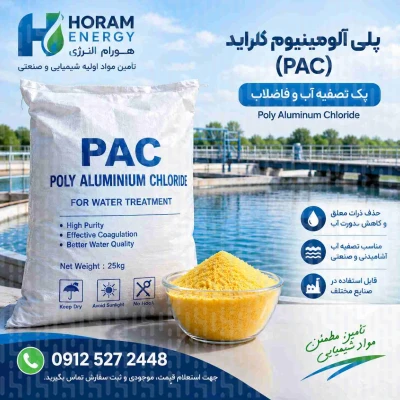

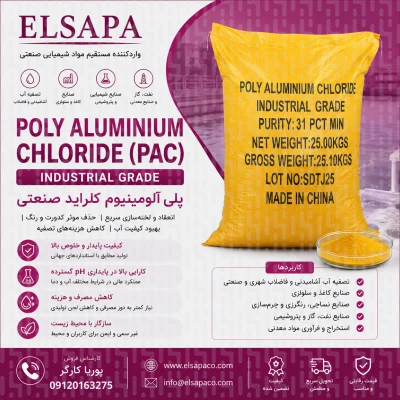


Industrial, wholesale, tonnage and export supply of PAC
Buy Poly Aluminium Chloride PAC; Price and Bulk Sales of Industrial, Drinking-Water and Wastewater Grades
Get the current price of liquid and powdered poly aluminium chloride, compare white and yellow PAC, review COA, Al2O3, basicity, heavy metals, packaging and delivery terms for factories and treatment plants.
In industrial purchasing of poly aluminium chloride, the name PAC or the powder color is not enough to select the product. The buyer must specify the application grade, liquid or solid form, Al2O3 percentage, basicity, pH, insoluble matter, iron and heavy metals.
For drinking water, compliance with the standard and the approved maximum dosage are important. For wastewater, actual performance in the jar test, sludge production, settling and dewatering are more important than the appearance of the bag.
This page is written for purchasing managers, treatment plant managers, laboratory personnel, water and wastewater contractors, and traders who purchase PAC at pallet, truck or container scale.
Buy Poly Aluminium Chloride PAC and Get a Quick Answer for Bulk Orders
For buying poly aluminium chloride first state the final application. Drinking-water treatment, industrial wastewater, papermaking, mining and sludge dewatering do not require the same product.
Then specify the order quantity, product form, aluminium oxide percentage, basicity, color, packaging type and delivery city. With this information, the seller can provide a comparable offer.
A vague request such as “How much is PAC?” usually leads to a figure that later changes with freight, tax, packaging or analysis differences.
For tonnage orders, the price must be clear per net weight and based on the delivered product. PAC powder with Al2O3 of about 28 to 30 percent cannot be compared only by price per ton with a 10 or 18 percent solution.
For a fair comparison, the amount of usable Al2O3, jar-test efficiency, actual dosage, sludge quantity and freight cost must be included in the calculation. A small difference in active-matter percentage creates a large number in a contract of hundreds of tons.
PAC powder, solid or liquid solution
Drinking-water, industrial, wastewater or papermaking
Al2O3, basicity, pH, insoluble matter and heavy metals
25 kg bag, pallet, jumbo bag, tank or IBC
In a price inquiry, write one technical sentence: “White powdered PAC for drinking water, Al2O3 minimum 30 percent, basicity according to COA, heavy metals in accordance with the destination standard, palletized 25 kg bags, quantity 40 tons, delivery Tehran, sample and COA of the same batch required.” This wording eliminates non-comparable offers.
The terms “food grade” and “drinking-water grade” in the market do not by themselves authorize use in drinking water. The product certificate, the standard accepted by the buyer, the approved maximum dosage, heavy-metal analysis and residual-aluminium control must be checked.
What Is Poly Aluminium Chloride and What Structure Does PAC Have?
Poly aluminium chloride, or PAC, is a family of polymeric and pre-hydrolyzed aluminium salts composed of aluminium, chloride and hydroxide.
It is not a single molecule with one exact and fixed formula for all brands. The U.S. Environmental Protection Agency describes PAC as a class of aluminium-based inorganic polymeric materials in which the aluminium-to-chloride ratio and hydroxide content vary. This difference changes basicity and coagulation behavior.
The general formula of PAC is written in sources in forms such as Aln(OH)mCl3n-m, but this representation is intended to describe the material family. In solution, monomeric, oligomeric and polymeric aluminium species are present simultaneously.
A large part of PAC's practical advantage comes from the fact that part of the hydrolysis has already occurred before the material enters the water. Therefore, when it contacts raw water, it neutralizes the charge of colloidal particles faster and forms flocs.

“Poly aluminium chlorides are a class of aluminium-based inorganic polymeric materials used primarily for coagulation in water and wastewater treatment.” Source: U.S. EPA, Polyaluminum Chloride Supply Chain Profile
Poly Aluminium Chloride Formula and Its Difference from Aluminium Trichloride
Aluminium trichloride with the formula AlCl3 is a different compound. PAC is produced through controlled hydrolysis and polymerization of aluminium salts, and hydroxide groups are present in its structure.
Purchasing aluminium chloride solution or aluminium chloride powder instead of PAC can disrupt the process. The correct English product name is usually written as Poly Aluminium Chloride, Poly Aluminum Chloride, Polyaluminium Chloride or PACl.
Poly Aluminium Chloride CAS Number and Identification Limitations
The common CAS number for PAC is 1327-41-9. PubChem also lists this number for poly aluminium chloride, but emphasizes that PAC may not have a single, defined structure.
The buyer should not approve the product based only on the CAS number. The trade name, Al2O3 percentage, basicity, physical form, standard and COA of the same batch must be reviewed alongside the CAS number.
What Is PAC for Water Treatment and How Does It Remove Particles?
Fine clay particles, organic matter and colloids remain stable in water because of surface charge and do not settle easily. PAC reduces their charge, forms hydroxide bridges and converts fine particles into larger flocs.
These flocs settle in the sedimentation basin or are separated by filtration. PAC is not a disinfectant and does not replace chlorine, ozone or UV. Its main function is coagulation and assistance with separation.
Physical and Chemical Properties of Poly Aluminium Chloride PAC
The physical properties of PAC vary with the product form. The powder is usually white, milky, cream or yellow. The liquid appears clear to pale yellow or amber yellow. The material dissolves in water and its solution is acidic.
Color intensity should not be interpreted as a definitive indicator of purity. White powder may contain less iron, but the COA must prove this.
PAC hydrolyzes in water and forms hydroxy-aluminium species. Its dosage affects water pH and alkalinity, but under many conditions it causes a smaller pH drop than aluminium sulfate.
This advantage is not absolute. Water with low alkalinity, cold temperature or specific organic matter may still require pH adjustment. The actual result is determined by a jar test.

Al2O3 Percentage in Powdered and Liquid Poly Aluminium Chloride
The Al2O3 percentage is the common market language for expressing the amount of active aluminium. PAC powder in many grades contains about 28 to 30 percent Al2O3.
Liquid products may contain about 10, 14 or 18 percent. GACL introduces PAC 10, PAC 14, PAC 18 and PAC 30 grades in its product family.
USALCO reports an Al2O3 value of about 12.5 percent and basicity above 70 percent for DelPAC 2500.
What Does Poly Aluminium Chloride Basicity Mean?
Basicity expresses the ratio of hydroxide groups to the theoretical aluminium capacity. The higher the basicity, the more pre-hydrolyzed the product is and, usually, the less acid it introduces into the water.
This number should not be confused with pH. Two PAC products with similar pH values can have different basicity. Basicity affects the type of aluminium species, floc formation rate, alkalinity consumption and performance in cold water or low-alkalinity water.
Solubility, Density and pH of Poly Aluminium Chloride
High-quality powder should dissolve under the manufacturer's recommended conditions without abnormal sediment. High insoluble matter can affect nozzles, pumps and filters. Density in liquid PAC affects conversion of volumetric dosage to mass dosage.
pH must be stated together with the test-solution concentration; comparing the pH of a one-percent solution with that of a ten-percent solution is not valid. Every COA should clearly state the test method and measurement temperature.
Technical Specifications Table for Poly Aluminium Chloride, PAC 18 and PAC 30
The table below shows common market ranges for an initial comparison. These values are not definitive standards for all brands. Final specifications must be taken from the TDS and COA of the same product.
Drinking-water, industrial-wastewater and papermaking applications may have different limits for iron, heavy metals and insoluble matter.

When buying PAC 30, the number 30 usually refers to the Al2O3 percentage in the powder. In PAC 18, the number 18 also refers to the Al2O3 percentage in the liquid product or the related grade.
This naming convention must be confirmed with the TDS for each manufacturer. Do not assume that every product called PAC 18 or PAC 30 has exactly the same specifications.
Divide the price per ton by the kilograms of Al2O3 in that ton. Then include jar-test dosage, freight cost, sludge production, alkali requirement and dewatering cost in the calculation. A lower price for a dilute product does not necessarily mean a lower treatment cost.
Technical COA Analysis of Poly Aluminium Chloride Before Purchase
The COA must show the actual result for the same batch. The TDS describes the product's target range, and the SDS explains hazards and safety procedures. A sheet without a batch number, production date, test method or unit is weak for a tonnage contract.
The buyer should also review the COAs of the previous three batches to evaluate production consistency. Large fluctuations in basicity or Al2O3 can change dosage adjustment with every shipment.

What Is Important in a Poly Aluminium Chloride COA?
The minimum parameters include Al2O3, basicity, pH, insoluble matter, iron, moisture for powder, density for liquid, and heavy metals. For drinking water, arsenic, lead, cadmium, mercury and hexavalent chromium must be controlled according to the purchasing standard.
For white paper or color-sensitive industries, iron is more important. For wastewater, jar-test performance, sludge volume and settling rate should be reviewed alongside the COA.
Sampling Powdered and Liquid Poly Aluminium Chloride
A sample from one opened bag is not representative of a truckload. Samples should be taken from an appropriate number of bags at different points on the pallet, combined, and divided into test, retention and dispute samples.
For liquid, the tank or IBC should be homogenized before sampling according to the supplier's instructions. The sample must be labeled with the batch number, date, sampling location and sampler's name. If the shipment contains multiple batches, each batch should be checked separately.
Poly Aluminium Chloride Jar Test and Shipment Acceptance
The jar test is an inseparable part of purchasing. Actual plant water is tested with different PAC dosages, target pH values and, if needed, coagulant aid. Final turbidity, floc formation time, settling rate, sludge volume, color, COD or residual phosphorus are recorded.
A new product should be tested alongside the current product under identical conditions. Changing PAC, polyelectrolyte and pH at the same time does not allow the cause of the result to be identified.
The phrase “complies with standard” without the standard name, revision number and limit for each contaminant is not sufficient. The contract should state the test method, reference laboratory, sampling right and the disposition of rejected shipments.
Types of Solid, Liquid, White and Yellow Poly Aluminium Chloride
The PAC market uses a few simple names, but the actual selection is multidimensional. Physical form, color, Al2O3 percentage, basicity, iron, heavy metals, insoluble matter and final application must all be reviewed together. None of the terms white, yellow, food grade or industrial alone provides complete specifications.

White Poly Aluminium Chloride for Drinking Water
White PAC is usually produced from purer raw materials and a more controlled process and has lower iron. This grade is considered for drinking water, food industries, white paper and color-sensitive applications.
Use in drinking water requires certification and a standard. NSF publishes a list of products certified to NSF/ANSI/CAN 60 and separately shows the maximum use level for each product. Buying a white product without standard certification does not replace a health-safety review.
Yellow Poly Aluminium Chloride for Industrial Wastewater
Yellow PAC is widely used in municipal and industrial wastewater treatment, mining, sludge dewatering and general applications. The yellow color may come from iron, raw materials or the production method. This product is not necessarily weaker.
If the application is not color-sensitive and the jar test gives a suitable result, yellow PAC can be an economical choice. The iron and insoluble-matter levels must be clear in the COA.
Liquid or Powdered Poly Aluminium Chloride
The liquid form is suitable for direct dosing and continuous consumption. The powder form has advantages for long-distance transport, export and bulk storage. The decision is not made only by price per ton.
Tank, dissolution, dosing, water-transport, dust, labor and product-stability costs are included in the calculation. A treatment plant with high daily consumption may prefer liquid, while an export trader usually chooses powder.
Industrial, Wastewater and Food-Grade Poly Aluminium Chloride
Industrial grade is supplied for wastewater and non-potable processes. Wastewater grade focuses on removing turbidity, color, phosphorus, suspended solids and on sludge dewatering.
The term food grade in the market should be used cautiously; PAC is not a food. It refers to a grade suitable for treating water used in food industries or drinking water. Certification, standard and maximum dosage must be specified.
Difference Between PAC, Aluminium Chloride, Aluminium Sulfate and Polyelectrolyte
PAC is a pre-hydrolyzed coagulant. Aluminium chloride and aluminium sulfate are simpler aluminium salts and affect alkalinity and pH differently. Polyelectrolyte is usually a coagulant aid or flocculant, and its long chains enlarge flocs.
Direct substitution among these materials without a proper jar test is not correct. In many lines, PAC and polyelectrolyte are used at separate dosages and in a controlled sequence.
Industrial-Scale Production Method of Poly Aluminium Chloride PAC
PAC production begins with the reaction of an aluminium source with hydrochloric acid and controlled hydrolysis. The aluminium source may be aluminium hydroxide, alumina, boehmite, aluminate or suitable mineral materials.
The material ratio, temperature, time, pressure and amount of base determine the OH-to-Al ratio. After reaction, the solution is purified and stabilized. For the powdered product, the solution is dried by a spray dryer or other equipment, then screened and packaged.

“Kemira explains that poly aluminium chloride is produced from aluminium hydrate and hydrochloric acid and is used in drinking-water and wastewater treatment to remove impurities.” Source: Kemira, PAC Production and Application
Controlling Basicity in Poly Aluminium Chloride Production
Controlling basicity is the heart of the process. If hydrolysis is low, the product is more acidic and consumes more alkalinity. If hydrolysis is excessive or unstable, precipitation and reduced stability occur.
The producer adjusts polymeric species through raw-material selection, addition sequence, temperature and residence time. The result should be reflected in basicity, pH, density and performance testing.
Drying Poly Aluminium Chloride Powder
In a spray dryer, the solution is converted into fine droplets and dried with hot air. Inlet and outlet temperature, droplet size and contact time affect color, solubility and moisture. Very fine powder creates more dust. Coarser powder may dissolve more slowly. After drying, screening and control of metals and insoluble matter are performed.
Production of Liquid Poly Aluminium Chloride
The liquid product is prepared after reaction, filtration and concentration adjustment. Its stability depends on concentration, basicity and storage temperature. The tank and tanker must be compatible with PAC. Contamination with iron, alkali or other materials can change the product. The producer should state the storage-temperature range and shelf life in the TDS.
Poly Aluminium Chloride Producers in Iran and Supply Routes
The Iranian market distinguishes among producer, importer, supplier and seller. A professional sales page should not introduce every name found in an advertisement as a PAC factory.
To verify a producer, the factory address, license, reaction and drying line, capacity, product sample and traceable COA should be reviewed. Several Iranian companies claim on their official websites to produce liquid or solid PAC, and projects for industrial production of this material have also been introduced.

Urmia Petrochemical Poly Aluminium Chloride
Petrochemical Industries Design and Engineering Company has reported a project for a liquid and solid PAC production unit related to Urmia Petrochemical.
Production status, available grade, saleable capacity and delivery schedule must be confirmed at the time of order from the official source or a seller holding documentation. The project name alone does not guarantee market availability.
Poly Aluminium Chloride Producers and Suppliers in the Iranian Market
The following table shows the role of each company based on the public claims on its own website or its commercial position. Four Iranian names with a production claim or production project are separated. The other names are supply routes, importers or foreign brands. This distinction prevents presenting ten factories without evidence.
Applications of Poly Aluminium Chloride in Water Treatment and Industries
The main application of PAC is coagulation and flocculation in water and wastewater treatment. It reduces turbidity, suspended solids, part of the organic matter, color and phosphorus by converting fine particles into separable flocs.
The result depends on water quality, pH, alkalinity, temperature, dosage, mixing and the type of PAC. There is no fixed dosage for all waters.

Application of Poly Aluminium Chloride in Drinking Water
In drinking water, the aim is to reduce turbidity, color and precursors of disinfection by-products. PAC must have appropriate certification, and its dosage must be adjusted so that residual aluminium and final turbidity are controlled.
NSF lists certified products with specified maximum use levels. This limit is not a dosage instruction for all waters; it is the maximum health-evaluated amount for the specific product. The treatment plant must perform jar testing, online monitoring and treated-water testing.
Application of Poly Aluminium Chloride in Wastewater Treatment
In wastewater, PAC is used to remove suspended solids, color, phosphorus, part of the COD and to improve settling. In textile effluent, color and dissolved organic matter behave in complex ways, and PAC may be combined with polyelectrolyte or oxidation.
In dairy wastewater, fat and protein affect dosage. In petrochemical and refinery wastewater, oil and surfactants can change flocculation. Pilot testing is essential.
Application of Poly Aluminium Chloride in Phosphorus Removal
Aluminium forms a precipitate with phosphate, and PAC can be used to reduce phosphorus in municipal and industrial wastewater. USALCO states that DelPAC 1525 is used for phosphorus removal.
Molar ratio, injection point, pH and alkalinity affect consumption. Overdosing increases sludge and residual aluminium. Phosphorus control should be accompanied by effluent testing and a sludge balance.
Application of Poly Aluminium Chloride in Papermaking
In paper and board, PAC can be used as a fixative, as a coagulant for interfering substances and to aid particle retention.
Kemira mentions the use of PAC in raw water, wastewater and as a fixative in the paper and board industry. Low-iron grade is important for bright paper. Compatibility with starch, resin, dyes and the retention system must be checked on the paper machine.
Application of Poly Aluminium Chloride in Mining and Sludge Dewatering
In mining, PAC is used to clarify return water, settle fine particles and assist thickener performance. Mineral type, surface charge, salinity and pH affect the result.
In sludge dewatering, PAC changes floc structure and can be used with polymer. The objective is not only turbidity reduction; cake solids percentage, free water and polymer consumption should also be measured.
Application of Poly Aluminium Chloride in Food and Beverage Industries
PAC can be used in the treatment of incoming water or wastewater in food industries, not as a food additive. The grade must be approved for contact with process water, and residual aluminium must be controlled.
In slaughterhouse, dairy and beverage wastewater, high organic load and fat change the dosage. Fat separation and pH adjustment before coagulation can improve the result.
Poly Aluminium Chloride Dosage and PAC Jar-Test Method
Do not copy the PAC dosage from a label or from the experience of another factory. Water with 20 NTU turbidity and water with 500 NTU turbidity do not behave the same way.
Natural organic matter, alkalinity, temperature, salinity and particle type affect dosage. The jar test should be repeated before bulk purchase, after seasonal changes and when the water source changes.

Poly Aluminium Chloride Jar-Test Steps
Several beakers with equal volumes of the actual water are prepared. Stepwise PAC dosages are added. Rapid mixing is performed to disperse the material, followed by slow mixing for floc growth.
After settling, turbidity, color, pH, residual aluminium and sludge volume are measured. If polyelectrolyte is used, its dosage and addition time are examined separately. The result should be recorded on a form, not judged only by visual observation.
How to Dissolve Poly Aluminium Chloride Powder
The powder should be added slowly to water while stirring. Pouring all the powder onto the water surface at once creates lumps. The stock-solution concentration is selected according to the manufacturer's instructions and pump capacity.
The make-up water should be as clean as possible. The prepared solution should not remain in an open tank for a long time. Water temperature, agitation and residence time affect stability.
Injection Sequence of Poly Aluminium Chloride and Polyelectrolyte
PAC is injected at the rapid-mix point to neutralize particle charge. Polyelectrolyte is usually added afterward in a lower-shear zone to connect the flocs.
Simultaneous or reversed injection can reduce polymer performance. The time interval and mixing intensity are determined by jar testing and pilot testing.
Causes of Reduced Poly Aluminium Chloride Performance
Reduced efficiency may result from pH changes, low alkalinity, cold water, overdosing, underdosing, improper mixing, an uncalibrated pump, aged solution or a change in the product batch.
Sometimes increasing the dosage makes the result worse because particle charge is reversed again. Step-by-step investigation is better than uncontrolled chemical addition.
Poly Aluminium Chloride MSDS and PAC Handling Safety
Poly aluminium chloride is not generally classified as a combustible material, but its solution is acidic and can be corrosive or irritating to the eyes, skin and some metals.
The powder can also create dust during unloading and dissolution. The SDS for the same brand should be obtained before the product arrives, because concentration, physical form and additives can change safe handling procedures. A generic online safety sheet does not replace the manufacturer's SDS for the same batch.
In the warehouse and point of use, the name PAC should be visible on the tank, transfer line, pump and injection points. Confusing a PAC line with hypochlorite, caustic soda or acid can cause an unintended reaction and equipment damage.
Operator training is not limited to how to switch on the pump. The user must know what action to take in case of a leak, eye contact, line blockage or incorrect mixing.

Personal Protective Equipment for Poly Aluminium Chloride
Chemical splash goggles, chemical-resistant gloves, work clothing and suitable footwear are required for unloading and dissolution. For powder operations, local exhaust ventilation and respiratory protection are selected based on a dust assessment.
A cloth mask is not a substitute for a respiratory-protection program. An emergency shower and eyewash should be located near the injection area, and access to them must not be blocked by pallets or bags.
Skin and Eye Contact with Poly Aluminium Chloride
In case of eye contact, flush the eyes with plenty of water and obtain medical evaluation. Remove contaminated clothing and rinse the skin. In case of dust inhalation, move the person to fresh air.
If swallowed, do not attempt to induce vomiting without guidance. Follow the exact product SDS instructions and provide the packaging information or trade name to the healthcare provider.
Control of Liquid Poly Aluminium Chloride Leaks
Contain the leak with a compatible absorbent and prevent it from entering drains and waterways. PAC can make surfaces slippery. Neutralization should follow HSE procedures and the SDS; uncontrolled addition of alkali can generate heat and precipitate.
Secondary containment and a collection tray are required for IBCs and tanks. The warehouse floor should resist acidic solution and be washable.
Equipment Compatibility with Poly Aluminium Chloride
Tank, seal, hose, pump and fitting materials must be compatible with liquid PAC. Reinforced polyethylene, suitable fiberglass and some engineering plastics are used in many systems, but final selection is based on concentration, temperature and the manufacturer's recommendation.
Ordinary steel components may corrode and introduce iron into the product. Corrosion is gradual, but its effect appears over months.
Do not mix PAC with sodium hypochlorite, strong alkalis or unknown materials in the same tank. Transfer lines, valves and hoses must have clear labels, and the tanker connection should be checked by two people before unloading.
Poly Aluminium Chloride Packaging for Bulk Sales and Export
PAC powder is usually supplied in multilayer 25 kg bags with a polyethylene liner. Jumbo bags may also be offered for high consumption. Liquid product is delivered in IBCs, polyethylene tanks, tankers or compatible tanks.
The packaging type must match route humidity, unloading method, warehouse equipment and destination regulations. Weak packaging can turn sound product into lumpy, non-doseable material during transit.
25 kg Poly Aluminium Chloride Bags
The bag should display the product name, grade, net weight, batch number, production date, country of manufacture and safety symbols. Palletizing and shrink wrapping reduce contact with moisture.
The net weight of several random bags should be checked. For export, the destination language requirements for labels and documents should be reviewed. If bags are delivered without the factory name or only with the seller's label, the authenticity chain must be clarified with origin documents and the COA.
Poly Aluminium Chloride Jumbo Bags
Jumbo bags reduce manual handling but require an appropriate unloading system and forklift. The inner liner, capacity, safety factor and discharge spout should be specified in the contract. A damaged jumbo bag should not be lifted to height.
For a factory that sends powder to a silo or dissolution unit, jumbo bags can reduce packaging cost and unloading time. For low consumption, 25 kg bags make dosage control easier.
IBC and Tanker Delivery of Liquid Poly Aluminium Chloride
IBC is suitable for medium consumption and staged delivery. Batch number, net weight, active-matter percentage and seal type should be recorded. For tanker delivery, tank cleanliness, previous-load history, hose compatibility and weighbridge weight are important.
A liquid sample should be taken before unloading or at the beginning of unloading according to the agreed method. A shared tanker carrying incompatible materials or without a cleaning history creates a contamination risk.
Palletizing Poly Aluminium Chloride for Export
A dry, sound pallet, corner protectors, strapping and suitable shrink wrap are required for sea transport. Before loading, the container should be checked for holes, floor moisture, odor from the previous cargo and severe rust.
Bags should not be placed directly against a damp wall. Loading photos, container number, seal and pallet count should be kept in the export file. For humid routes, moisture absorbers and a container liner are selected based on voyage duration.

Storage Method for Powdered and Liquid Poly Aluminium Chloride
Powdered PAC is stored on pallets in a dry, covered and ventilated warehouse. Bags should be kept away from the floor, damp walls and roof leaks.
First-in, first-out should be followed and each batch should have a designated location. An opened bag should be resealed. Lumpy powder is not always chemically damaged, but its solubility, moisture and insoluble matter should be reassessed before use.
Liquid PAC requires a closed, resistant tank with suitable venting. High or low temperatures can reduce the stability of some grades. The storage-temperature range must be taken from the TDS of the same product.
Abnormal settling or separation should be discussed with the supplier before agitation or use. Intense, continuous agitation is not always beneficial and may alter the product structure or introduce air into the line.
Shelf Life of Poly Aluminium Chloride
PAC shelf life is not one fixed number for all products. Dry powder in intact packaging usually has greater stability than solution, but the manufacturer's date is the reference.
The liquid product may remain stable for several months to one year, depending on concentration and temperature. Production date, expiry date and storage conditions should be stated on the COA or TDS. Product beyond its date should not be put into the line without retesting.
Why Does Poly Aluminium Chloride Form Lumps?
Air humidity, liner tears, bag contact with a wet floor, long storage and severe temperature differences can cause lumping.
Some lumps break down with crushing and controlled dissolution, but hard lumps may increase dissolution time and create insoluble particles. In bulk purchasing, the allowable percentage of damaged bags and the procedure for handling wet cargo should be specified in the contract.
Cleaning a Poly Aluminium Chloride Tank
The liquid tank should be inspected at defined intervals and cleaned when necessary. Sediment at the bottom may result from contamination, low stability, temperature changes or reaction with residual materials.
Discharging sediment without a plan may harm the wastewater system. Cleaning procedure, wastewater collection and safe tank entry should follow HSE instructions.

For every batch, keep a warehouse card containing brand, country, batch number, arrival date, COA result, jar-test result and point of use. When outlet turbidity changes, this information speeds up root-cause diagnosis.
Comparison of Iranian, Chinese and Foreign-Brand Poly Aluminium Chloride
PAC should be compared among equivalent grades. Do not compare 30-percent drinking-water powder with a 28-percent industrial product or a 10-percent solution based only on price per ton.
First align the application, Al2O3, basicity, iron, heavy metals, insoluble matter, packaging and standard. Then compare jar-test performance, actual consumption and commercial terms.
Iranian Poly Aluminium Chloride
Iranian PAC may offer shorter lead time, the possibility of site visits and lower freight costs. The buyer can also obtain a sample from the production batch more quickly and pursue complaints domestically.
The control point is batch-to-batch consistency and long-term supply capability. A domestic-production claim should be verified with licenses and the factory line. For large contracts, a technical site visit and laboratory audit are valuable.
Chinese Poly Aluminium Chloride
Chinese products cover a wide range. Some factories produce reputable drinking-water and industrial grades, while some shipments are imported only under generic trade names.
COAs from three batches, the factory name, certificate of origin, pre-shipment sample and container inspection reduce risk. A very cheap offer should be reviewed for Al2O3, moisture, insoluble matter, bag weight and the real cost of active material.
GACL India Poly Aluminium Chloride
Gujarat Alkalies and Chemicals Limited, or GACL, introduces PAC 10, PAC 14, PAC 18 and PAC 30 grades and states powder-production capacity for PAC 30.
This variety shows that a brand name is also incomplete without the grade. The buyer should match the TDS for the same grade, manufacturing plant, batch number and shipping conditions with the import documents.
DelPAC and Kemira PAX Poly Aluminium Chloride
USALCO supplies the DelPAC family for drinking water, wastewater and phosphorus removal. Some grades are certified to NSF/ANSI/CAN 60 and comply with AWWA B408.
Kemira also introduces the PAX family for water, wastewater and paper industries. These brands are useful references for understanding variations in basicity and formulation, but freight cost, import feasibility and local service should be considered when purchasing in Iran.
Poly Aluminium Chloride Brand Comparison Table
The table below is not a definitive ranking. Its purpose is to show the comparison criteria. The final result must be obtained using a sample and the factory's actual water.

Export and Import of Poly Aluminium Chloride PAC
PAC trade requires precise technical documentation because of its use in water and wastewater. The goods description on the invoice, packing list, COA, SDS and certificate of origin must be consistent.
Differences among Poly Aluminium Chloride, Aluminum Chloride and Aluminum Chlorohydrate in documents can create disputes at customs or in the laboratory. The final tariff code must be confirmed by the customs broker based on the exact goods description.
Poly Aluminium Chloride Import Documents
Proforma invoice, commercial invoice, packing list, certificate of origin, bill of lading, insurance, COA, SDS and, where required by contract, inspection certificate are common documents. The batch number on the COA must match the bag or IBC.
For drinking-water products, the standard certificate and approved-product listing should be checked. A pre-shipment sample and retention sample at destination reduce disputes.
Poly Aluminium Chloride Export Requirements
For export, the grade required by the destination country, label language, heavy-metal limits, pallet type and banking documents should be specified from the start. Powdered PAC is more commonly selected because it reduces the transport of water.
Route humidity and sea-transit time affect packaging. FOB and CIF prices cannot be compared without considering destination costs, insurance and demurrage.
Incoterms for Poly Aluminium Chloride
Under EXW, the buyer assumes a large part of transport and formalities. FCA is used for delivery to the carrier at a specified point. FOB and CIF are used for sea transport with different allocations of responsibility.
The Incoterms version, port, container free time, insurance and destination charges should be written into the contract. A low freight price may be offset by a longer route or higher destination charges.
Inspection of Poly Aluminium Chloride Export Shipments
Pre-shipment inspection includes bag counting, weight checks, pallet condition, batch number, sampling, loading photos and seal recording. If the product consists of multiple batches, a separate COA should be provided for each batch.
At destination, sampling should be performed before use and compared with the retention sample. A minor color difference without a technical difference is not necessarily grounds for rejection, but a major appearance change should be investigated.
Industrial Poly Aluminium Chloride Purchasing Guide for Factories
Industrial PAC purchasing is a multi-stage process. Operations should define the technical need, the laboratory should write the specifications, purchasing should normalize the offers, and HSE should approve packaging and unloading.
When each department sees only its own part, a cheap product may enter the plant but chemical-consumption and sludge costs increase. The purchasing document should be the result of joint work.
Stage One of Poly Aluminium Chloride Purchasing: Define the Need
Record the water source or wastewater type, flow rate, turbidity, pH, alkalinity, color, COD, phosphorus and seasonal temperature. Also record the current product, dosage, existing problem and objective of the change.
If the only problem is price, comparison should be based on treatment cost. If the problem is residual aluminium or sludge, the acceptance criterion must cover it.
Stage Two of Poly Aluminium Chloride Purchasing: Review Documents
Obtain from the seller the TDS, SDS, COAs for three batches, certificate of origin, packaging specifications and, if needed, drinking-water-use certificate. Check document dates and the legal name of the manufacturer.
A file without letterhead or a generic COA is not sufficient for a tonnage purchase. Factory contact information must be verifiable.
Stage Three of Poly Aluminium Chloride Purchasing: Sample and Pilot
The sample should be from the same grade and preferably the same batch as the seller's available stock. Jar testing should be performed across different dosages and pH conditions.
For a large contract, a trial shipment or multi-day pilot is better than a decision based on a single beaker. Turbidity, sludge, alkali consumption, polymer consumption and filter performance should be recorded. The financial result should be calculated per thousand cubic meters of water.
Stage Four of Poly Aluminium Chloride Purchasing: Contract
The exact product name, brand, country, factory, form, Al2O3, basicity, pH, insoluble matter, iron, heavy metals, packaging, quantity, delivery time and test method should be included in the contract. Sampling rights, dispute-resolution reference and disposition of rejected goods should be specified. Changing the brand or country without buyer approval should be prohibited.
Stage Five of Poly Aluminium Chloride Purchasing: Delivery Control
Bag count, pallets, weight, packaging integrity, batch number and documents should be checked. A composite sample should be taken before use. Test results should be compared with contract limits. First-day operating performance should be monitored. If the dosage changes, the cause and result should be recorded so supplier evaluation does not rely only on people's memory.
- Specify the application and product form.
- Write the Al2O3, basicity and impurity limits.
- Get the COA for the same batch, TDS and SDS.
- Obtain a traceable sample.
- Run the jar test and pilot alongside the current product.
- Compare price based on active material and treatment cost.
- Clarify packaging, delivery location and tax.
- Include rejection criteria and the reference laboratory in the contract.
Poly Aluminium Chloride Price Today and Factors Affecting the Price List
The price of poly aluminium chloride depends on product form, Al2O3 percentage, basicity, drinking-water or industrial grade, color, iron, heavy metals, country and brand, packaging, order volume, exchange rate, freight and payment terms.
The prices of liquid and powdered PAC cannot be compared directly even within one brand because the amount of active material and freight cost differ. A price list without a date, grade, net weight and delivery location is incomplete for an industrial decision.
In the imported market, replacement cost, exchange rate, order-registration costs, sea freight, customs clearance, warehousing and working capital affect price.
Old inventory may be offered at historical cost, or the seller may price it based on the next import. For Iranian product, raw materials, energy, factory capacity, packaging and transport distance are important. Cash, credit and annual-contract prices are also not the same.
Poly Aluminium Chloride Price per Kilogram
Price per kilogram is used more for buying a sample, one bag or a small order. Packaging and warehousing account for a larger share at this scale.
Do not multiply the per-kilogram retail price by one ton and assume the result is the tonnage price. For bulk purchase, obtain an official proforma invoice stating quantity, brand, analysis, tax and freight.
Poly Aluminium Chloride Price per Ton
For the per-ton price, net weight, number of bags, pallets, delivery location, tax and freight must be clear. If two offers differ, first align the Al2O3 and basicity.
Then calculate the cost per kilogram of Al2O3 and the jar-test dosage. A product that is ten percent more expensive but requires fifteen percent less dosage is cheaper from a process-cost perspective.
Liquid Poly Aluminium Chloride Price
Liquid PAC usually has a lower per-ton price than powder because of its lower active-matter percentage, but transporting water and the need for a tanker or IBC must be considered. Density and Al2O3 percentage affect conversion of volumetric dosage.
Tank-cleaning cost, IBC return and transport-distance limitations also add to the real cost.
White and Yellow Poly Aluminium Chloride Price
White PAC can be more expensive because of purer raw materials, lower iron and more sensitive applications. This difference is valuable only when the process requires it.
For wastewater where product color has no effect on the outlet, buying white grade may add unnecessary cost. In drinking water or white paper, iron and heavy metals can justify this price difference.
Poly Aluminium Chloride Price Comparison Method Table
This table does not replace the current market price. Its purpose is to define the inquiry basis so seller offers are measured using the same unit.
In a proforma invoice, “PAC 30” is not sufficient. The actual Al2O3 percentage, tolerance, basicity, color, grade, factory, packaging and price-validity period must be stated.
Why Buy Poly Aluminium Chloride from Shimico?
Shimico is a specialized platform connecting buyers and sellers of chemicals. The buyer can register a request with technical specifications and view offers from several suppliers.
The advantage of this method appears when the request is precise. Entering “I want PAC” attracts irrelevant sellers. Entering grade, quantity, Al2O3 percentage, packaging and delivery city makes comparison faster.
The platform does not replace laboratory testing, identity verification or a contract. The buyer should review seller documents, sample, COA and payment terms.
Shimico shortens the search path and increases supplier visibility. Technical and commercial decisions remain the responsibility of the parties to the transaction.
Request a Poly Aluminium Chloride Purchase Quote on Shimico
On the product page, enter the order specifications and ask sellers to quote the same grade. Place any offer without a brand or COA in a separate row.
A seller that provides a sample, TDS, SDS and official invoice provides more information for evaluation. Delivery time and actual inventory should also be confirmed.
Post a Poly Aluminium Chloride Sales Listing on Shimico
A producer, importer or wholesaler can post a PAC listing with complete specifications. A professional listing shows the grade name, Al2O3 percentage, basicity, color, form, brand, origin, packaging, minimum order and loading location.
This information reduces unproductive contacts and moves the industrial buyer to negotiation faster.
Bulk Purchase Inquiry for Poly Aluminium Chloride PAC
To receive the current price of powdered, liquid, white, yellow, industrial, drinking-water or wastewater PAC, enter the technical specifications and order quantity. Chemical sellers can also publish their product listings free of charge.
✓ Compare wholesale and tonnage sales offers
✓ Request COA, TDS, SDS and sample
✓ Check packaging, origin and delivery time
✓ Post chemical-product listings free of charge
Shimico contact number: +98 21 8899 0453
Buyer Opinions About Poly Aluminium Chloride and Real Satisfaction Criteria
“After comparing two grades in the jar test, the more expensive product created a lower monthly cost because of its lower dosage and more limited pH drop.”
“The generic COA was not enough. When we obtained a sample from the same batch, the difference in insoluble matter from the promotional sample became clear.”
“For bright paper, low iron and color consistency were more important than price per ton. The yellow grade worked well in water, but it was not suitable for our product.”
“We added the pallet and container liner to the contract. The cargo reached the destination on a humid route without lumping.”
Frequently Asked Questions About Buying and Pricing Poly Aluminium Chloride PAC
What Is Poly Aluminium Chloride?
Poly aluminium chloride, or PAC, is a family of polymeric and pre-hydrolyzed aluminium salts used as a coagulant in water treatment, wastewater and some industrial processes.
What Is PAC?
PAC stands for Poly Aluminium Chloride or Poly Aluminum Chloride. In the Iranian market it is also called Pak, PAC powder, poly aluminium chloride and polyaluminium chloride.
What Is Poly Aluminium Chloride Used For?
The main function of PAC is to neutralize the charge of colloidal particles and form larger flocs so the particles can be separated by settling, flotation or filtration.
Does Poly Aluminium Chloride Disinfect Water?
No. PAC is a coagulant and does not replace chlorine, ozone or UV. It may remove some organic matter and microorganisms attached to particles together with the flocs, but a separate disinfection step is still required.
What Is the Formula of Poly Aluminium Chloride?
PAC does not have a single fixed structure and is represented by a general formula such as Aln(OH)mCl3n-m. The ratio of hydroxide, aluminium and chloride varies among grades.
What Is the CAS Number of Poly Aluminium Chloride?
The common CAS number for PAC is 1327-41-9. The CAS number alone does not indicate the grade, basicity, Al2O3 percentage or suitability for drinking water.
Is White Poly Aluminium Chloride Better or Yellow?
There is no universal answer. White usually has lower iron and is used for more sensitive applications. Yellow can be suitable and economical for wastewater and industrial applications. The COA and jar test determine the final decision.
Is Liquid Poly Aluminium Chloride Better or Powdered?
Liquid is suitable for direct dosing and continuous use. Powder provides more active material per ton for long-distance transport, storage and export. Total equipment, transport and consumption costs should be compared.
What Is the Difference Between PAC 18 and PAC 30?
These numbers usually refer to the Al2O3 percentage. PAC 18 is often a liquid grade and PAC 30 is often powder. The exact specifications of each brand must be confirmed from the TDS of the same product.
What Is Poly Aluminium Chloride Basicity?
Basicity indicates the degree of pre-hydrolysis of PAC. Higher basicity usually has less effect on pH drop and alkalinity, but the best value depends on the water and process.
Why Is the Al2O3 Percentage of Poly Aluminium Chloride Important?
Al2O3 is the basis for expressing the amount of active aluminium and is used to compare price, dosage and concentration. Two products with similar prices but different Al2O3 do not have the same value.
What Is Important in a Poly Aluminium Chloride COA?
Al2O3, basicity, pH, insoluble matter, iron, moisture or density and heavy metals are reviewed. The batch number, date and test method should also be included.
How Much Insoluble Matter Should PAC Have?
The appropriate limit depends on the grade and contract standard. For sensitive applications, the value should be low and controlled. The exact number should be written in the contract together with the test method.
Is Poly Aluminium Chloride Approved for Drinking Water?
Only a product that has certification and a standard accepted by the buyer and is used within the approved maximum use level. White color or the term food grade alone is not sufficient.
What Is Food-Grade PAC?
PAC is not a food. This market term usually refers to a grade suitable for drinking-water treatment or water used in food industries and should be confirmed by official certification.
What Is the Dosage of Poly Aluminium Chloride?
There is no fixed dosage; it depends on turbidity, pH, alkalinity, temperature, organic matter and the type of PAC. Dosage is determined by jar testing and then by pilot testing.
How Is a Poly Aluminium Chloride Jar Test Performed?
Several water samples with different PAC dosages undergo rapid mixing, slow mixing and settling. Turbidity, pH, floc, sludge and the target parameter are compared.
At What pH Does PAC Perform Best?
The suitable range depends on the type of PAC and the water. Some grades work over a broad range, but the jar test should examine the actual pH and alkalinity.
How Do You Dissolve Poly Aluminium Chloride Powder?
The powder is slowly added to water while stirring. Stock-solution concentration and use time are taken from the TDS. Adding it all at once causes lumping.
Can PAC Be Used with Polyelectrolyte?
Yes. In many lines, PAC is used for coagulation and polyelectrolyte for floc growth. Dosage, addition sequence and mixing intensity should be determined by jar testing.
Is PAC Better Than Aluminium Sulfate?
In many waters, PAC creates a lower dosage requirement, a more limited pH drop or less sludge, but this advantage is not guaranteed for all waters. Comparison should be made using jar testing and total cost.
Is PAC Better Than Ferric Chloride?
Ferric chloride and PAC behave differently in terms of pH, color, sludge and phosphorus removal. The actual water or wastewater determines which option is more suitable.
Does PAC Reduce COD?
PAC can remove the particulate and colloidal portion of COD. Dissolved and refractory COD may require a biological process, oxidation or another method.
Does PAC Remove Phosphorus?
Yes. Aluminium ions form a precipitate with phosphate. Dosage and injection point should be controlled so that outlet phosphorus, sludge and residual aluminium remain within the target range.
Does PAC Remove Heavy Metals?
PAC can help remove some metals through coagulation, adsorption onto flocs and co-precipitation. pH and the chemical species of the metal are determining factors.
Why Does Poly Aluminium Chloride Form Lumps?
Moisture, liner tears, long storage and contact with a wet floor or wall cause lumping. Packaging integrity and a dry warehouse are required.
What Is the Shelf Life of Poly Aluminium Chloride?
It depends on the brand, form and storage conditions. The manufacturer's date and TDS are the reference. Liquid product is usually more sensitive than powder.
How Many Kilograms Is Each Bag of Poly Aluminium Chloride?
A 25 kg bag is common. Jumbo bags and other packages are also supplied. Net weight should be written on the proforma invoice and on the bag.
Is Iranian Poly Aluminium Chloride Better or Chinese?
Country alone is not a quality criterion. COA, batch consistency, standard, sample, jar test, packaging, delivery time and support should be compared.
What Factors Affect the Price of Poly Aluminium Chloride?
Liquid or powder form, Al2O3, basicity, grade, brand, origin, packaging, exchange rate, volume, freight and payment affect the price.
Where Can I Buy Poly Aluminium Chloride?
Buy from a producer or supplier that provides a legal identity, COA for the same batch, TDS, SDS, sample and clear contract. Shimico can be used to compare several sellers.
What Is the Minimum Order for Poly Aluminium Chloride?
It depends on the seller and packaging. Purchases can range from one bag to a pallet, truck or container. For a large contract, a sample and trial shipment are recommended first.
Is Poly Aluminium Chloride Toxic?
PAC is an industrial chemical and can irritate the eyes, skin and respiratory system. Drinking-water grade must have a standard and an approved maximum use level.
Is Poly Aluminium Chloride Corrosive?
PAC solution is acidic and can be corrosive to some metals. Tank, pump and pipe materials should be selected according to the manufacturer's recommendation.
How Do You Verify the Authenticity of Imported PAC?
Match the factory name, certificate of origin, batch number, COA, TDS, packaging, pre-shipment sample and customs documents.
What Is Urmia Petrochemical Poly Aluminium Chloride?
This term refers to the PAC project and product related to Urmia Petrochemical. Production status, available grade and sales capacity should be confirmed from an official source at the time of purchase.
Scientific and Technical Sources for Poly Aluminium Chloride
- Polyaluminum chloride, PubChem, U.S. National Library of Medicine, accessed July 22, 2026
- Polyaluminum Chloride Supply Chain Profile, U.S. Environmental Protection Agency, March 2023
- NSF Product and Service Listings: Polyaluminum Chloride, NSF, accessed July 22, 2026
- Drinking Water Treatment Chemicals Certification, NSF, accessed July 22, 2026
- DelPAC 1525, USALCO, accessed July 22, 2026
- DelPAC 2500 Technical Data Sheet, USALCO, online published version
- Inorganic Coagulants for Water Treatment, Kemira, accessed July 22, 2026
- Poly Aluminium Chloride Product Data, Gujarat Alkalies and Chemicals Limited, online version
- Polyaluminum Chloride Product Information, Asada Chemical Industry, accessed July 22, 2026
- Poly Aluminium Chloride PAC Production Unit, Petrochemical Industries Design and Engineering Company, June 11, 2023
- Poly Aluminium Chloride PAC, Falizan Tasfieh, accessed July 22, 2026
- Solid Poly Aluminium Chloride Manufacturer, Andisheh Mehrara Sepahan, September 20, 2023