





Buy Industrial, Agricultural, and Export-Grade Copper Sulfate with Wholesale Sales and Current Prices
In bulk purchases of copper sulfate, the blue color of the product is only the surface of the matter. What determines the true quality of the shipment is copper content, CuSO4·5H2O purity, free moisture, insoluble matter, iron, lead, chloride, particle size, and consistency of analysis between production batches.
SHIMICO shortens the process of inquiry, supplier comparison, and purchasing powdered, sugar-grain, crystalline, industrial, and agricultural copper sulfate for factories, trading companies, electroplating units, fertilizer producers, and export buyers.
What Is Copper Sulfate and What Is Copper Sulfate Composed Of?
What is copper sulfate? Copper sulfate is an inorganic salt formed from divalent copper ions and sulfate ions.
Its anhydrous form is known by the formula CuSO4 and its common commercial form is copper sulfate pentahydrate with the formula CuSO4·5H2O. This substance is also known as blue vitriol, bluestone, and Copper(II) Sulfate.
Its color, solubility, and reactive behavior have led to its use in agriculture, electroplating, mining, chemical production, pigments, authorized animal feed, specialized treatment processes, and laboratories.
What is copper sulfate composed of? In its ionic structure, the Cu2+ cation is paired with the SO42- anion. In the pentahydrate form, five water molecules are present in the crystal lattice.
This water of crystallization creates the familiar blue color. When the crystal is heated and loses its water of crystallization, its color gradually becomes lighter and then turns off-white to light gray.

What Color Is Copper Sulfate and What Does the Color Indicate?
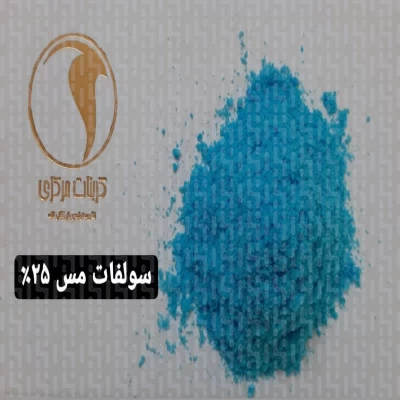
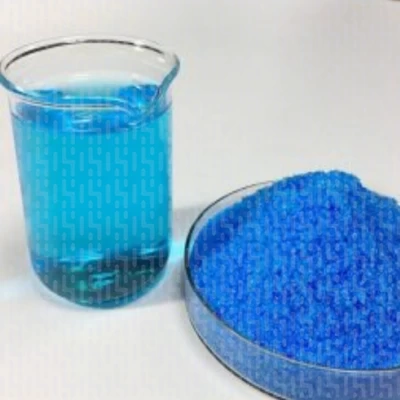
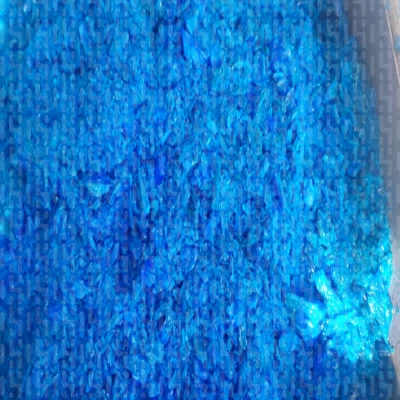
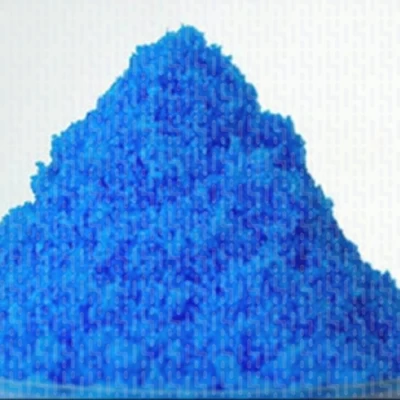
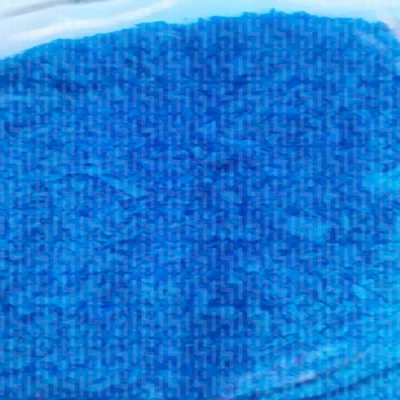
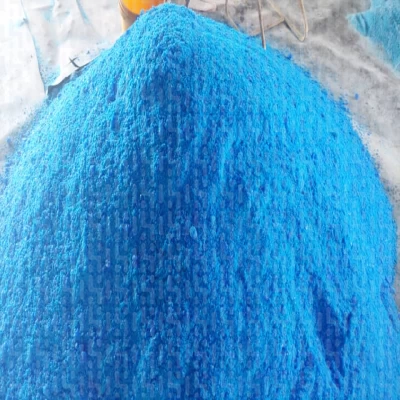
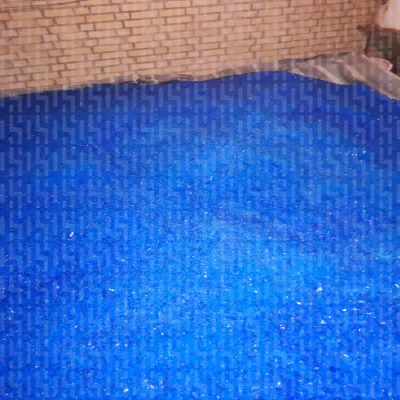
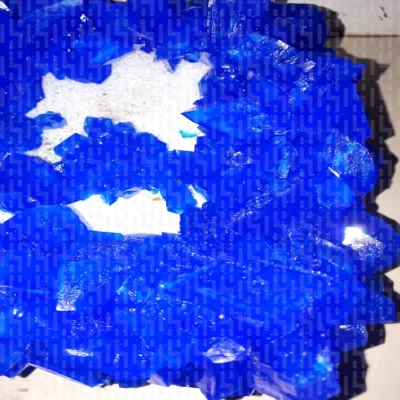
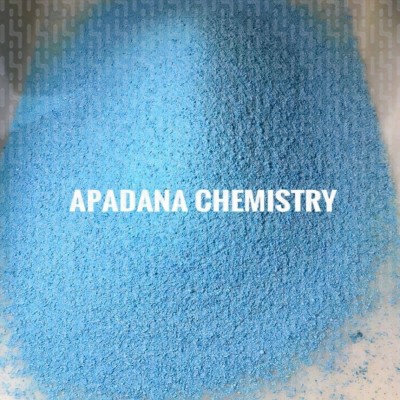
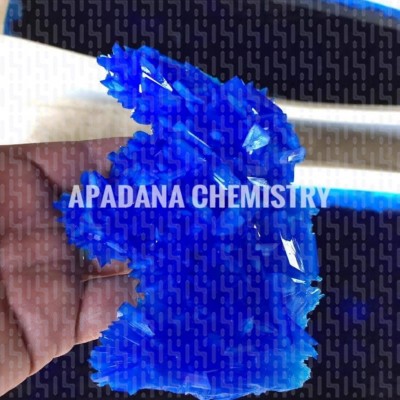
The short answer to the question “What color is copper sulfate?” is this: the pentahydrate form is usually light blue to deep blue, its aqueous solution also appears blue, and the anhydrous form is white or light gray. However, color intensity is not a definitive measure of purity.
Iron, nickel, insoluble particles, moisture, crystal size, and even ambient lighting can change the product’s appearance. Purchasing decisions should be based on the COA and testing, not on a product photo.
Physical Properties of Copper Sulfate Pentahydrate
Copper sulfate pentahydrate is a crystalline solid, with no distinct odor, and is soluble in water. Merck’s laboratory product source for analytical grade reports a molar mass of 249.69, a density of about 2.284 g/cm³, and a pH of about 3.5 to 4.5 for a 50 g/L solution.
These figures are useful for scientific identification, but industrial products may vary slightly depending on purity, particle size, and impurities.
Chemical Properties of Industrial Copper Sulfate
Copper sulfate dissociates in water into copper and sulfate ions. Its solution is usually mildly acidic and forms a copper hydroxide precipitate with bases.
More active metals such as iron, zinc, and magnesium can displace copper from the solution. Ammonia forms a deep-blue complex with copper ions. These reactions are important in process control, identification tests, and copper recovery.
Technical Specifications Table for Industrial Copper Sulfate and Copper Sulfate Pentahydrate
The technical specifications below are a purchasing template, not a guarantee for a specific shipment. Each supplier must provide the COA for that same batch. Acceptance limits differ for agricultural, animal-feed, electroplating, laboratory, or export applications. The buyer should complete the “required limit” column in the purchase request.

| Copper Sulfate Technical Parameter | Theoretical Value or Common Range | Importance for the Industrial Buyer | Recommended Control Method |
|---|---|---|---|
| Formula | CuSO4·5H2O | Identification of the Pentahydrate Form | Technical Documents and Testing |
| Copper Content Cu | Theoretical value about 25.45%; commercial value based on contract | Calculation of Active Material and Actual Cost | Titration or Instrumental Method |
| Pentahydrate Purity | Often 98% or higher in good commercial grades | Effect on Consumption and Precipitation | Assay in the COA |
| Iron Fe | According to Grade and Contract | Solution Color, Precipitation, and Electroplating | ICP or a Validated Method |
| Lead Pb | Low Limit Appropriate to the Application | Restrictions for Feed, Agriculture, and Export | ICP/AAS |
| Insoluble Matter | Lower Is Better for a Clear Solution | Nozzle and Filter Clogging and Sediment | Filtration and Gravimetric Measurement |
| Free Moisture | According to Contract | Caking, Weight, and Flowability | Controlled Drying |
| Solution pH | Depends on Concentration; Analytical Grade 3.5 to 4.5 at 50 g/L | Compatibility with the Process Line and Formulation | Calibrated pH Meter |
| Particle Size | Powder, Sugar-Grain, or Crystal | Dissolution, Dust, and Feeding | Sieving and Mesh Distribution |
Copper Sulfate COA Technical Analysis for Bulk Purchasing
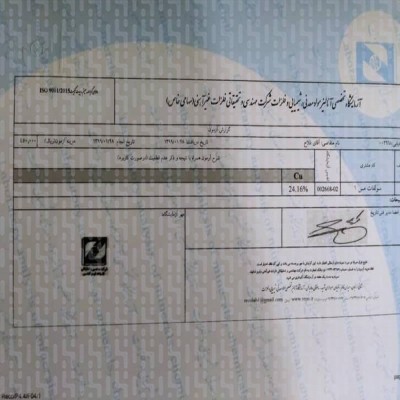
The COA must relate to the same batch or shipment that you receive. A general data sheet from a website or the analysis of an old sample is not sufficient for a bulk contract.
The batch number, production date, test method, result for each parameter, laboratory name, and signature of the quality-control officer must be traceable. For export orders, an English version of the COA, SDS, and certificate of origin is also usually required.

Sample COA Table for Copper Sulfate Pentahydrate
The table below is designed for preparing a purchase request. Final figures must be entered according to the application and the manufacturer’s offer. For laboratory grade, impurity limits will be much stricter than for industrial grade.
| Copper Sulfate Test | Contract Specification | Batch Result | Status |
|---|---|---|---|
| Appearance | Blue Crystal or Powder, Free of Visible Contamination | To Be Completed in the COA | Accept/Reject |
| Assay CuSO4·5H2O | According to the Order, for Example 98% Minimum | To Be Completed in the COA | Accept/Reject |
| Copper Cu | According to Contract | To Be Completed in the COA | Accept/Reject |
| Iron Fe | Maximum Agreed Limit | To Be Completed in the COA | Accept/Reject |
| Lead Pb | Maximum Agreed Limit | To Be Completed in the COA | Accept/Reject |
| Insoluble Matter | Maximum Agreed Limit | To Be Completed in the COA | Accept/Reject |
| Particle Size | Mesh or Millimeter Range | To Be Completed in the COA | Accept/Reject |
🔬 Sample Control: In multi-shipment contracts, do not test only the first batch. Include periodic sampling, a sealed retention sample, and the right to reject out-of-specification shipments in the contract.
Types of Powdered, Sugar-Grain, Crystalline, Industrial, and Liquid Copper Sulfate
Types of copper sulfate should be viewed from two angles: physical form and application grade. Powder, sugar-grain, and crystal refer to particle size. Industrial, agricultural, animal-feed, and laboratory refer to the level of purity and impurity limits.
A product can simultaneously be “industrial crystalline copper sulfate” or “agricultural powdered copper sulfate.” If the seller provides only a market name, request numerical specifications.

✅ Selecting and Buying Different Types of Copper Sulfate: To receive comparable offers, specify the copper sulfate type, copper percentage, purity, powder or crystal form, particle size, order quantity, packaging type, destination, payment terms, COA, and delivery time in your request.
Buying powdered, sugar-grain, crystalline, or industrial copper sulfate is precise only when the market name of the product is converted into numerical specifications.
Powdered Copper Sulfate for Formulation and Rapid Mixing
Powdered copper sulfate is used in the production of micronutrient fertilizers, soluble formulations, and some chemical processes. When purchasing, check flowability, dust, moisture, caking, and mesh uniformity.
Very fine powder is not always better; it may increase losses, adhesion, and occupational exposure. For automated lines, product behavior in the hopper and screw feeder is more important than the appearance of the sample.
Sugar-Grain Copper Sulfate for Better Flowability
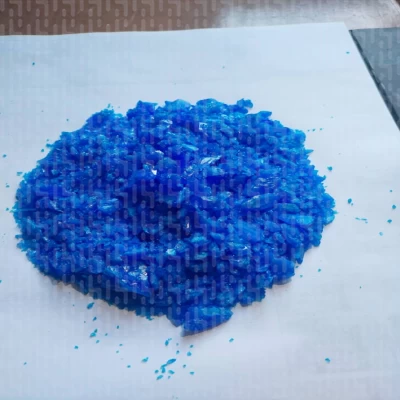
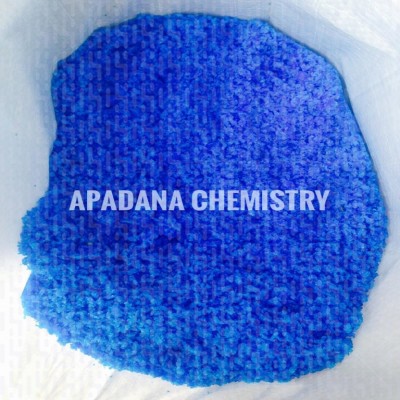
Sugar-grain copper sulfate resembles sugar granules in appearance. In the market, this term refers to crystal size and should be supplemented with a sample or mesh specification.
For units that use gravimetric feeding, the sugar-grain form may behave more uniformly than powder. It also creates less dust during long-distance transport, but it can still absorb moisture if the liner is weak.
Crystalline Copper Sulfate for Solution Preparation and Export Sales
Crystalline copper sulfate usually has a clearer appearance and produces less dust. Larger crystals dissolve more slowly than powder, but may have better stability in packaging and transport.
For export, uniform crystal size and the absence of foreign particles affect the customer’s visual evaluation. Crystalline copper sulfate should be purchased by specifying the size range and percentage of out-of-range particles.
Industrial Copper Sulfate for Electroplating, Mining, and Chemical Production
Industrial copper sulfate should be selected according to the application. In electroplating, metallic impurities and chloride are important. In mining and metal recovery, copper percentage and solution behavior are more important.
In pigment or catalyst production, batch consistency and insoluble matter can affect final product quality. Purchasing industrial copper sulfate using only the phrase “high purity” is not sufficient and must be converted into numerical values and a test method.
Agricultural Copper Sulfate and Buying Copper Sulfate Fertilizer
Buying copper sulfate fertilizer makes sense when a soil or leaf test indicates copper deficiency or when a registered product is labeled for control of a specific disease. Copper is an essential plant micronutrient, but the margin between deficiency and toxicity is narrow.
Agricultural copper sulfate should be purchased with application instructions, registration number, analysis, and expert recommendation. Do not replace agricultural grade with an industrial product lacking heavy-metal control simply because it is cheaper.
Laboratory Copper Sulfate and Merck Copper Sulfate Price
Laboratory copper sulfate is purchased for testing, calibration, and controlled synthesis. The price of laboratory copper sulfate and Merck copper sulfate cannot be compared with industrial products because small packaging, ACS or ISO grade, trace-impurity control, and traceable documentation create higher costs.
For some analytical grades, Merck provides purity close to 99 to 100.5 percent and specified impurity limits. For multi-ton consumption, this grade is usually not economically justified.
Liquid Copper Sulfate and Buying Copper Sulfate Solution
Liquid copper sulfate is, in practice, an aqueous solution with a defined concentration. Buying copper sulfate solution is suitable for a factory that does not want to operate a dissolution and filtration unit.
The price of liquid copper sulfate should be compared based on the weight or volume percentage of active material, density, net volume, tank material, and transport cost. Shipping water costs money; therefore, over long distances, buying solid product and preparing the solution on site can sometimes be more economical.
Russian Copper Sulfate, Barcelos Copper Sulfate, and Imported Brands
The price of Russian copper sulfate and products sold under names such as Ural or European brands depends on the exchange rate, importer inventory, country of origin, shipping cost, and authenticity documents.
The phrase Barcelos copper sulfate is likely related to a trade name or Spanish supplier, and the seller should be asked for the manufacturer’s full name, country of origin, and a photo of the label. Similar names are common in the chemical market; buying based only on a verbal name carries risk.
⚠️ Important Note About Copper Sulfate Types: The phrase “25 percent purity” may refer to copper content, not the purity of copper sulfate pentahydrate. In the pro forma invoice, specify whether the declared figure relates to Cu, CuSO4 or CuSO4·5H2O.
Copper Sulfate Production Methods by Aeration, Acid Route, and Electrolysis
The industrial production method for copper sulfate depends on the raw material. The producer may use copper metal, copper oxide, copper carbonates, controlled copper scrap, or process solutions.
The goal is not merely to dissolve copper. Removing iron, lead, nickel, organic matter, and insoluble particles, followed by formation of uniform crystals, is an important part of quality. Copper sulfate production methods should be accompanied by mother-liquor recovery and wastewater management.

Copper Sulfate Production from Copper Oxide and Sulfuric Acid
In a common route, copper oxide reacts with sulfuric acid to form a copper sulfate solution. After controlling pH and temperature, the solution is filtered and purified.
Controlled concentration and cooling produce pentahydrate crystals. The crystals are separated from the mother liquor, surface-dried, sized, and packaged.
CuO + H2SO4 → CuSO4 + H2O
Copper Sulfate Production by Aeration from Copper Metal
Copper metal does not dissolve rapidly in dilute sulfuric acid without an oxidizing agent. In copper sulfate production by aeration, oxygen from the air acts as the oxidant, and contact among gas, acid, and the copper surface must be controlled.
This route can reduce the need for some high-risk oxidizers, but reactor design, mass transfer, temperature, and solution treatment are decisive. A “nitric-free” claim should be supported by a process description and impurity-control details.
Copper Sulfate Production by Electrolysis and Copper Recovery
Copper sulfate production by electrolysis can be part of a refining or recovery circuit. In some processes, copper sulfate solution is the electrolyte and copper is deposited on the cathode.
In other routes, anodic dissolution of copper enriches the solution. Industrial design depends on feed purity, electrolyte composition, current density, and impurity management.
Copper Sulfate Preparation Method and Crystallization Control
In industrial-scale copper sulfate preparation, the process is completed through dissolution, purification, concentration, and crystallization. Cooling rate, degree of supersaturation, agitation, and presence of crystal seeds determine product size.
Rapid cooling usually produces finer particles, while slow growth can create larger crystals. The copper sulfate production method should maintain particle-size consistency from one batch to the next.
Copper Sulfate Producers in Iran and Large Companies in the Copper Supply Chain
National Iranian Copper Industries Company It is the country’s largest upstream copper-industry group, and its activities cover exploration, mining, concentration, smelting, refining, and production of copper products. This company and its affiliated complexes supply an important share of the raw materials and intermediate products required by downstream copper industries.
Sarcheshmeh Copper Complex It is one of the most important centers for copper mining, concentration, smelting, and refining in Iran. The complex’s activities begin with ore extraction and continue through production of refined copper products. Its products and infrastructure can play a role in supplying the copper materials required by units producing compounds such as copper sulfate.
Shahr-e Babak Copper Complex and Khatunabad It operates in copper mining, concentration, and smelting. This complex is one of the country’s major copper-processing links and, by producing copper intermediates, supplies part of the downstream-industry supply chain.
Sungun Copper Complex It is considered one of the major centers for copper extraction and concentrate production in northwestern Iran. The concentrate produced at this complex is feed for copper smelting and processing units and is connected through this route to the copper-chemical production chain.
Miduk Copper Complex It also operates in mining and copper concentrate production. The products of this complex are mainly positioned in the upstream section of the copper chain and provide raw material for smelting, refining, and copper-compound industries.
Daralou Copper Complex It is one of Iran’s copper mine and concentration development projects. Its connection to copper sulfate is through concentrate production and the supply of copper feedstock for downstream units.

| Name of Major Complex | Main Field of Activity | Connection to the Copper Sulfate Supply Chain |
|---|---|---|
| National Iranian Copper Industries Company | Exploration, Mining, and Production of Copper Products | The Country’s Largest Upstream Copper-Supply-Chain Group |
| Sarcheshmeh Copper Complex | Copper Mining, Concentration, Smelting, and Refining | Supply of Copper and Intermediate Products in the Chain |
| Shahr-e Babak Copper Complex and Khatunabad | Copper Mining, Concentration, and Smelting | An Important Part of the Country’s Copper Production and Processing |
| Sungun Copper Complex | Copper Extraction and Concentrate Production | Supply of Mineral Feedstock and Copper Concentrate |
| Miduk Copper Complex | Mining and Copper Concentrate Production | One of the Main Centers Producing Copper Materials |
| Daralou Copper Complex | Copper Mining and Concentration | Part of Iran’s Copper-Mine Development Chain |
| Razi Petrochemical Company | Production of Sulfuric Acid, Sulfur, and Chemical Fertilizers | Production of One of the Main Raw Materials for Copper Sulfate Manufacturing |
| Urmia Petrochemical Company | Production of Sulfuric Acid and Sulfate Compounds | Supply of Acidic Raw Material for the Chain |
Comparison of Foreign Copper Sulfate Brands
Copper sulfate brands should be compared among products with the same grade, purity, and packaging. The price of Iranian industrial copper sulfate cannot be compared with the price of Merck copper sulfate in a 500-gram package.
A foreign product is not necessarily higher quality simply because it is imported. Consistency of analysis, batch traceability, technical documentation, shipping cost, and delivery time are more precise criteria.

European Copper Sulfate Brands
Among European industrial producers, the names Manica and Manica Cobre are seen in the agricultural, authorized animal-feed, and industrial copper sulfate markets.
Grade diversity, technical documentation, and traceability are among the advantages of this group. At the time of purchase, the exchange rate, import costs, authenticity of documents, production date, and delivered price in Iran should be checked.
American Copper Sulfate Brands
Old Bridge Chemicals is one of the well-known American names in the production of copper compounds and industrial, fertilizer, and animal-feed grades.
Supplying these products to the Iranian market depends on importer inventory, shipping route, origin documents, and trade restrictions. The factory-quoted price abroad is not always the same as the final delivered price to an Iranian buyer.
Laboratory Copper Sulfate Brands
Brands such as Merck, Sigma-Aldrich, Supelco, and Thermo Fisher are mainly used for laboratory applications, calibration, precise synthesis, and controlled testing.
Because of trace-impurity control, lot numbers, certificates of analysis, and small packaging, these products are far more expensive than industrial grade and are not an economical choice for factory-scale tonnage consumption.
Russian, Ural, and Central Asian Copper Sulfate
Products offered under the title Russian, Ural, or Uzbek copper sulfate should be checked by the full name of the manufacturing plant, country of origin, batch number, COA, SDS, and certificate of origin. A country or region name alone is not a brand and cannot prove the purity, copper percentage, or consistency of shipment quality.
| Copper Sulfate Brand Group | Examples of Market Names | Potential Advantage | Purchasing Risk or Consideration |
|---|---|---|---|
| Iranian Production | Domestic Producers and Purifiers | Faster Delivery, Sampling Availability, and Rial-Denominated Contracts | Analysis Consistency Must Be Checked for Every Batch |
| European Industrial | Manica and Manica Cobre | Grade Diversity and Organized Technical Documentation | Exchange Rate, Imports, Supply Time, and Document Authenticity |
| American Industrial | Old Bridge Chemicals | Industrial, Fertilizer, and Animal-Feed Grades | Availability in the Iranian Market and Shipping Cost |
| Laboratory | Merck, Sigma-Aldrich, Supelco, and Thermo Fisher | Controlled Trace Impurities and Traceable Documentation | High Price and Unsuitable for Tonnage Consumption |
| Russian and Central Asian | Products Offered Under Ural, Russian, or Uzbek Names | Regional Availability During Certain Periods | Manufacturer Name, COA, and Certificate of Origin Must Be Checked |
Applications of Industrial Copper Sulfate in Factories and Production Processes
What is copper sulfate used for and what is copper sulfate good for? For an industrial buyer, the answer lies in the role of the copper ion. This ion can serve as a copper source, electrolyte, activator, precursor for copper compounds, micronutrient, or registered biological-control agent.
Grade selection should begin with the end use. Buying a general-purpose product and trying to adapt it to every production line usually creates hidden costs.

Copper Sulfate in Electroplating and Electrowinning
In acidic electroplating baths, copper sulfate is a source of copper ions. Ion concentration, acidity, chloride, and organic additives affect deposit quality.
Iron, nickel, or suspended-particle impurities can alter the appearance and adhesion of the coating. In electrowinning and refining, copper sulfate solution is the medium that transfers ions to the cathode. For this application, consistency of analysis from one shipment to the next is very important.
Conversion of Copper Sulfate to Copper in Metal Recovery
Copper sulfate can be converted to copper through electrodeposition or cementation onto a more active metal. The choice of method depends on required purity, solution concentration, energy cost, and waste management.
Cementation with iron is simple, but the resulting copper product is less pure than electrolytic copper. The recovery method should be designed together with a mass balance and management of the remaining solution.
Copper Sulfate in Mining and Flotation
In some flotation circuits, copper sulfate is used as a mineral-surface activator. The dosage and injection point should be determined by metallurgical testing.
Higher consumption does not necessarily produce better recovery and may reduce selectivity or increase collector consumption. Water quality and the presence of interfering ions also change the behavior of copper sulfate.
Copper Sulfate in Pigment, Glaze, and Ceramic Production
Copper sulfate in glazes can serve as a source of copper oxide and green, blue, or turquoise colors. The result depends on kiln atmosphere, temperature, glaze composition, and copper dosage.
Insoluble matter and iron can change the final color, so glaze manufacturers should receive a consistent grade. In some formulations, sulfate is selected because its thermal behavior differs from copper oxide or carbonate.
Copper Sulfate in Textiles, Leather, and Chemical Synthesis
This material is used in some dyeing processes, mordanting, production of other copper salts, catalysts, and intermediates. The exact application must be compatible with the formulation and regulations governing the final product.
For materials that come into contact with products for human consumption, industrial grade must not be substituted for an approved grade without legal authorization. The buyer should specify which final material the product will be used to manufacture so that the supplier can offer the appropriate grade.
Copper Sulfate in Agriculture and Buying Agricultural Copper Sulfate
Copper sulfate has two different roles in agriculture: supplying copper as a micronutrient and serving as the active ingredient in certain registered copper fungicides or bactericides. These two roles should not be confused.
Fertilization is based on copper deficiency, whereas disease control is based on the pesticide label, application timing, and target disease. A bag of industrial copper sulfate without an agricultural label is not a substitute for a registered product.
Copper plays a role in enzyme activity, chlorophyll formation, and seed production. Very high-organic-matter soils, sandy soils, or particular conditions can increase the likelihood of deficiency.
On the other hand, copper accumulation in soil and roots harms plants and soil biology. Therefore, buying copper sulfate fertilizer without a soil or leaf test is not a professional decision. The appropriate dose depends on soil texture, pH, organic matter, crop, history of copper-compound use, and application method.

Copper Sulfate for Trees and Diagnosis of Copper Deficiency
Copper sulfate is used for trees when testing or confirmed symptoms indicate a deficiency, or when a registered copper product is recommended for a specific disease.
Shoot dieback, weak growth, and leaf deformation can have many causes. Root disease, salinity, iron deficiency, or herbicide injury can produce similar symptoms. Foliar application without diagnosis may worsen the symptoms.
Copper Sulfate for Pistachio Trees and Pistachio Orchards
Copper sulfate for pistachio trees, or the phrase copper sulfate for pistachio, often refers to copper solutions or micronutrient fertilizer. In pistachio orchards, water and soil salinity, lime, pH, and the previous spray program should be reviewed.
Repeated use of copper compounds without monitoring can cause copper accumulation. Trees may be more sensitive during bud break and green-tissue stages.
Copper Sulfate for Walnut Trees and Grapevines
Copper sulfate for walnut trees and copper sulfate for grapes may have a place in programs for controlling fungal or bacterial diseases, but application timing and green-tissue sensitivity are important.
Copper mixtures at unsuitable concentrations or under unsuitable weather conditions can cause phytotoxicity. Follow only the label of a registered product and local recommendations.
Copper Sulfate for Garlic, Onion, and Rice
Copper sulfate for garlic, copper sulfate for onion, and copper sulfate for rice should not be applied using one fixed prescription. Soil type, variety, growth stage, and application purpose differ.
If the purpose is to correct deficiency, the amount is determined by testing. If the purpose is disease control, use only a product registered for that crop and disease. In paddy fields, movement of copper in water and its effect on nearby aquatic life should also be considered.
Copper Sulfate for Cucumber and Tomato
Copper sulfate for cucumber and copper sulfate for tomato are used in the context of some copper fungicides. Young tissues of these crops can be sensitive to copper.
Temperature, humidity, mixing with other materials, and pre-harvest interval affect safety. Greenhouse application also requires precise instructions because of the enclosed conditions and high humidity.
🌱 Agricultural Note: Copper sulfate in agriculture is not a “more is better” material. Copper is a micronutrient, but excessive use can put roots, soil microorganisms, and surface waters under stress.
Mixing Copper Sulfate with Lime and Bordeaux Mixture
Mixing copper sulfate with lime is the basis of Bordeaux mixture. Lime moderates acidity and the rapid release of copper ions. Preparation and use of this mixture should be based on the instructions of a registered product, water quality, tank compatibility, and a small-scale test. Informal preparation without measuring pH and following the label can lead to phytotoxicity or improper precipitation.
Copper Sulfate in Pools, Agricultural Water, Fish Farming, and Aquariums
Copper sulfate is known as an algaecide in pools, but this use does not mean it can be applied freely or without calculation.
Copper toxicity depends on alkalinity, hardness, pH, temperature, organic-matter content, and aquatic species. In soft water with low alkalinity, the risk to fish is greater. Labels of registered copper products also warn about toxicity to fish and aquatic invertebrates.

Copper Sulfate for Swimming Pools and Pool Water
Copper sulfate for swimming pools or copper sulfate for pool water should not replace a complete disinfection and filtration program.
Copper can cause stains on surfaces, hair discoloration, and accumulation in water. The price of copper sulfate for pools should not be the only criterion; the product must be authorized for that specific application and its use instructions must be clear. Using an industrial product without a pool-use label is not recommended.
Copper Sulfate in Agricultural Ponds
Copper sulfate is sometimes considered for algae control in agricultural ponds. Before any application, the destination of the water, crop sensitivity, discharge to rivers, presence of livestock or fish, and local regulations should be reviewed. Discharging copper-containing water to the environment can harm aquatic life. If the water will later be used for irrigation, copper accumulation in soil should also be evaluated.
Copper Sulfate in Fish Farming and Fish Ponds
Copper sulfate in fish farming and copper sulfate in fish ponds are specialized topics. Small differences in water alkalinity can change toxicity. No single general dose is safe for all ponds. An aquatic-animal health specialist should evaluate the species, biomass, alkalinity, oxygen, and treatment objective. Use without monitoring can cause rapid losses.
Copper Sulfate in Aquariums and Copper Sulfate for Fish
Copper sulfate in aquariums and copper sulfate for fish should be considered only in controlled treatments using products intended for aquatic animals. Invertebrates, corals, and some fish are sensitive to copper. Using industrial copper sulfate in a home aquarium is dangerous and can kill organisms. Copper concentration should be measured with an appropriate test kit, not judged by water color.
Scientific Quote: The National Pesticide Information Center explains that freshwater fish and invertebrates are highly sensitive to copper. Aquatic use should be carried out only according to the product label and water conditions. NPIC English Source
Copper Sulfate in Distillation, Distillates, Alcohol, and Raisin Distillate
Phrases such as copper sulfate in distillation, copper sulfate in distillate, copper sulfate in raisin distillate, copper sulfate in distillate production, copper sulfate in alcohol, and copper sulfate in alcoholic beverages usually arise from concerns about contamination or unscientific purification methods.
Copper sulfate is not a food substance to be added to beverages, and swallowing it can be harmful. Using it to clean, change color, or remove unwanted compounds from a beverage is not a safe or approved method.

Removing Copper Sulfate from Distillate and Separating Copper Sulfate from Distillate
Removing copper sulfate from distillate or separating copper sulfate from distillate is not reliable in a home setting. The absence of a blue color does not prove safety either. If a beverage or food material may have come into contact with copper sulfate, stop consumption and submit a sample to an accredited laboratory. Dilution, redistillation, charcoal, or traditional materials do not guarantee removal of copper ions.
Why Is Mixing Copper Sulfate with Alcohol Not Recommended?
Mixing copper sulfate with alcohol can create toxic contamination. Copper sulfate pentahydrate behaves differently in some solvents, but this does not make it suitable for food use. A contaminated container, invisible precipitate, or residual copper ions can be hazardous. Only approved equipment and materials should be used for food products.
🚫 Health Warning: Do not use copper sulfate in beverages, distillates, consumable alcohol, or home distillation. If ingestion or contamination has occurred, do not self-treat; contact a medical center or poison-control center.
Reactions of Copper Sulfate with Iron, Aluminum, Zinc, and Chemicals
Understanding these reactions is useful for tank design, equipment-material selection, contamination control, and copper recovery. This section is educational and does not replace laboratory procedures or process design. Industrial-scale reactions should be carried out under specialist supervision, with ventilation and safety assessment.

Reaction of Copper Sulfate with Iron and an Iron Nail
The reaction of copper sulfate with iron is a simple displacement reaction. Iron is more active than copper, so it enters the solution and metallic copper deposits on the iron surface. The reaction of copper sulfate with an iron nail, or copper sulfate with iron, is described by the following equation:
Reaction of Copper Sulfate with Zinc and Magnesium
The reaction of copper sulfate with zinc and the reaction of copper sulfate with magnesium also lead to copper precipitation. Magnesium and zinc are more active than copper. At production scale, reaction rate, heat, metal form, and impurities must be controlled.
Reaction of Copper Sulfate with Aluminum
The reaction of copper sulfate with aluminum is thermodynamically possible, but the oxide layer on the aluminum surface can slow the start of the reaction. Chloride and surface scratches can change the behavior and cause severe corrosion. An aluminum tank is not a suitable choice for storing copper sulfate solution.
Reaction of Copper Sulfate with Sodium Hydroxide
The reaction of copper sulfate with sodium hydroxide produces a blue copper hydroxide precipitate. This reaction is seen in treatment processes and copper-compound production. Excessive pH increase changes the type of precipitate and separation behavior.
Reaction of Copper Sulfate with Ammonia
The reaction of copper sulfate with ammonia can initially form a hydroxide precipitate and, in excess ammonia, a deep-blue copper complex. This color is well known for identifying copper ions. Ammonia produces irritating vapors, and mixing it with chemicals without adequate ventilation is dangerous.
Reaction of Copper Sulfate with Water and Color Change
For the anhydrous form, the reaction of copper sulfate with water relates to hydration and the development of blue color. Pentahydrate crystals dissolve in water and form a blue solution. Strong heating can remove water of crystallization, but continued heating may lead to decomposition and the release of corrosive sulfur-containing fumes.
Zinc Sulfate and Copper Sulfate Solution
Zinc sulfate and copper sulfate solutions may be used together in micronutrient formulations or specialized processes. Compatibility depends on pH, concentration, water, chelating agents, and other ions. Mixing without a jar test can cause precipitation, turbidity, or reduced nutrient availability.
Copper Sulfate Testing and Quality Identification
Copper sulfate testing goes beyond observing color. Iodometric titration for assay, atomic absorption or ICP for metals, measurement of insoluble matter, moisture, and particle size are common control tools. A bulk buyer should preferably have at least one independent laboratory for periodic verification.
What Removes Copper Sulfate and What Is the Method for Eliminating Copper Sulfate?
The question “what removes copper sulfate?” has two situations. For a surface spill, first prevent the spread of dust and collect the dry material with appropriate tools. For chemical contamination or wastewater, washing it into the sewer is not a solution.
A method for eliminating copper sulfate should lead to collection, copper recovery, or controlled precipitation and delivery of the waste to an authorized facility. Never discharge it into soil, drains, or surface water.
Copper Sulfate Safety and MSDS Guide for Warehouses and Factories
According to reputable safety data sheets, copper sulfate pentahydrate is harmful if swallowed, can cause serious eye damage, and is very toxic to aquatic life. Its powder may irritate the skin and respiratory system. The main factory risks arise from dust, eye contact, accidental ingestion, release into water, and improper handling of torn bags.

Personal Protective Equipment for Copper Sulfate
Chemical-resistant gloves, sealed safety goggles, work clothing, and, under dusty conditions, an appropriately assessed respirator are required. The bag-dumping area should have local exhaust ventilation. Eating, drinking, and storing food in the warehouse or work area should be prohibited. Employees should be trained on the SDS and spill-collection procedure.
First Aid for Contact with Copper Sulfate
In case of eye contact, rinse the eyes continuously with plenty of water and seek medical evaluation. In case of skin contact, remove contaminated clothing and wash the skin.
If dust is inhaled, move the person to fresh air. If swallowed, do not induce vomiting and contact a medical center or poison-control center immediately. The SDS for the specific product should be available to employees.
Copper Sulfate Spill Control in the Warehouse
For a dry spill, prevent dust generation, collect the material using a controlled dry method, and place it in a compatible labeled container. Entry into floor drains, sewers, and surface water must be prevented. Aggressive sweeping or washing with large volumes of water spreads the contamination.
Safety Quote: The ILO International Chemical Safety Card for copper sulfate pentahydrate recommends storage in a closed original container away from drains and identifies it as very hazardous to the aquatic environment. View the ILO English Source
Copper Sulfate Packaging: 25 kg Bags, Jumbo Bags, and Solution
Packaging must protect the product from moisture, tearing, and contamination. The price of 25 kg copper sulfate is also affected by the type of bag and liner.
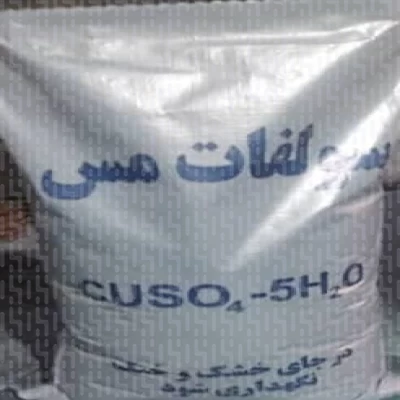
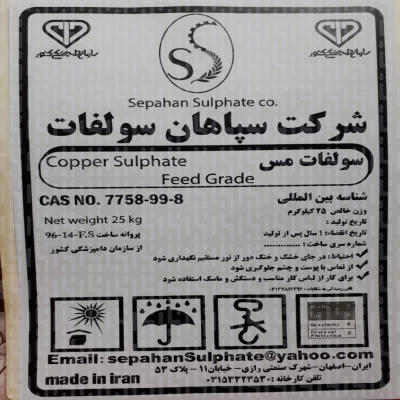
Laminated polypropylene bags with an inner polyethylene layer are common for many solid grades. Net weight, batch number, product name, environmental hazard, manufacturer, and date should appear on the label.

25 kg Bags of Industrial Copper Sulfate
A 25 kg bag is suitable for manual handling and staged consumption. Stitching, liner thickness, moisture resistance, and palletizing are important. For export, pallet type, shrink wrap, strapping, and the number of bags per pallet should be coordinated with the container. A bag without a liner can allow the product to cake in humid weather.
Copper Sulfate Jumbo Bags for Bulk Purchasing
Jumbo bags of 500 to 1,000 kg reduce packaging costs and unloading time, but the buyer must have lifting equipment and a safe unloading station. The inner liner, lifting loops, and safe working capacity of the jumbo bag must be verified. Fine material without dust control can create problems when discharging jumbo bags.
Drums and IBCs for Liquid Copper Sulfate
Copper sulfate solution is transported in compatible drums or IBCs. Concentration, density, net volume, and expansion space should be recorded. Some metals are unsuitable for the solution; polyethylene or polypropylene, subject to compatibility verification, are more common options. The outlet valve should be protected from impact.
How to Store Copper Sulfate in an Industrial Warehouse
Store copper sulfate in a dry, cool, ventilated place away from moisture. Bags should be placed on sound pallets with clearance from walls and the floor. The warehouse should not have floor drains that discharge directly to the environment. Open containers, damaged bags, or spilled product should be managed immediately.
Copper Sulfate Incompatibilities with Equipment and Materials
Copper sulfate solution can react with active metals such as iron, zinc, magnesium, and aluminum. Strong bases cause precipitation, and ammonia forms complexes. Tank, pump, valve, and pipe materials should be selected according to concentration, temperature, and contact time. Unlabeled containers or food containers should not be used.
Copper Sulfate Inventory Rotation and Caking Control
A first-in, first-out system, batch-number recording, and periodic bag inspection prevent shipments from being mixed. Caking does not always mean a loss of purity, but it can disrupt feeding and dissolution. It is usually caused by moisture, stacking pressure, or weak packaging. Breaking up caked material by heavy impact can tear bags and create dust.
Export and Import of Industrial and Agricultural Copper Sulfate
Copper sulfate export requires coordination of quality, documents, and transport. The six-digit HS code for copper sulfates is reported as 283325, but the destination country’s national code and customs regulations should be confirmed before declaration.
For international transport, many SDSs classify copper sulfate pentahydrate as UN 3077, Class 9, Packing Group III, as an environmentally hazardous solid substance. Packaging type and marking must comply with the transport mode and destination regulations.
Copper Sulfate Export Documents
Commercial invoice, packing list, COA, English SDS, certificate of origin, English or destination-language label, net and gross weights, and pallet specifications are basic documents. Agricultural or animal-feed grade may require additional permits in the destination country. The buyer and customs broker should confirm requirements before loading. Differences among the trade name, formula, and HS Code in documents can stop customs clearance.
Quality Control for Export Copper Sulfate
Pre-loading sampling, pallet photos and videos, container recording, sealing, and retention samples reduce disputes. In foreign-currency contracts, the reference test method and dispute-resolution laboratory should be specified from the start. Weighbridge weight, bag count, and net weight per bag should also be recorded in the loading report.
Importing Russian, European, and Laboratory Copper Sulfate
For imports, the manufacturer name, country of origin, lot number, analysis sheet, SDS, and matching of the label with documents are important. The price of Russian, European, or Merck copper sulfate is not only the product price; currency costs, shipping, insurance, duties, warehousing, and the cost of tied-up capital must be added to the delivered price. For an unfamiliar brand, request a sample from the actual shipment and a certificate of authenticity.
Industrial Copper Sulfate Buying Guide: Where Should You Buy?
Where should we buy copper sulfate, where can we obtain copper sulfate, and where can I buy copper sulfate are three forms of the same question.
The correct answer for a factory is not “from the cheapest seller.” The answer is: from a supplier that offers a product suitable for the process, a COA for the same batch, a testable sample, suitable packaging, a delivery record, and a clear contract. A cheap purchase without the right to reject the shipment can sometimes be the most expensive choice.
Copper Sulfate Buying and Selling Checklist
✅ Exact Product Name and Hydrated Formula
✅ Industrial, Agricultural, Feed, or Laboratory Grade
✅ Copper Percentage and Assay
✅ Limits for Iron, Lead, Chloride, and Insoluble Matter
✅ Powder, Sugar-Grain, or Crystal and Particle-Size Range
✅ 25 kg Bag, Jumbo Bag, or Solution
✅ Order Quantity, Delivery Schedule, and Destination
✅ COA for the Same Batch, SDS, and Retention Sample
✅ Price Including Tax, Freight, Unloading, and Payment Type
✅ Shipment Acceptance, Rejection, or Replacement Condition
Bulk Copper Sulfate Purchasing with a Monthly Contract
Bulk copper sulfate purchasing under a monthly contract should go beyond a single price figure. Specify the delivery schedule, quantity tolerance, ability to adjust price according to a defined index, COA validity period, time allowed for reporting nonconformity, and the method for replacing goods. For a factory with a continuous production line, delivery delays can cause greater losses than a small price difference.
Today’s Copper Sulfate Price and Factors Affecting the Price List
Copper sulfate does not have a fixed price. The purchase price of copper sulfate changes with the price of copper, sulfuric acid, energy, exchange rate, purity, copper percentage, particle size, packaging, origin, order quantity, and freight cost. Agricultural copper sulfate price, industrial copper sulfate price, powdered copper sulfate price, and copper sulfate pentahydrate price are comparable only when the technical conditions are the same.
For price analysis, calculate the cost per kilogram of active copper. Two products may have similar per-kilogram prices, but different copper percentages and moisture levels can make one more expensive in practice. Packaging quality, waste percentage, and dissolution time are also part of the actual cost.
Why Are Agricultural and Industrial Copper Sulfate Prices Different?
Agricultural grade may require product registration, labeling, and heavy-metal limits. Industrial grade may accept different impurities for certain uses. Powder milling, crystal growth, drying, dust control, and packaging costs also change the price. Do not compare the price of agricultural copper sulfate with an unlicensed industrial product.
Laboratory and Merck Copper Sulfate Price
The price of laboratory copper sulfate and Merck copper sulfate is much higher than an industrial bag because of small packaging and trace-impurity control. Buying this grade for tonnage consumption is not economical unless the process requires analytical purity. Laboratory-brand prices also depend on expiry date, authenticity, original packaging, and import route.
Copper Sulfate Price for Oilseed-Meal Production and Animal Feed
The phrase copper sulfate price for oilseed-meal production usually relates to animal-feed grade or mineral supplements. This grade must meet feed requirements, heavy-metal limits, traceability, and relevant permits. Do not substitute an industrial product because of its lower price. High nominal purity alone does not authorize food or animal-feed use.
Price of Liquid, Russian, and Pool-Use Copper Sulfate
The price of liquid copper sulfate has meaning only in relation to concentration and density. The price of Russian copper sulfate depends on the exchange rate and authenticity of origin. The price of copper sulfate for pools should be assessed only for a product authorized for that application. Comparing these three groups without converting to active material and reviewing documents gives an incorrect result.
Standard Copper Sulfate Price Inquiry Form
To receive a reliable price list, structure your request as follows. This form makes sellers’ offers comparable and reduces last-stage changes in the quoted figure.
| Inquiry Field | Sample Request | Effect on Price |
|---|---|---|
| Type | Industrial Copper Sulfate Pentahydrate, Sugar Crystal | Production Method and Particle Size |
| Analysis | Cu Minimum According to Contract, Fe and Pb Limited | Purity and Refining |
| Quantity | 20 Tons or a Monthly Program of 50 Tons | Volume Discount and Production Schedule |
| Packaging | 25 kg Bags on Pallets | Bag, Liner, Pallet, and Shrink Wrap |
| Destination | Delivery to Factory or Port | Freight and Insurance |
| Payment | Cash, Staged Payment, or Letter of Credit | Financing Cost |
Why Buy Copper Sulfate Through SHIMICO?
SHIMICO is a specialized platform connecting buyers and sellers of chemicals. Instead of making scattered contacts across several general marketplaces, you can clearly specify the product, grade, quantity, and destination and receive relevant offers. For buying industrial, agricultural, powdered, sugar-grain, crystalline, and export-grade copper sulfate, you can review suppliers and compare terms.
The main advantage for a large buyer is access to multiple supply routes. When a factory depends on monthly deliveries, having an alternative option and the ability to compare COAs are important. Sellers can also present their product listing, capacity, packaging, and shipping coverage.
🔷 Ready to Request a Quote and Buy Copper Sulfate in Bulk?
Enter the product type, analysis, order quantity, and destination to receive suitable offers for wholesale copper sulfate sales.
✅ Compare Chemical Suppliers ✅ Request Quotes for Bulk and Export Purchases ✅ Access Chemical and Fertilizer Categories ✅ Post Free Chemical Listings on the SHIMICO Platform
Reviews from Bulk Copper Sulfate Buyers on SHIMICO
Frequently Asked Questions About Buying, Pricing, and Using Copper Sulfate
What Is Copper Sulfate and What Is It Used For?
Copper sulfate is an inorganic salt of copper and sulfate. Its blue pentahydrate form is used in agriculture, electroplating, mining, chemical production, glazes, and certain registered algae-control applications.
Where Can We Buy Copper Sulfate?
For industrial purchasing, use a specialized platform or a supplier that provides the COA for the same batch, a sample, SDS, invoice, and a quality-acceptance contract. SHIMICO allows comparison of multiple suppliers.
How Is the Price of Copper Sulfate Calculated?
The price depends on copper percentage, purity, particle size, grade, packaging, order quantity, origin, exchange rate, and freight. Compare the delivered price and the cost per kilogram of active copper.
What Is the Difference Between Powdered, Sugar-Grain, and Crystalline Copper Sulfate?
The main difference is particle size. Powder dissolves faster but creates more dust. Sugar-grain material has good flowability, while large crystals create less dust. Check the chemical grade separately.
What Specifications Are Needed When Buying Copper Sulfate Pentahydrate?
The formula, copper percentage, assay, iron, lead, insoluble matter, moisture, particle size, and packaging should be recorded in the purchase request. The theoretical copper fraction in the pentahydrate form is about 25.45 percent.
Is Copper Sulfate Suitable for Trees?
Only when a confirmed deficiency exists or a registered product is used for a specific disease. Unplanned use can cause phytotoxicity and copper accumulation in soil.
Is Copper Sulfate Suitable for Pools?
Some registered copper products are used for algae control, but the dose depends on water chemistry and pool type. Unsupervised use may harm aquatic life and cause staining.
Is Copper Sulfate Used in Distillates or Distillation?
Do not use it in beverages or food materials. Copper sulfate is harmful if swallowed, and there is no reliable home method for removing contamination.
What Is the Reaction of Copper Sulfate with Iron?
Iron displaces copper from the solution, forming iron sulfate and metallic copper. This reaction is the basis of copper cementation.
Can Copper Sulfate Be Used in an Aquarium?
Only use products intended for aquatic animals and under the supervision of an aquatic specialist. Industrial copper sulfate can be very dangerous to fish, shrimp, snails, corals, and invertebrates.
How Does the Price of Liquid Copper Sulfate Compare with Solid Copper Sulfate?
Compare price based on the percentage of active material and dry weight. Solution reduces dissolution costs, but transporting water costs more.
How Is Copper Sulfate Separated from Water?
Depending on the objective, crystallization, ion exchange, precipitation, or electrorecovery may be used. Separating copper sulfate from water must include wastewater management, and direct discharge of the solution to the environment is not permitted.
Is It Better to Buy Copper Sulfate Solution or Solid Copper Sulfate?
If you do not have a dissolution and filtration unit or have continuous consumption, solution is suitable. For long transport routes, solid product often has a lower freight cost.
What Is the Minimum Order for Wholesale Copper Sulfate Sales?
The minimum order depends on the supplier and packaging. For tonnage pricing, state the quantity, monthly program, and destination from the beginning.
Does the Price of 25 kg Copper Sulfate Differ from Tonnage Pricing?
Yes. Bag, pallet, warehousing, and distribution costs make up a larger share in a 25 kg package. A tonnage contract may include a volume discount or jumbo-bag option.
Scientific and Technical Sources for Copper Sulfate
- Copper Sulfate, PubChem, U.S. National Library of Medicine
- Copper Sulfate Pentahydrate, PubChem
- Copper Sulfate General Fact Sheet, National Pesticide Information Center
- Copper Sulfate Pesticide Label, U.S. EPA
- Copper for Crop Production, University of Minnesota Extension
- Copper(II) Sulfate Pentahydrate EMSURE, Merck
- ICSC 1416 Copper(II) Sulfate Pentahydrate, ILO/WHO
- Copper Compounds and Grades, Old Bridge Chemicals
- Copper Sulphate Manufacturer, Manica S.p.A.
Final Reminder: This page is written for industrial and professional buyers. Application rates in agriculture, pools, aquatic systems, or any biological use should be taken from the label of a registered product, local testing, and specialist advice. Before bulk purchasing, approve a sample and the COA for the same batch.
🔷 Documented purchasing means clear analysis, a clear contract, and a traceable shipment.