





Buy Industrial Methanol; Current Prices and Wholesale Sales of Bulk, Drummed, and Export Methanol
A technical and commercial guide for factories, petrochemical companies, downstream units, traders, oil and gas companies, formaldehyde producers, and bulk buyers

To receive comparable prices, include the order quantity, producing petrochemical company, purity, water range, packaging type, delivery location, payment method, loading date, and export requirements in the purchase request.
What Is Methanol? Methanol Formula, Methyl Alcohol, and the Difference Between Methanol and Ethanol
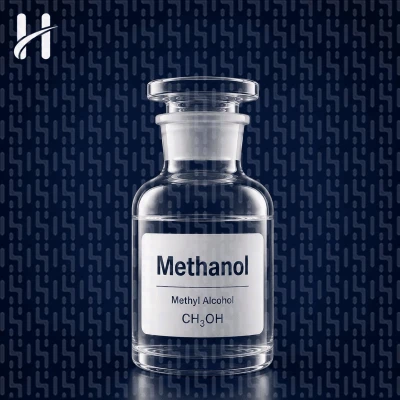
Methanol, with the formula CH3OH, is the simplest organic alcohol. It is also known as methyl alcohol, methylic alcohol, wood alcohol, carbinol, and MeOH.
Pure methanol is a clear, colorless, volatile liquid that is completely miscible with water. The historical use of the term wood alcohol goes back to the old production method of destructive distillation of wood; today, industrial production is mainly based on synthesis gas obtained from natural gas or other carbonaceous feedstocks.
The Methanol Institute technical data sheet identifies methanol with the formula CH3OH, CAS number 67-56-1, and the names methyl alcohol and wood alcohol.Methanol Technical Data Sheet
Molecular Structure of Methanol and Methanol Molar Mass
The structure of methanol consists of one methyl group and one hydroxyl group. Its molar mass is about 32.04 grams per mole.
The presence of the OH group causes polarity, hydrogen bonding, and complete miscibility with water. This same structure makes methanol a polar protic solvent and a suitable feedstock for chemical reactions.
What Type of Alcohol Is Methanol and What Is the Functional Group of Methanol?
Methanol is considered a primary alcohol, although the carbon bearing the hydroxyl group is not bonded to another carbon. Its functional group is hydroxyl. This definition is important in selecting oxidation, carbonylation, and formaldehyde-production routes.

Difference Between Methanol and Ethanol in Formula, Odor, and Toxicity
The formula of methanol is CH3OH and the formula of ethanol is C2H5OH. Both are colorless and volatile, and their odor alone is not a reliable way to distinguish them. The main difference for consumers and factories is in toxicity, metabolic pathway, and application.
In the body, methanol is converted to formaldehyde and formic acid and can damage the optic nerve and nervous system. Ethanol is not harmless either, but its toxicity pattern differs from that of methanol.
Odor, liquid color, and observing the flame are not valid methods for distinguishing methanol from ethanol. Unknown samples or suspicious beverages should be tested by a reputable laboratory using methods such as GC.
The table below summarizes the most common differences between methanol and ethanol. Each item has already been explained in the text, and the table is only for quick comparison.
Physical and Chemical Properties of Industrial Methanol; Density, Boiling Point, and Flash Point
The physical properties of methanol directly affect tank design, pump selection, volume calculations, transport, and fire control. Methanol evaporates rapidly at ambient temperature, forms flammable vapor, and mixes with water in all proportions.
Methanol density at the reference temperature is lower than that of water. This must be considered when converting liters to kilograms and reconciling weighbridge readings with tank volume.

Methanol Density and Converting Methanol Volume to Weight
IMPCA defines the reference relative density at 20°C as between 0.7910 and 0.7930. One cubic meter of pure methanol at a temperature close to 20°C weighs about 791 to 793 kilograms.
An increase in temperature increases volume and decreases density. Calculating sales by volume without recording temperature can create discrepancies.
Methanol Boiling Point and Methanol Freezing Point
The boiling point of methanol at one atmosphere is about 64.6 to 64.7°C, and its freezing point is close to -97.8°C.
This low freezing range is one reason it is used in antifreeze formulations and deicing fluids. The final application must be reviewed for safety, materials of construction, and regulatory requirements.
Methanol Flash Point and Methanol Explosive Range
The closed-cup flash point of methanol is about 12°C. Technical sources report a flammable vapor range in air of about 6 to 36 percent by volume.
Methanol flame may be difficult to see in daylight. Tanks, pumps, lighting, ventilation, and instruments must be designed for a flammable environment.
The Methanol Institute reports a boiling point of 64.6°C, a freezing point of -97.8°C, a flash point of 12°C, and an explosive range of 6 to 36 percent by volume in its technical data sheet.Physical Specifications of Methanol
The following physical-specifications table is for quick review. The buyer should obtain the final value from the COA, TDS, and SDS of the product being traded.
Technical COA Analysis of Methanol; Purity, Water, Ethanol, Acetone, and APHA Color
When buying methanol with a COA, the most important question is not simply what the purity number is; the question is by what method and on what basis the purity was reported.
IMPCA calculates purity on a dry basis, and water is not subtracted from it. Therefore, two certificates with similar purity can have different water contents and may not behave the same in the process.

99.8% Methanol Purity and 99.85% Methanol
The terms 99.8% methanol or 99.85% methanol should be read together with the calculation basis, GC method, and water limit. For contracts, dry-basis purity, water, and organic impurities should be stated separately. A product with higher water content may increase the energy cost of the distillation unit or the reaction load.
Water in Methanol and the Karl Fischer Test
Water is one of the most important impurities in methanol. Contamination can occur during production, in the tank, transfer line, tanker, or sampling.
The Karl Fischer test is used according to the agreed method to measure water. The sampler, bottle, and headspace of the container must be dry; methanol absorbs moisture from the environment.
Ethanol, Acetone, BTEX, and Methanol Transport Contamination
IMPCA describes the GC/FID method for determining impurities such as ethanol, acetone, isopropanol, isobutanol, methyl acetate, MTBE, MEK, and BTEX compounds.
Some of these impurities come from production and some from storage and transport. Benzene, toluene, and xylenes can indicate a previous tanker cargo or tank contamination.
Methanol Chloride and the Possibility of Seawater Contamination
High chloride in a marine shipment can indicate contact with seawater or improper washing. Even small amounts of chloride matter for some sensitive units and metal equipment. The port sampling method should be specified before the contract.
Methanol Permanganate Time and Oxidizable Substances
The permanganate test is used to check oxidizable impurities. A time shorter than the contractual limit can indicate the presence of reactive substances. The result is sensitive to temperature, light, glassware, and test procedure. Laboratory comparisons are valid only when the same method is used.
The COA must include the batch number, sampling date, laboratory name, test method, specification limits, and actual result. A general certificate without a batch number is not sufficient for a bulk shipment.
Types of Industrial Methanol; Petrochemical, Laboratory, HPLC, and Export Methanol
Methanol types are differentiated by purity, impurity-control level, packaging, and application. Industrial AA-grade methanol or product meeting contractual specifications is used for high-volume applications.
Laboratory methanol, HPLC-grade methanol, and LC-MS methanol have different controls for UV absorbance, particles, evaporation residue, and impurities. Substituting industrial grade in analytical instruments can disrupt the baseline and the column.

Industrial Methanol and AA-Grade Methanol
In petrochemical trade, industrial AA-grade methanol refers to a high-purity product with specifications close to IMPCA. This name alone is not a contract.
The buyer should state water, acetone, ethanol, color, chloride, and non-volatile matter limits in the order. A grade suitable for a formaldehyde unit may differ from the grade required for electronics or pharmaceutical production.
Laboratory Methanol and HPLC Methanol
Laboratory methanol is supplied for reactions, equipment washing, and sample preparation. HPLC methanol must control UV absorbance, evaporation residue, and interfering impurities.
HPLC methanol is purchased based on brand, catalog number, certificate of analysis, and compatibility with the instrument method, not only on overall purity percentage.
Export Methanol and Methanol Meeting Buyer Specifications
Export methanol may be the same industrial product, but its sampling, documentation, tank, sealing, inspection, and Incoterms are more stringent.
A foreign buyer may request lower limits for TMA, aromatics, chloride, or sulfur. These items are written into the contract and LC.
Methanol Production from Natural Gas; Synthesis Gas, Catalyst, and Methanol Distillation
Industrial methanol production consists of gas-feed preparation, sulfur removal, synthesis-gas production, adjustment of the hydrogen-to-carbon ratio, compression, catalytic reaction, and distillation.
Natural gas is converted in the reforming unit into a mixture of hydrogen, carbon monoxide, and carbon dioxide. The synthesis gas then produces crude methanol in the presence of a copper-based catalyst.

Synthesis Gas Production for Methanol
The feed is desulfurized so that the downstream catalyst is not damaged. Steam reforming, autothermal reforming, or a combination of the two adjusts the synthesis-gas ratio.
Technology selection depends on capacity, feed composition, energy price, and integration with oxygen or steam. Feed quality and desulfurization-unit performance directly affect catalyst life.
Methanol Synthesis Reaction and Copper Catalyst
In the synthesis loop, carbon monoxide and carbon dioxide react with hydrogen. Conversion per pass is not complete; unreacted gas is recycled.
Temperature, pressure, thermodynamic equilibrium, catalyst activity, and heat removal determine stable production. Changes in synthesis-gas composition can shift production, energy consumption, and by-product formation.
Distillation and Purification of Crude Methanol
Crude methanol contains water, dissolved gases, and light and heavy compounds. Distillation columns separate light impurities, water, and heavy materials.
The final product is stored in controlled tanks. Contamination may also occur after production during transfer and transport; therefore, both the loading COA and the destination sample are important.
Production of Green Methanol, Biomethanol, and e-Methanol
Green methanol is a general term for product with lower carbon intensity. Biomethanol is produced from biological feedstock or biogenic synthesis gas.
e-Methanol is made from renewable hydrogen and recovered CO2. The buyer should not rely only on the word green and should review the carbon-footprint calculation method, system boundary, electricity origin, and product certificate.
Conversion of Methanol to Olefins, Propylene, and Gasoline
MTO, MTP, and MTG processes convert methanol into olefins, propylene, or fuel fractions. Catalyst type, temperature, product distribution, and coke management are important in these routes.
Developing the methanol value chain can increase domestic consumption, but every project depends on feedstock economics and the final-product market.
Methanol Producers in Iran; Comparison of Zagros, Kaveh, Marjan, and Fanavaran Petrochemicals
Iran has several large methanol complexes, and a significant share of the product goes to export markets. The petrochemical name on a purchase offer matters, but the COA for that same batch, loading location, inventory, packaging type, and delivery terms must be checked for the final decision. Maintenance shutdowns, feedstock restrictions, and export schedules can change daily availability.

Zagros Petrochemical Methanol and Buying Zagros Methanol
Zagros Petrochemical in Assaluyeh is one of the major names in Iran's methanol market. Buyers search phrases such as Zagros Petrochemical methanol price, buying Zagros methanol, and Zagros methanol analysis.
Nominal capacity or brand reputation does not replace the batch COA and review of the transport route. Domestic orders should be evaluated based on the delivery location and actual access to the loading allocation.
Kaveh Petrochemical Methanol and Buying Kaveh Methanol
Kaveh methanol in Bandar Deyr is known for a large production line. Its coastal location is an advantage for export. For domestic purchases, distance to destination, loading method, and tanker scheduling affect the delivered price. Kaveh methanol price should be compared with Zagros or Marjan under the same delivery and payment terms.
Marjan, Fanavaran, Shiraz, and Kharg Methanol
Marjan Petrochemical, Fanavaran, Shiraz, and Kharg are also present in Iran's methanol production and supply chain. Feed type, geographic location, and access route to port or domestic market differ. The buyer should compare offers on the same delivery terms and ask the seller to state the exact loading origin on the pro forma invoice.
The table below shows ten notable names in Iran's methanol industry. Production status, maintenance, inventory, and the possibility of direct sales must be confirmed on the inquiry date. Some names may be in development, commissioning, or limited-supply stages.
A company name appearing on an industry list does not mean daily inventory, direct sales, or approval of a seller's representation. The invoice, COA, allocation, loading location, and seller identity should be checked separately.
Foreign Methanol Brands and Comparison of Global Methanol Producers
In the global methanol market, a distinction should be made between two groups:
producers of industrial and bulk methanol, and brands supplying laboratory and instrument-grade methanol.
The product in both groups has the same chemical formula, CH3OH, but their supply volumes, packaging types, controlled specifications, technical documents, and end uses are not the same.
For example, Methanex is more active in the industrial methanol market, bulk contracts, and large petrochemical value chains.
By contrast, brands such as Merck supply methanol in laboratory, analytical, HPLC, and LC-MS grades. Therefore, the price of Merck methanol should not be compared with the price per ton of petrochemical methanol or tanker methanol.

Comparison of Domestic Methanol and Foreign Methanol
Domestic product has advantages in transport distance, accessibility, and the ability to buy in bulk. Foreign product may be selected for a specific contract, carbon certificate, origin, or special specifications.
Currency cost, ocean freight, insurance, customs clearance, and delivery time must be added to the product price. Importing is not rational if only the foreign plant price is compared.
Global Methanol Price and Methanex Published Prices
Methanex is one of the best-known suppliers of industrial methanol in the global market, and its products are consumed in chemical industries, methanol-derivative production, fuels, marine transport, and downstream units.
Industrial methanol is generally supplied in bulk, through long-term contracts, marine cargoes, or other wholesale deliveries.
In such contracts, the buyer does not review only the producer's name. Methanol purity, water content, organic impurities, loading location, tank type, sampling method, and delivery terms also matter.
Merck Methanol; Suitable for Laboratories, HPLC, and Instrumental Analysis
Methanol Merck is mainly purchased for quality-control laboratories, pharmaceutical industries, research centers, universities, and chromatography instruments.
These products are usually supplied in small bottles with a specific catalog number.
Merck methanol may be supplied in different grades such as general laboratory grade, analytical grade, HPLC, or LC-MS.
The difference between these grades is not limited to the purity percentage written on the label. UV absorbance, water, residue after evaporation, and instrument-interfering impurities are also controlled.
Applications of Industrial Methanol; What Is Methanol Used For and Which Industries Buy Methanol?
Methanol is a basic feedstock for hundreds of downstream products. Searches such as what methanol is used for, what methanol is used in, and what methanol is used for in petrochemicals do not have a single answer.
Part of consumption goes to the production of formaldehyde, acetic acid, MTBE, DME, and methylamines. Another part is used in fuels, oil and gas, wastewater treatment, solvents, and laboratories.

Application of Methanol in Formaldehyde and Resin Production
Formaldehyde is one of the largest methanol derivatives. Catalytic oxidation of methanol produces formaldehyde, which is used in urea-formaldehyde, melamine-formaldehyde, and phenol-formaldehyde resins.
These resins are used in MDF, particleboard, adhesives, insulation, and molded parts. Methanol impurities can affect the catalyst and product quality.
Buying Methanol for a Formaldehyde Plant
A formaldehyde plant should control dry-basis purity, water, ethanol, acetone, sulfur, and supply stability. A small difference in water, given the high tonnage, creates an additional load on the unit and concentration control. A monthly contract should include a delivery schedule, retention sample, and batch-rejection criteria.
Application of Methanol in Acetic Acid, MTBE, and DME Production
In carbonylation, methanol is the feedstock for acetic-acid production. Methanol reacts with isobutene to produce MTBE, and dehydration of methanol produces dimethyl ether. Each route has different sensitivity to impurities. The downstream unit should define its specifications beyond the phrase industrial methanol.
Application of Methanol in Biodiesel and Esterification
In the transesterification reaction, methanol reacts with oil in the presence of a catalyst to produce fatty-acid methyl esters and glycerol.
Water and the acidity of the feedstock and methanol affect soap formation and phase separation. Purity, molar ratio, methanol recovery, and product quality should be adjusted according to process design.
Application of Methanol in Paint, Resin, Adhesive, and Industrial Solvent Uses
Methanol is used in resin production, dilution, equipment cleaning, and methylation reactions. Compatibility with coatings, flash point, ventilation, and vapor recovery should be reviewed. Use in open areas or without explosion-proof equipment increases fire and toxic-exposure risks.
Application of Methanol in Oil and Gas and Methanol Injection into Gas Lines
Methanol is injected to prevent or remove hydrates and freezing in wells, pipelines, and gas equipment. The dosage depends on free water, pressure, temperature, gas composition, and recovery-system design.
Copying a dosage from another operation can increase cost, corrosion, recovery load, and VOC emissions. This application should be adjusted using a thermodynamic model and the operating experience of the same field.
Methanol for Cars, Gasoline, and Windshield Washer Fluid
Searches such as methanol for cars, adding methanol to gasoline, and methanol for windshield washer fluid are common.
Methanol can be present in fuel or industrial windshield-washer formulations, but direct addition to an ordinary vehicle without engineering design is not safe or recommended. Water, corrosion, elastomer compatibility, air-fuel ratio, and regulations must be reviewed.
Application of Methanol in Wastewater Treatment and Denitrification
Methanol is used as an external carbon source for denitrifying bacteria so that nitrate is converted to nitrogen.
The dosage is calculated based on nitrate load, COD, temperature, retention time, and biological efficiency. Methanol storage at a treatment plant requires a tank, ventilation, a containment dike, and explosion-proof equipment.
Application of Methanol in Marine Fuel, Burners, and Fuel Cells
Methanol is being considered as a fuel for ships, boilers, industrial stoves, and direct methanol fuel cells. Liquid storage and low-soot combustion offer advantages, but toxicity, low-visibility flame, fuel-system design, and carbon origin must be managed. Green methanol is receiving attention for reducing the carbon intensity of marine transport.
The applications table is placed only after each field has been explained so that search engines can see the answer to each question in a separate paragraph.
Methanol Safety and Methanol MSDS; Toxicity, Flammability, and Personal Protective Equipment
Methanol is both flammable and toxic. Hazardous exposure can occur through ingestion, vapor inhalation, and skin absorption.
The Methanex SDS classifies methanol as a Category 2 flammable liquid and a Category 3 toxic substance for ingestion, skin contact, and inhalation. The eyes, optic nerve, and nervous system are important target organs.

The Methanex SDS states that methanol is a highly flammable liquid and vapor, is toxic by swallowing, skin contact, and inhalation, and can damage the optic nerve and nervous system.Methanex Methanol SDS 2025
Methanol PPE and Methanol Vapor Control
Compatible gloves, safety goggles, face shield, protective clothing, and, when required, respiratory protection are selected based on exposure assessment.
Local exhaust ventilation should capture vapor at the source. Electrical equipment, lighting, and fans in hazardous areas must be explosion-proof. Tanks and receiving equipment should be bonded and grounded to control static discharge.
Methanol Fire and Invisible Methanol Flame
Methanol flame may be difficult to see in daylight. Dry chemical powder, CO2, and alcohol-resistant foam are among the options listed in the SDS for firefighting.
A direct water stream can spread the material. Firefighters should use self-contained breathing apparatus and full protective clothing. Tanks exposed to fire are cooled with water spray.
Methanol Spill and Collection of Spilled Methanol
In the event of a spill, the area is evacuated and ignition sources are removed. People are positioned safely upwind. The material is contained with soil, sand, or a non-combustible absorbent and collected with non-sparking tools. Methanol must not enter sewers, waterways, or soil. An emergency plan should be written and practiced before loading operations.
The absence of a visible flame does not mean there is no fire. Before entering a spill or fire area, thermal and gas monitoring and firefighting protocols should be implemented.
Methanol Poisoning; Symptoms, Latency Period, and Immediate Action
Methanol poisoning may initially appear as intoxication, headache, nausea, or weakness and then, after several hours, progress to blurred vision, pain, acidosis, breathing disorders, and reduced consciousness. The severity of the outcome depends on how quickly treatment begins. Any suspected exposure requires immediate medical evaluation.

What Should We Do If Methanol Is Swallowed?
If methanol has been swallowed or ingestion is suspected, contact emergency medical services or a poison-control center immediately. Do not wait for symptoms to appear. Do not induce vomiting or attempt home treatment. Take the container or the substance's SDS with you for the medical team.
After How Many Hours Do Methanol Symptoms Appear?
The Methanex SDS notes that several hours may pass between exposure and the onset of symptoms. The absence of early symptoms does not rule out poisoning. This latency period is one reason dangerous delays in seeking care can occur.
Why Does Methanol Cause Blindness?
Methanol metabolites, especially formic acid, can damage the optic nerve and nervous system. Specialized treatment may include an antidote and dialysis, but this is carried out only by medical professionals. The time to medical attention is critical.
There is no home method based on odor, color, flame, or tasting that can confirm the safety of a beverage. Unknown or suspicious beverages should not be consumed, and samples should be tested only in a reputable laboratory.
How to Distinguish Methanol from Ethanol; GC Testing and the Limitations of Home Methanol Tests
Searches such as methanol detection method, methanol detection kit, methanol meter, and methanol detection in beverages are common.
Valid identification requires a laboratory method, controlled sampling, a reference standard, and calibration. Gas chromatography is one of the common methods for separating and measuring methanol in a mixture.

Methanol Detection by GC-FID
In GC-FID, volatile components are separated on a column and measured with a detector. The method should include an internal standard, calibration curve, detection limit, repeatability, and quality control. IMPCA also uses GC/FID for methanol purity and impurities.
Methanol Detection by FTIR, Density, or Boiling Point
FTIR can assist with identification, but complex mixtures and low concentrations require a validated method.
Density and boiling point are useful for screening industrial product, but the presence of water, ethanol, and other solvents changes the result. These tests do not replace quantitative GC.
Method for Separating Methanol from Ethanol
Industrial separation of methanol and ethanol is carried out using distillation design, tray count, reflux, pressure, and feed control.
A difference in boiling point alone does not mean separation is simple and safe at household scale. Distilling flammable solvents outside engineered equipment creates fire and poisoning hazards.
Methanol Packaging; Drums, Jerrycans, IBCs, Tankers, and Methanol ISO Tanks
Methanol packaging must be coordinated with consumption volume, transport route, dangerous-goods regulations, and the factory unloading system.
A smaller buyer may request 20-liter methanol or a 220-liter drum, while a large buyer usually chooses tankers, IBCs, or contracted bulk supply. Every package requires labeling, sealing, and leak control.

175 kg Methanol Drum and 220-Liter Drum
The net weight of a drum depends on density, actual filled volume, and expansion space. The term 220-liter drum does not always mean 220 net liters.
Weighbridge weight, drum tare, gross weight, and net weight should be recorded on the invoice. The buyer should view packaging cost separately from the price of the methanol itself.
20-Liter Methanol Jerrycan and Laboratory Packaging
Small jerrycans are used for controlled consumption and laboratory use. The package must be leak-proof, have a compatible cap, and carry complete labeling.
Transferring methanol into beverage containers, unlabeled containers, or incompatible containers is prohibited. Buying 20-liter methanol for continuous industrial use is generally not economical on a unit-cost basis.
Methanol Tankers and Export ISO Tanks
Tankers and ISO tanks are suitable for high tonnage. Cleaning certificates, valve and hose inspection, grounding, sealing, samples before and after loading, and dangerous-goods transport documents are checked. Responsibility for loading and unloading must be clear in the contract.
How to Store Methanol; Tanks, Ventilation, Grounding, and Water Control
Methanol is stored in a closed, cool tank with engineered ventilation and away from heat and ignition sources. The tank and equipment must be designed for methanol.
A containment dike, fire alarm, gas monitoring, alcohol-resistant foam, and fire-truck access are included in site design.

Materials of Construction for Methanol Tanks and Equipment
Selection of steel, alloy, coating, gasket, and elastomer depends on temperature, water, stress, and project standard. Methanol can be incompatible with some metals and seals.
The equipment manufacturer's compatibility table and Methanol Institute guidance should be reviewed. Replacing a gasket without technical approval can become a source of hidden leakage.
Moisture Control in Methanol Tanks
Methanol absorbs water. An open vent, wet washing, steam, condensate, or water at the bottom of the tank can increase the water percentage. After maintenance or washing, tank and line dryness should be confirmed. A surface sample alone does not show the condition at the bottom of the tank.
Safe Loading and Unloading of Methanol
Before connecting the hose, product identity, destination-tank capacity, valve routing, and available headspace are checked. Grounding and bonding are established before transfer.
The operator remains present throughout the transfer, and the emergency shutoff system is ready. Sampling is carried out from a safe point using an approved container.
Methanol Institute guidance for atmospheric tank storage emphasizes material selection, fire protection, vapor control, and tank design suited to methanol's specific properties.Methanol Tank Guide
Iran Methanol Exports; Documents, Incoterms, Marine Transport, and Export Methanol Analysis
Exporting methanol to China, India, Turkey, Iraq, Afghanistan, and regional markets depends on more than the FOB price.
Foreign buyers pay close attention to the COA, sampling method, loading port, laycan window, ship tank, sealing, independent inspection, certificate of origin, and payment terms. Differences between origin and destination samples should be addressed in the contract.

Methanol Export Documents
Commercial invoice, packing list, certificate of origin, COA, SDS, bill of lading, customs declaration, and dangerous-goods documents are common documents.
Packaging type and destination country may require additional documents. The HS Code and customs requirements should be checked by the customs broker.
FOB, CFR, and CIF Methanol
Under FOB, responsibilities are defined up to delivery on board the vessel. Under CFR, the seller pays ocean freight, and under CIF, insurance is also included.
The FOB Persian Gulf methanol price cannot be compared directly with the ex-works price. Port, tank, inspection, loading, and financing costs must be added.
Export Methanol Sampling
Sampling is carried out from the shore tank, loading line, ship, and composite sample. Sealed bottles are retained for the buyer, seller, and inspector.
The IMPCA sampling method can be used as a basis for agreement. A retention sample without a documented chain of custody has little value in a dispute.
Industrial Methanol Buying Guide; From Sample Request to Bulk Methanol Sales Contract
The methanol purchasing process should begin by defining the application. A formaldehyde unit, treatment plant, laboratory, and oil company do not have the same requirements.
After the specifications are defined, sellers are screened, samples are reviewed, transport is evaluated, and the contract is concluded with acceptance criteria.

Step One in Buying Methanol; Define the Application and Specifications
The buyer should specify monthly consumption, dry-basis purity, water, impurities, packaging type, delivery location, and process limitations.
A request for 99% methanol leaves too much room for non-equivalent offers. The production unit should approve the acceptable limit for each parameter.
Step Two in Buying Methanol; Supplier Verification
Legal identity, sales history, actual access to product, sample invoices, allocations, cargo insurance, and supply capability should be reviewed.
Claims of representation or direct petrochemical sales should be supported by documentation. A very low price without a clear supply route creates financial and quality risk.
Step Three in Buying Methanol; Sample, COA, and Independent Testing
An initial sample is only for evaluation and does not guarantee that the commercial shipment will have the same quality. The contract should define cargo sampling, the reference laboratory, and the method for handling nonconformity. The retention sample should be sealed, signed, and stored under suitable conditions.
Step Four in Buying Methanol; Contract and Delivery
The contract should state specifications, tolerance, price, tax, weight basis, Incoterms, delivery date, seal, weighbridge, demurrage, delay penalties, and the method for rejecting the load. Verbal terms are not sufficient in a bulk dispute.
The table below summarizes the methanol purchasing checklist. The answer to each row should be written before the order is approved.
Today's Methanol Price and Methanol Price List; What Factors Change the Price per Ton?
Today's methanol price depends on the exchange rate, global price, petrochemical supply, gas-feed restrictions, maintenance, Chinese demand, the commodity exchange, freight, packaging, and payment terms. A price list without a date, delivery basis, and validity period has limited commercial value.

Commodity Exchange Methanol Price and Factory Methanol Price
Commodity-exchange offers can be a basis for domestic pricing, but competition premiums, fees, tax, freight, and financing costs are added to the base price.
A non-exchange buyer may purchase from a trader or distributor. The comparison should be made on the final delivered price.
Price of Drummed, Bulk, and Tanker Methanol
Drummed methanol has higher packaging and handling costs. Bulk and tanker methanol usually have a lower unit price at high tonnage, but they require a storage tank and unloading system. Tank capital cost, HSE, and inventory are also part of the economic decision.
Export Methanol Price and Persian Gulf FOB Price
Export pricing changes with the destination market, vessel freight, port inventory, quality, letter of credit, and loading time. FOB price is defined only up to the delivery point. The buyer must add freight, insurance, unloading, and destination duties.
Hypothetical Scenario for Comparing Two Methanol Offers
Assume the first offer is USD 20 per ton cheaper but has 0.08 percent more water and is transported from a more distant origin. For a 500-ton order, the initial difference is USD 10,000 in favor of the first offer.
If freight on that route is USD 25 higher, it creates USD 12,500 in additional cost. The apparently cheaper offer ends up USD 2,500 more expensive; the cost of water and transport risk have not yet been calculated.
The real price equals the product price plus freight, packaging, tax, financing cost, quality risk, loss, production-line shutdown, and waste-management cost. The lower number on a pro forma invoice is not always the cheaper purchase.
Why Buy Methanol Through SHIMICO for Factories and Bulk Buyers?
SHIMICO is a B2B platform connecting buyers and sellers of chemicals. A buyer can register a methanol request with quantity, petrochemical producer, packaging, delivery city, COA, and loading time.
Sellers also present their offers using the same information. This structure makes offer comparison more organized.
SHIMICO does not replace factory technical control, seller verification, or a legal contract. The buyer must review documents, samples, transport, and payment. The platform's advantage is access to multiple suppliers, request registration, and comparison of sales terms.
Buying Industrial Methanol and Wholesale Methanol Sales; What Information Is Needed for a Price Inquiry?
One seller may quote an ex-petrochemical price, another may include freight to the factory, and a third offer may be for drummed product.
Until the delivery basis, net weight, packaging type, tax, loading cost, and payment terms are standardized, comparing methanol prices will not give a correct result.
Buying Bulk and Tanker Methanol for Large Factories
Bulk methanol purchasing is suitable for continuous consumption. The tanker should be authorized, clean, dry, and compatible with methanol. The buyer should record the previous cargo history of the tank, seal status, tanker number, origin and destination weighbridge weights, retention sample, and cargo COA.
Water or aromatic contamination in a tanker that previously carried another product can change the quality of a shipment that appears visually clear.
Tanker Methanol Price and Factory-Gate Delivery Cost
The tanker methanol price consists of the base product price, route freight, waiting charges, unloading, insurance, allowable weight loss, and payment terms.
For long-distance orders, freight may offset the price difference between two petrochemical sources. The buyer should calculate the delivered price per kilogram of net methanol, not just the origin invoice figure.
Buying Drummed Methanol, IBCs, and 220-Liter Packaging
Drummed methanol is used for lower consumption, emergency inventory, city deliveries, or delivery to units without bulk tanks.
The metal or polyethylene drum must be approved for methanol, have an intact closure, and be delivered with a GHS label, batch number, net weight, and supplier name. The price of methanol in a 220-liter drum includes the cost of the drum itself, filling, palletizing, and transport; therefore, its unit price is usually higher than bulk.
Buying Methanol in 1,000-Liter IBCs and Export ISO Tanks
IBCs are useful for intermediate consumption and simpler inventory management, but gasket material, outlet valve, and the tank's prior-use history should be reviewed. For exports, ISO tanks and marine tankers require more control.
Tank-cleanliness documents, pre-loading inspection, sealing, sampling, and the point of risk transfer should be written into the contract.
The next table shows what information each order type requires. These items should be included in the inquiry before requesting a pro forma invoice so that prices are comparable.
Inquiry for Buying and Wholesale Selling of Industrial Methanol
Register the quantity, purity, packaging type, producing petrochemical company, delivery location, and required documents to receive comparable offers.
View Chemical Products and Suppliers Post a Free Chemical ListingFrequently Asked Questions About Buying, Pricing, Applications, and Safety of Methanol
Scientific and Technical Sources for Methanol
- Methanol Technical Data Sheet, Methanol Institute, 2016, View Source
- IMPCA Methanol Reference Specifications, Version 10, IMPCA, 10 September 2024, View Source
- Methanol Safety Data Sheet, Methanex, 31 January 2025, View Source
- Methanol Safe Handling Manual, Fifth Edition, Methanol Institute, 2020, View Source
- Atmospheric Above Ground Tank Storage of Methanol, Methanol Institute, 2020, View Source
- Methanol, PubChem, National Center for Biotechnology Information, continuously updated database, View Source
- Methanol Pricing, Methanex, periodic pricing page, View Source
- Iran Petrochemical Industry Yearbook 1403, National Petrochemical Company / NIPNA, 2026, View Source